
Blog
Best Chef Knife Set: Our Top Picks for 2024
Kitchen Essentials
Find Your Best Chef Knife Set Today
Choosing the best chef knife set can transform your cooking experience. We’ve tested dozens to bring you straightforward advice.
What Defines the Best Chef Knife Set?
A great knife set balances sharpness, comfort, and longevity. The best chef knife set will include essential blades like a chef’s knife, paring knife, and utility knife. Look for high-carbon stainless steel for edge retention and a full tang for balance. Handles should feel secure, whether wood, plastic, or metal. A good set also includes a storage block or sheath to protect blades and fingers.
Blade Materials and Edge Retention
Steel quality determines how often you’ll need to sharpen. German steel (X50CrMoV15) is known for toughness and ease of sharpening, while Japanese steel (VG-10 or AUS-8) offers harder edges that stay sharp longer but can be more brittle. Learn more about kitchen knife metallurgy. For most home cooks, a mid-range stainless steel with 56-58 HRC hardness is ideal.
Handle Ergonomics and Comfort
A knife’s handle affects control and fatigue. Wood handles like pakka wood offer a warm, grippy feel, while synthetic handles are dishwasher-safe. The best chef knife set will feel balanced in your hand—neither blade-heavy nor handle-heavy. Try a pinch grip to test if the bolster (if any) allows a comfortable hold. Curved handles accommodate different hand sizes better than straight ones.
Knife Types You Actually Need
You don’t need a 20-piece set. A core set of 3-5 knives covers 90% of tasks: an 8-inch chef’s knife for chopping, a 3.5-inch paring knife for peeling, a 5-inch utility knife for slicing, a serrated bread knife, and perhaps a santoku for push-cutting. Avoid sets with many specialty knives you’ll rarely use. The best chef knife set focuses on quality over quantity.
Storage and Maintenance Tips
Store knives in a block, on a magnetic strip, or in blade guards—never loose in a drawer. Sharpen with a whetstone or honing rod regularly; honing realigns the edge, while sharpening removes metal. Hand wash and dry immediately to prevent rust and handle damage. A well-maintained knife set lasts decades.
Budget Considerations
Prices range from $50 to $500+. Entry-level sets (under $100) can serve well if you choose reputable brands. Mid-range ($100-250) offers the best value with good steel and ergonomics. Premium sets ($250+) often include forged blades and exotic handles. Remember: a $200 set that you love is better than a $500 set that sits unused.
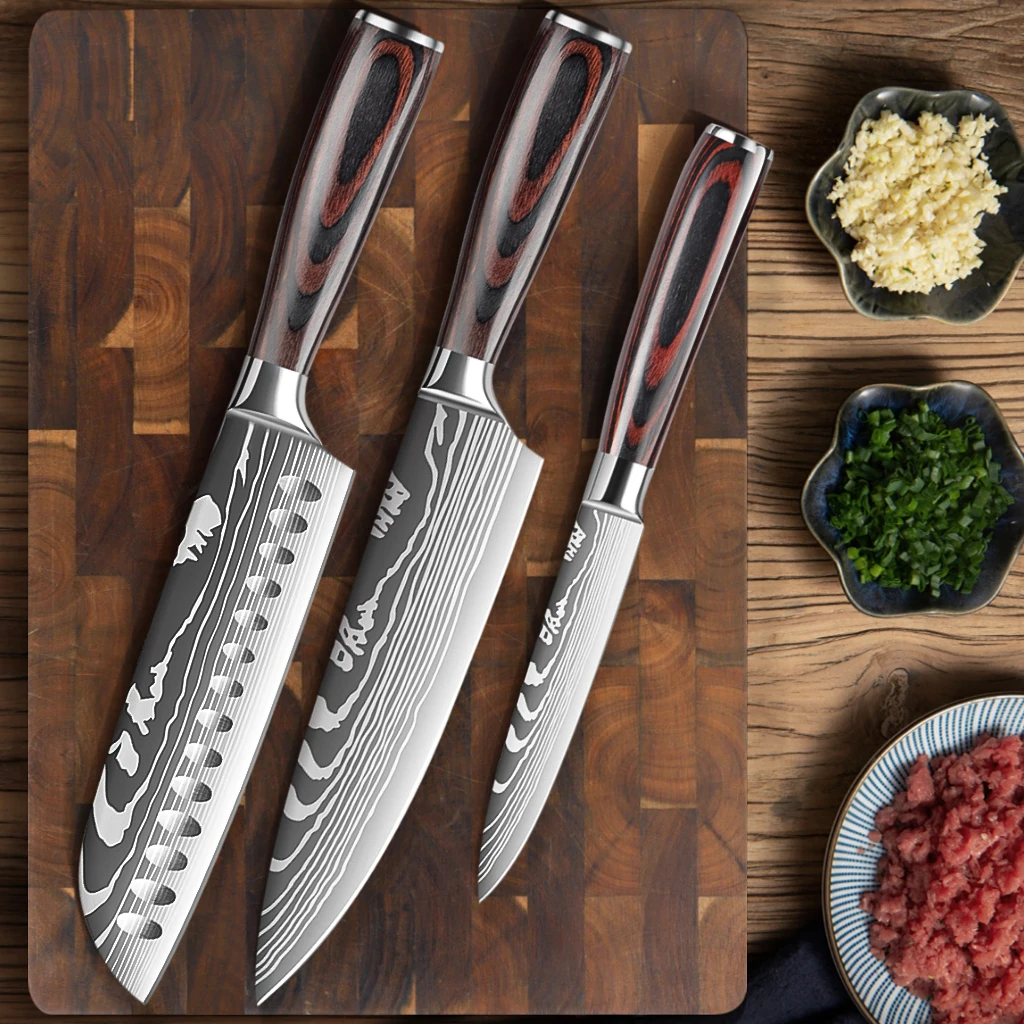
IOKO 3 PCS Japanese Style Kitchen Knife Set Pakka Wood Handle Slicing Sushi Steak Santoku Chef Utility Paring Kitchen Knife Set
For a well-rounded start, the IOKO 3 PCS Japanese Style Kitchen Knife Set offers a chef, utility, and paring knife with pakka wood handles that feel great in hand.
Frequently asked questions
How many knives do I really need in a chef knife set?
Most cooks get by with 3-5 knives: a chef’s knife, paring knife, utility knife, serrated bread knife, and optionally a santoku. Avoid oversized sets with redundant or specialty blades.
What’s the difference between forged and stamped knives?
Forged knives are shaped from a single piece of heated steel, offering better balance and durability but higher cost. Stamped knives are cut from a steel sheet, lighter and more affordable, but may be less robust.
Should I choose a wooden or synthetic handle?
Wood handles (like pakka wood) provide a warm, comfortable grip but require hand washing. Synthetic handles (polypropylene or nylon) are dishwasher-safe and more durable, but can feel slippery.
How often should I sharpen my chef knives?
Hone with a rod weekly or before each use. Sharpen with a whetstone or professional service every 1-3 months, depending on use. Signs of dullness include slipping or requiring extra pressure.
