
Blog
Stainless Steel Santoku Knife Buying Guide
Buying Guide
Choose Your Ideal Stainless Steel Santoku Knife
A stainless steel santoku knife is the workhorse of any kitchen, combining precision and versatility. Whether you’re dicing vegetables or slicing fish, this guide helps you find the right one.
What Makes a Santoku Knife Special
The santoku knife, meaning “three virtues,” excels at slicing, dicing, and mincing. Its shorter, wider blade offers more control than a chef’s knife, making it ideal for home cooks. The stainless steel construction ensures durability and rust resistance, while the granton edge (hollow indentations) reduces friction, preventing food from sticking.
Blade Material: Stainless Steel Grades
Not all stainless steel is equal. Look for high-carbon stainless steel like VG-10, which balances sharpness and stain resistance. A harder steel (around 60 HRC) holds an edge longer but is more brittle; softer steel (55-58 HRC) is easier to sharpen. For most home cooks, a mid-range stainless steel offers the best compromise.
Coating or No Coating?
Some blades have a non-stick coating to prevent food from sticking. While helpful, coatings can wear off over time. A well-polished stainless blade with a granton edge often suffices.
Blade Size and Shape
Santoku knives typically range from 5 to 7 inches. A 7-inch blade is versatile for most tasks. The blade shape—sheep’s foot or curved—affects rocking motion. A flatter blade is better for chopping, while a curved one aids rocking cuts.
Handle Comfort and Material
A comfortable, non-slip handle is crucial. Options include wood (classic but requires care), synthetic (dishwasher-safe), and stainless steel (durable but slippery). Look for a full tang (blade extends through handle) for balance. Ergonomic handles reduce fatigue during prolonged use.
Edge Type: Straight vs. Serrated
Most santoku knives have a straight edge for clean cuts. A serrated edge can help with bread or tomatoes but is harder to sharpen. For an all-purpose knife, a straight edge with a fine grit is best.
Maintenance and Sharpening
Stainless steel knives need regular honing and occasional sharpening. Use a honing steel weekly and a whetstone every few months. Avoid dishwasher cleaning, as high heat and detergents damage the blade and handle.
Choosing the Right Knife for Your Needs
Consider your cooking style: if you chop a lot of vegetables, a lighter santoku with a thin blade is ideal. For meat and fish, a thicker blade offers more durability. Test the weight and balance in your hand before buying.
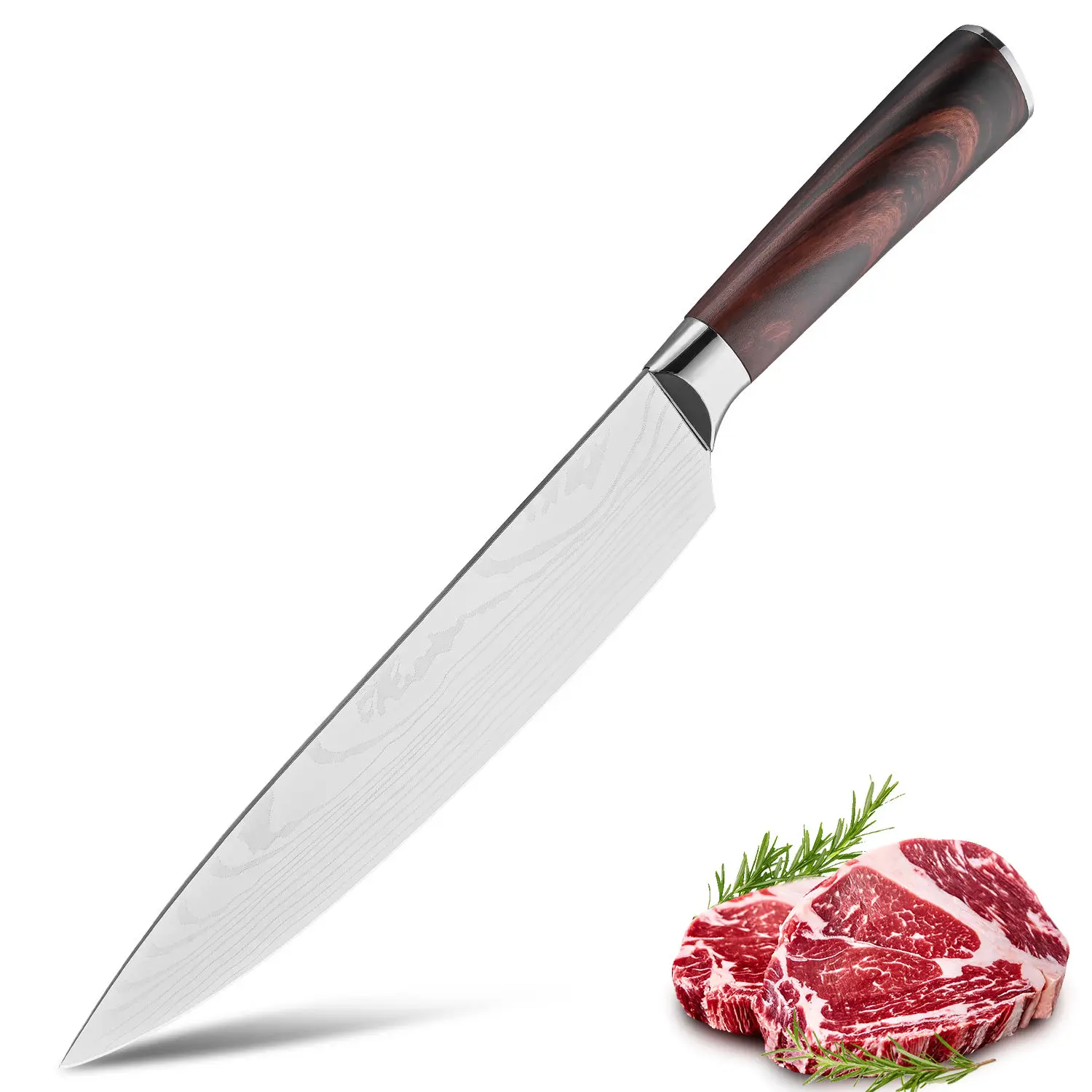
Factory Outlet Stainless Steel Japanese Santoku Knife 8 Inch Professional Kitchen Chef Knife
For a reliable option, consider the Factory Outlet Stainless Steel Japanese Santoku Knife 8 Inch Professional Kitchen Chef Knife, which offers a balanced design and durable construction.
Frequently asked questions
What is the best stainless steel for a santoku knife?
High-carbon stainless steel like VG-10 offers excellent edge retention and corrosion resistance. For most home cooks, a steel hardness of 58-60 HRC provides a good balance of sharpness and toughness.
How do I care for my stainless steel santoku knife?
Hand wash with mild soap, dry immediately, and store in a knife block or on a magnetic strip. Avoid the dishwasher. Hone regularly with a steel and sharpen with a whetstone every few months.
What is the difference between a santoku and a chef’s knife?
A santoku has a shorter, wider blade with a flatter edge and a sheep’s foot tip, making it better for up-and-down chopping. A chef’s knife has a curved edge for rocking cuts. Santoku knives are lighter and more maneuverable for smaller hands.
Can I use a santoku knife for cutting meat?
Yes, santoku knives are versatile and can handle meat, poultry, and fish. However, they may not be ideal for cutting through bones. A thicker blade or a dedicated cleaver is better for heavy-duty tasks.
