
Blog
Damascus Steel Knife Set: A Guide to Choosing Quality
Knife Guide
Choosing Your Damascus Steel Knife Set
A Damascus steel knife set is more than a tool; it’s a blend of ancient craftsmanship and modern performance. Whether you’re a home cook or a professional, understanding what makes these knives special helps you pick a set that lasts.
What Makes Damascus Steel Special?
Damascus steel is known for its distinctive wavy patterns, created by layering and forging different types of steel together. This process isn’t just for looks—it produces blades that are both hard and flexible, holding a sharp edge while resisting chipping. The result is a knife that feels balanced and cuts with precision, making everyday tasks like slicing tomatoes or mincing herbs effortless.
The pattern is more than decorative; it’s a testament to the skill of the smith. Each knife has a unique fingerprint, so no two are exactly alike. When you hold a genuine Damascus blade, you’re holding a piece of art that’s been crafted over centuries.
Key Factors in a Quality Knife Set
Not all Damascus sets are created equal. Here’s what to look for when evaluating options.
Steel Core Material
The core of the blade—the part that does the cutting—is crucial. High-carbon stainless steels like VG-10 offer excellent edge retention and corrosion resistance. VG-10 is a Japanese steel known for its hardness (around 60-61 HRC) and ability to take a razor-sharp edge. It’s a favorite among chefs for its balance of toughness and ease of sharpening.
Some sets use lower-grade steels, which may be softer and dull faster. Always check the core material; if it’s not specified, it’s likely not premium.
Layers and Pattern
Authentic Damascus has multiple layers—often over 100. More layers can mean a finer pattern and better performance, but the quality of the forge weld matters more than the number alone. A clean, consistent pattern without voids or delamination indicates good craftsmanship.
Beware of etched patterns that mimic Damascus but are mass-produced. Look for a pattern that flows naturally and has depth.
Handle Material and Ergonomics
The handle should provide a secure, comfortable grip, even when wet. Materials like ABS (acrylonitrile butadiene styrene) are durable, non-slip, and easy to clean. Wood handles are beautiful but require more care. Full tang construction—where the steel extends through the handle—adds balance and strength.
Try to hold a knife if possible. The weight should feel balanced, not blade-heavy or handle-heavy. A good handle reduces fatigue during long prep sessions.
What to Look for in a Complete Set
A well-chosen set includes the knives you’ll actually use, plus useful extras. Here are common pieces and why they matter.
- Chef’s Knife (8-inch): The workhorse for chopping, slicing, and dicing. Look for a comfortable curve and a sharp tip.
- Santoku (7-inch): A versatile all-purpose knife with a sheepsfoot blade, great for slicing and mincing.
- Paring Knife (3.5-inch): For detail work like peeling and trimming. A small, nimble blade is key.
- Boning Knife: Flexible blade for deboning poultry and fish. A narrow, pointed tip helps.
- Bread Knife: Serrated edge for crusty bread and soft fruits without crushing.
- Utility Knife: Mid-sized for sandwiches, fruits, and vegetables.
- Sharpening Rod or Stone: Keeping your knives sharp is essential. A honing rod maintains the edge between sharpening.
- Kitchen Shears: For snipping herbs, cutting poultry, or opening packages. A good pair is indispensable.
- Sharpener: A pull-through sharpener can make maintenance easy for beginners.
Damascus vs. Other Knife Types
How does Damascus compare to standard stainless or carbon steel? Damascus offers a unique combination: the beauty of a pattern-welded blade with the performance of a modern core. Standard stainless knives are often less expensive but may not hold an edge as long. Carbon steel knives can be extremely sharp but require diligent care to prevent rust. Damascus with a stainless core gives you the best of both worlds: a sharp, durable edge and a striking appearance.
If you value aesthetics and performance equally, Damascus is a worthy investment. For pure function on a budget, a good stainless set might suffice. But for many cooks, the joy of using a beautiful, well-made knife enhances the cooking experience.
Caring for Your Damascus Knives
Proper care extends the life of your knives and keeps them performing their best.
- Hand wash only: Dishwashers can damage the handle and blade edge. Wash with mild soap and dry immediately.
- Use a wooden or plastic cutting board: Glass, stone, or metal boards dull edges quickly.
- Hone regularly: Use a honing steel before each use to realign the edge.
- Sharpen when needed: Depending on use, sharpen every few months with a whetstone or quality sharpener.
- Store safely: Use a knife block, magnetic strip, or blade guards to protect edges and prevent accidents.
Common Misconceptions About Damascus Steel
Let’s clear up a few myths.
Myth: All Damascus knives are handmade. Many are mass-produced with etched patterns. Look for terms like “forged” or “handmade” from reputable sources.
Myth: Damascus steel never needs sharpening. All knives dull with use. Damascus holds an edge well but still requires maintenance.
Myth: The pattern affects cutting performance. The pattern is cosmetic; performance comes from the core steel and heat treatment.
How to Choose the Right Set for You
Consider your cooking style and frequency. A home cook who prepares meals daily may want a full set with a sharpener and shears. A professional might prefer a smaller set with specific knives. Look for sets that include a sharpening tool—keeping knives sharp is more important than having many knives.
Also evaluate the handle comfort and blade balance. If possible, read reviews from other users about edge retention and durability. A set that comes with a warranty or satisfaction guarantee adds peace of mind.
Finally, consider storage. A knife block keeps your counter organized, while a magnetic strip saves space. Some sets include a block; if not, factor that into your purchase.
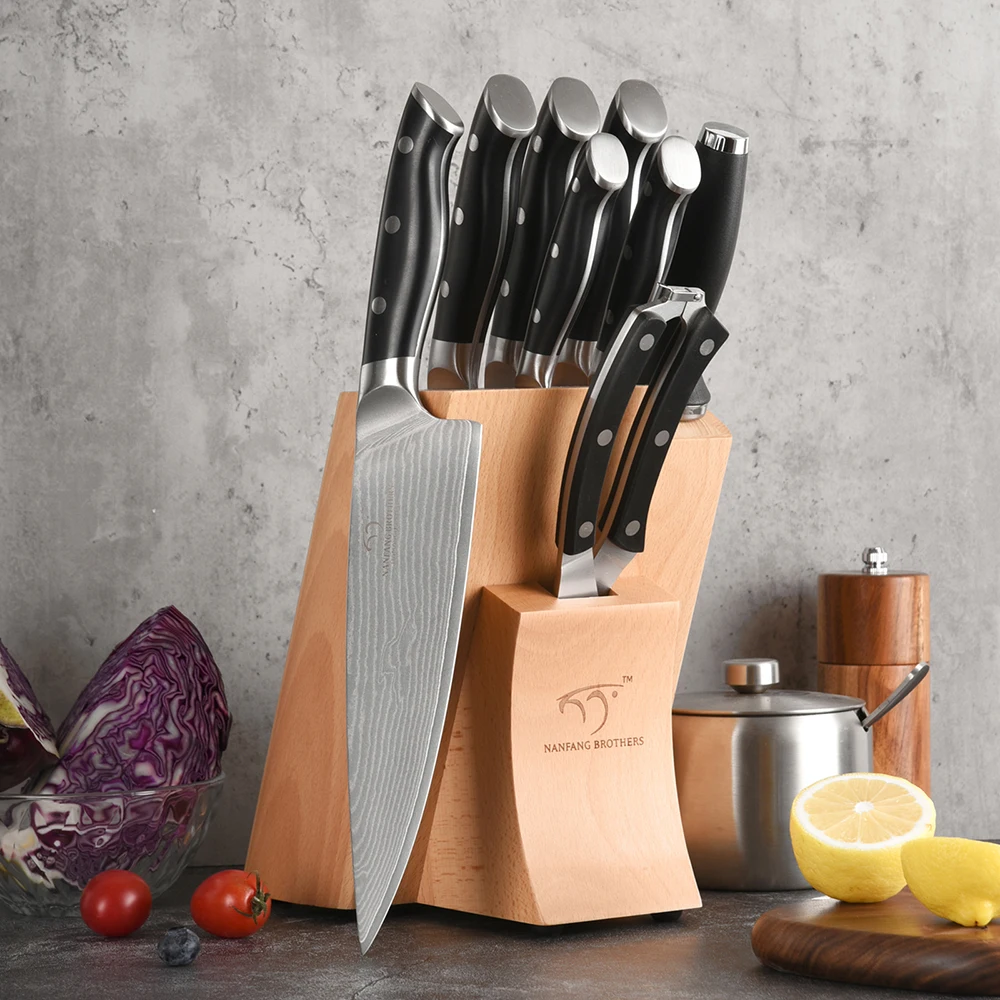
9 Pieces ABS Handle Fillet Knife VG-10 Damascus Steel Kitchen Knife Set with Sharpener Chicken Bone Scissors
For a reliable option, consider the 9 Pieces ABS Handle Fillet Knife VG-10 Damascus Steel Kitchen Knife Set with Sharpener and Chicken Bone Scissors, which offers a practical range of tools in one package.
Frequently asked questions
Is Damascus steel really better than regular stainless steel?
Damascus steel with a high-carbon core like VG-10 offers superior edge retention and sharpness compared to many standard stainless steels. It also provides a unique aesthetic. However, the performance depends on the core material and heat treatment, not just the pattern.
How do I clean and maintain a Damascus steel knife set?
Hand wash with mild soap and dry immediately. Avoid dishwashers. Hone regularly with a steel and sharpen with a whetstone or pull-through sharpener when dull. Store in a knife block or on a magnetic strip to protect the edge.
Can Damascus knives rust?
If the core is stainless (like VG-10), it is highly resistant to rust but not immune. The outer layers may be high-carbon steel and can develop patina or rust if not dried properly. Always dry knives after washing.
What should I look for in a Damascus steel knife set?
Check the core steel (VG-10 is excellent), number of layers (100+ is good), full tang handle made of durable material like ABS, and include a sharpener. Also consider the set includes knives you’ll actually use.
