
Blog
How to Choose High Quality Kitchen Knives
Knife Guide
Finding High Quality Kitchen Knives That Last
A great kitchen knife transforms cooking, but with so many options, finding high quality kitchen knives can feel overwhelming. Let’s cut through the noise.
Why Knife Quality Matters More Than You Think
A dull, poorly balanced knife makes slicing a chore and increases the risk of accidents. High quality kitchen knives offer consistent performance, better control, and longevity. They hold an edge longer, resist corrosion, and feel like an extension of your hand. Investing in a good knife isn’t about status—it’s about making cooking safer and more enjoyable.
Understanding Blade Steel: The Heart of the Knife
Steel type determines hardness, edge retention, and ease of sharpening. Common options include:
- Stainless steel: Rust-resistant, easy to maintain, but may not hold an edge as long as harder steels.
- High-carbon stainless: A balance of hardness and corrosion resistance, preferred by many chefs.
- Carbon steel: Very hard and sharp, but requires immediate drying to prevent rust.
- Damascus: Layered steel for aesthetic patterns; quality varies.
For most home cooks, high-carbon stainless offers the best mix of performance and low maintenance. Look for a Rockwell hardness of 58-60 HRC—harder holds an edge longer, but can be brittle.
Blade Shape and Edge: Match the Knife to the Task
Different knives serve different purposes. A chef’s knife (8-10 inches) is the workhorse for chopping, slicing, and dicing. A santoku (5-7 inches) excels at push cuts and is lighter. For precision tasks like paring or boning, smaller blades are better. Edge geometry matters too: a thinner blade glides through food, while a thicker spine offers durability. A 15-20 degree edge angle is standard for Western knives; Japanese knives often have a sharper 10-15 degree angle, requiring more care.
Balance and Weight: How the Knife Feels in Hand
A well-balanced knife reduces fatigue. The balance point should be at or slightly forward of the handle. To test, hold the knife at the bolster (where blade meets handle). If it tips forward, it’s blade-heavy; if backward, handle-heavy. Personal preference matters: some prefer a heavier knife for chopping, others a lighter one for slicing. The handle material—wood, plastic, or metal—affects grip and comfort. Try before you buy if possible.
Edge Retention and Sharpening: Keeping It Sharp
No knife stays sharp forever, but high quality kitchen knives maintain their edge longer. Harder steels (60+ HRC) hold an edge but are harder to sharpen. Softer steels (55-58 HRC) sharpen easily but need more frequent honing. Invest in a good whetstone or a professional sharpening service. Avoid pull-through sharpeners, which can damage the blade. A honing rod realigns the edge between sharpenings.
Construction: Full Tang vs. Partial Tang
A full tang means the blade metal extends through the entire handle, offering better balance and strength. Partial tangs are lighter but less durable. For high quality kitchen knives, full tang is recommended. Check if the handle is riveted or molded—rivets indicate sturdier construction. Also examine the bolster: a forged bolster provides a seamless transition, while a stamped knife may have a separate piece.
Care and Maintenance: Extend Your Knife’s Life
Proper care ensures longevity. Hand wash with mild soap and dry immediately—dishwashers dull blades and damage handles. Store in a knife block, magnetic strip, or blade guards to protect the edge. Use a cutting board (wood or plastic) to avoid dulling. Never cut on glass, stone, or metal. Oil wooden handles occasionally to prevent cracking. With care, a high quality kitchen knife can last decades.
What to Look for in a Knife Set vs. Individual Knives
Sets offer convenience and often a lower per-knife cost, but may include knives you rarely use. A good starter set includes a chef’s knife, paring knife, serrated bread knife, and maybe a utility knife. For high quality kitchen knives, focus on the chef’s knife first—it does 90% of tasks. Then add specialty knives as needed. Avoid sets with non-stick coatings; they wear off and don’t improve cutting performance. Instead, choose a knife with a smooth, polished blade.
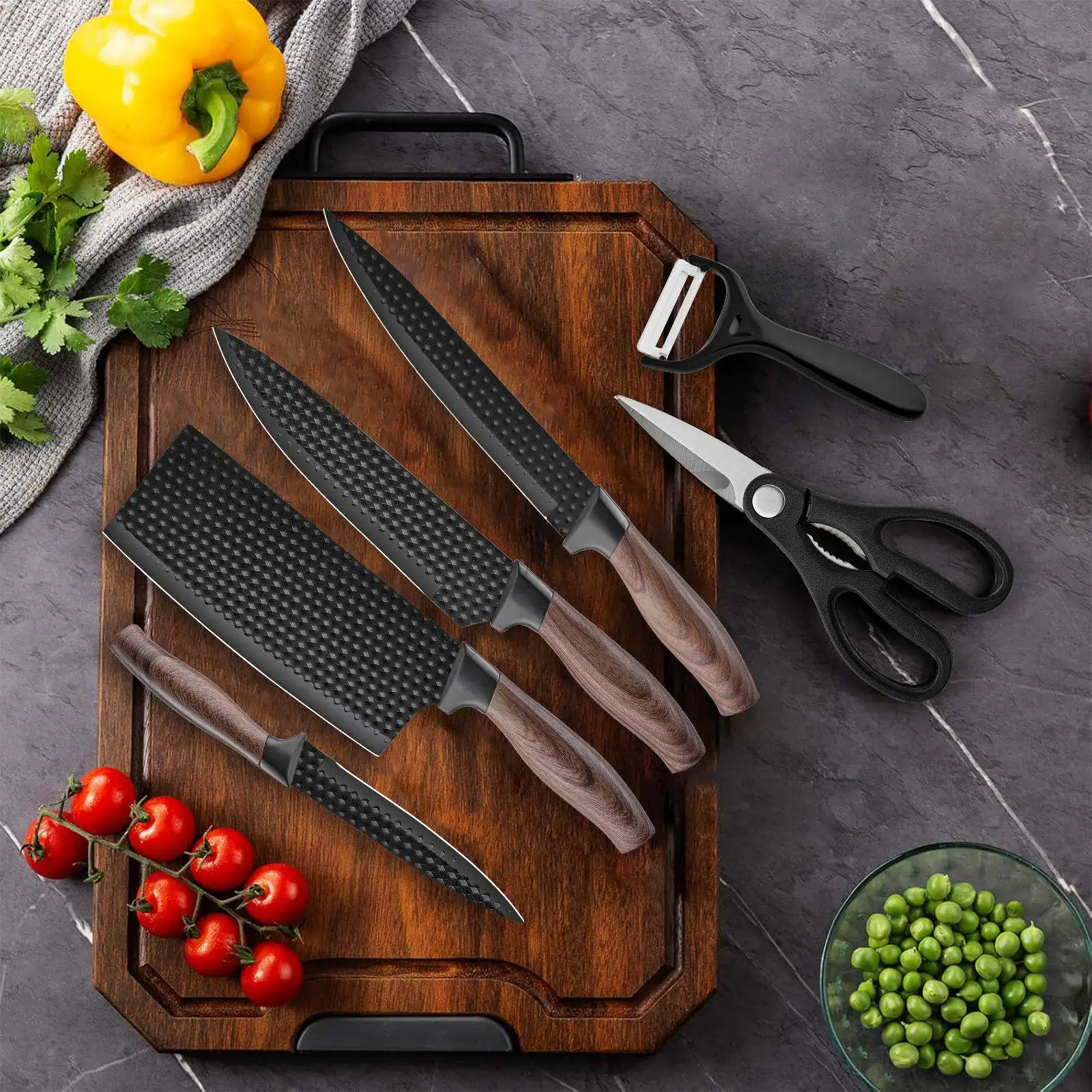
High Quality Multi-Purpose Nonstick Coating Kitchen Knife Set Japanese Chef Knife Set
If you’re looking for an affordable entry point, consider the High Quality Multi-Purpose Nonstick Coating Kitchen Knife Set Japanese Chef Knife Set, which offers a balanced set of essential blades for everyday cooking.
Frequently asked questions
What is the best steel for high quality kitchen knives?
High-carbon stainless steel is ideal for most home cooks. It offers good edge retention, hardness around 58-60 HRC, and rust resistance with proper care.
How often should I sharpen my kitchen knife?
It depends on use. For regular home cooking, sharpen every 3-6 months. Use a honing rod weekly to maintain the edge between sharpenings.
Are expensive knives worth the investment?
Yes, if you cook frequently. High quality kitchen knives hold their edge longer, feel better in hand, and can last a lifetime with care. They also reduce fatigue and improve safety.
What is the difference between a chef’s knife and a santoku?
A chef’s knife has a curved blade for rocking cuts, while a santoku has a straighter edge for push cuts. Santokus are typically lighter and have a sheep’s foot tip. Choose based on your cutting style.
