
Blog
The Best Kitchen Knife Set for Every Home Cook
Kitchen Essentials
Finding the Best Kitchen Knife Set for You
Choosing the best kitchen knife set can transform your cooking experience, making prep work faster, safer, and more enjoyable. Whether you’re a beginner or a seasoned chef, the right set of knives is an investment in your culinary journey.
Why a Good Kitchen Knife Set Matters
Your knives are arguably the most used tools in the kitchen. A quality set ensures precision, reduces fatigue, and keeps you safe by minimizing slips. According to a study by the University of Illinois, dull knives are more dangerous than sharp ones because they require more force. Investing in a reliable set is a step toward better cooking.
Key Features of the Best Kitchen Knife Set
When evaluating options, consider blade material, handle comfort, and included knives. High-carbon stainless steel offers a good balance of sharpness and rust resistance. Ergonomically designed handles reduce strain during prolonged use. A versatile set typically includes a chef’s knife, paring knife, serrated knife, and utility knife.
Blade Materials Explained
- Stainless Steel: Easy to maintain, resistant to rust, but may not hold an edge as long.
- High-Carbon Steel: Holds a sharper edge longer but requires more care to prevent corrosion.
- Ceramic: Very sharp and lightweight, but brittle and difficult to sharpen.
Handle Comfort and Safety
Look for full-tang construction (blade extends through the handle) for balance and durability. Handles made of wood, plastic, or composite materials should provide a secure grip even when wet.
Essential Knives in a Set
A good set covers most kitchen tasks. The chef’s knife is your workhorse for chopping, slicing, and dicing. A paring knife handles intricate work like peeling and trimming. A serrated bread knife tackles crusty loaves and delicate tomatoes. Utility knives fill the gap for smaller tasks. Some sets also include a Santoku knife, a Japanese-style all-purpose blade.
How to Choose the Right Set for Your Kitchen
Consider your cooking style. If you often prepare meat, a carving knife might be useful. For seafood lovers, a boning knife is handy. Storage matters too: blocks keep knives accessible and protect edges, while magnetic strips save counter space. For more on knife care, visit Wikipedia’s guide to kitchen knives.
Caring for Your Knife Set
To prolong the life of your knives, hand wash them with mild soap and dry immediately. Avoid dishwashers, which can dull blades and damage handles. Regularly hone with a steel and sharpen with a whetstone or professional service. Proper storage—such as a knife block or magnetic strip—prevents nicks and accidents.
Budget vs. Quality: Finding the Balance
You don’t need to spend a fortune for a good set. Mid-range options often provide excellent performance and durability. Look for sets with heat-treated blades and comfortable handles. Avoid sets with too many specialty knives you won’t use; focus on quality over quantity. The best kitchen knife set is one that fits your needs and budget.
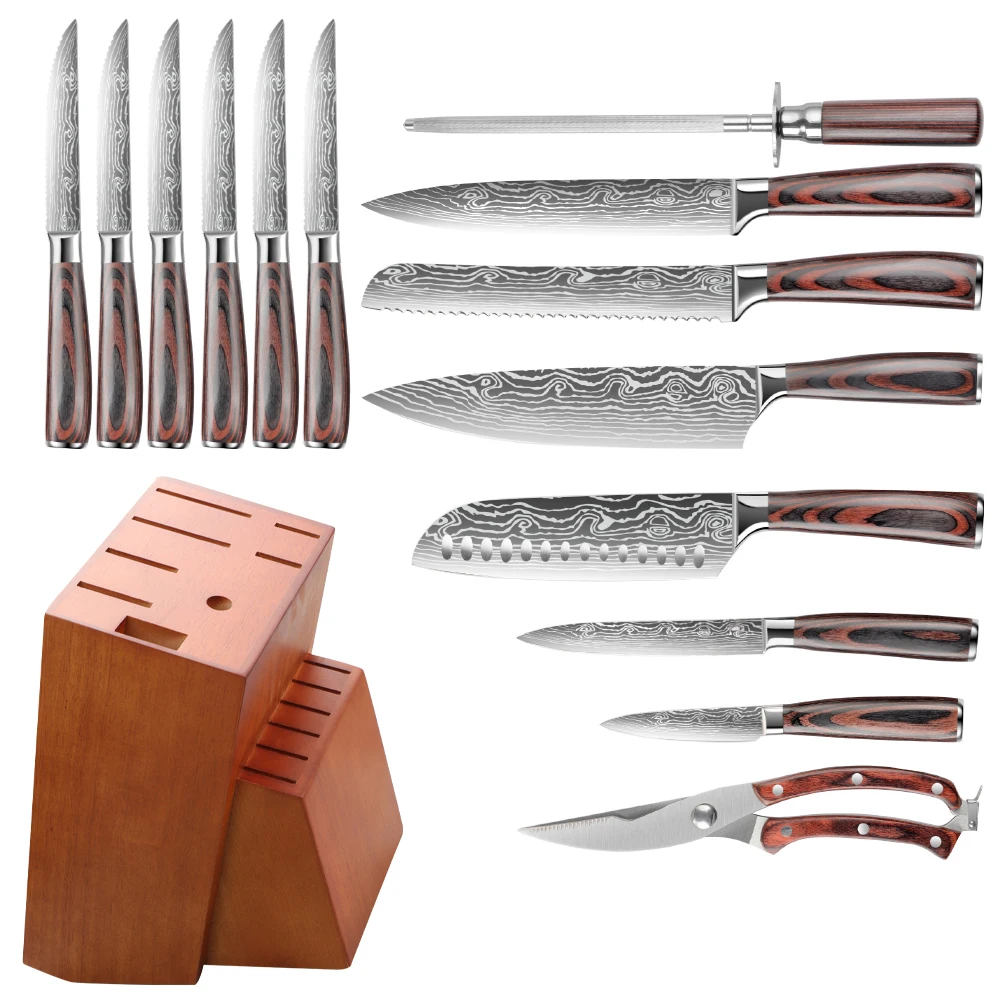
IOKO 15-Piece Japanese Style Kitchen Knife Set Sashimi Paring 8 Inch Chef Sushi Steak Utility 7 Inch Santoku Kitchen Knife Set
For a well-rounded set that combines traditional Japanese craftsmanship with modern ergonomics, consider the IOKO 15-Piece Japanese Style Kitchen Knife Set, which includes essential blades like a chef’s knife, Santoku, and utility knife.
Frequently asked questions
What is the best kitchen knife set for beginners?
A good starter set includes a chef’s knife, paring knife, and serrated knife. Look for high-carbon stainless steel blades and comfortable, non-slip handles. Avoid large sets with many specialty knives you may not use.
How often should I sharpen my kitchen knives?
Hone your knives with a steel after every few uses to maintain the edge. Sharpen them with a whetstone every 2-3 months, depending on usage. Professional sharpening once a year can also help.
Are ceramic knives better than steel?
Ceramic knives are very sharp and lightweight, but they are brittle and can chip if used on hard surfaces or bones. Steel knives are more durable and easier to sharpen. The choice depends on your cooking habits.
What is the difference between a chef’s knife and a Santoku knife?
A chef’s knife typically has a curved blade for rocking motions, while a Santoku has a straighter edge and a sheep’s foot tip, ideal for push cuts. Both are versatile, but Santoku knives are often lighter and better for precision slicing.
