
Blog
The Best Kitchen Knife Set for Home Cooks in 2024
Buying Guide
Finding the Best Kitchen Knife Set for You
Choosing the best kitchen knife set can transform your cooking experience. Whether you’re a beginner or a seasoned home chef, the right knives make prep work faster, safer, and more enjoyable.
What Makes a Great Kitchen Knife Set?
A great knife set balances quality, comfort, and versatility. You don’t need a block of 20 knives—just a few well-made ones that handle most tasks. Look for full tang blades (metal extending through the handle) for balance, and high-carbon stainless steel for edge retention and rust resistance.
Handle material matters too. Wood feels warm but requires care; synthetic materials like polypropylene are durable and grippy. Weight is personal—some prefer a heavier knife for chopping, others a lighter one for precision.
Essential Knives for Everyday Cooking
Most home cooks can get by with three knives: a chef’s knife, a utility knife, and a paring knife. A chef’s knife (8-10 inches) is your workhorse for chopping, slicing, and dicing. A utility knife (5-7 inches) handles smaller tasks like slicing sandwiches or trimming vegetables. A paring knife (3-4 inches) is for intricate work like peeling or deveining shrimp.
Some sets include a serrated bread knife or a santoku—a Japanese-style blade that excels at slicing and mincing. Santoku knives have a shorter, flatter edge and a sheep’s foot tip, making them great for rock chopping.
Blade Materials: Stainless vs. Carbon Steel
Stainless steel is low-maintenance and resists corrosion, but may not hold an edge as long as high-carbon steel. High-carbon stainless steel combines the best of both: easy sharpening and stain resistance. German stainless (like X50 Cr MoV15) is popular for its toughness; Japanese VG-10 is harder and takes a finer edge.
Avoid cheap stamped blades—they dull quickly and are hard to sharpen. Forged blades are stronger and heavier, but good stamped knives can still perform well if heat-treated properly.
Handle Design and Comfort
An ergonomic handle reduces fatigue during long prep sessions. Look for a comfortable grip that fits your hand size. Some handles have a bolster (the thick metal band between blade and handle) for safety and balance, but it can make sharpening harder. Others are bolsterless for easier honing.
Materials: wood handles (e.g., walnut) are classic but need oiling; synthetic handles (e.g., polyoxymethylene) are dishwasher-safe and durable. Try holding knives before buying if possible.
Knife Maintenance: Sharpening and Storage
A sharp knife is safer than a dull one. Use a honing steel weekly to realign the edge, and sharpen with a whetstone or professional service every few months. Avoid pull-through sharpeners—they remove too much metal.
Store knives in a block, on a magnetic strip, or in a drawer with blade guards. Loose drawers dull edges and risk cuts. A block keeps them organized but takes counter space.
Set Size: How Many Knives Do You Really Need?
Sets range from 3 to 20 pieces. A 3-piece set (chef, utility, paring) covers 90% of tasks. Larger sets add steak knives, bread knives, and kitchen shears, which may be useful if you entertain often. But extra knives can clutter your workspace.
Consider your cooking style: if you cook Asian cuisine, a cleaver or nakiri might be helpful; if you bake, a serrated knife is essential. Buy only what you’ll use.
Budget and Value
Good knives are an investment. Entry-level sets ($50-$100) can be decent if made from quality steel. Mid-range ($100-$200) offers better materials and construction. High-end ($200+) is for enthusiasts. Look for sets that include a honing rod or block.
Don’t be fooled by low prices—cheap knives may break or dull quickly, costing more in replacements. A well-made set can last decades with proper care.
Top Features to Look For
- Forged or high-quality stamped blades
- Full tang construction
- Ergonomic handle with good balance
- High-carbon stainless steel
- Includes essential knives only
- Comfortable grip for your hand size
Remember, the best kitchen knife set is one that feels right in your hand and matches your cooking habits. Prioritize quality over quantity.
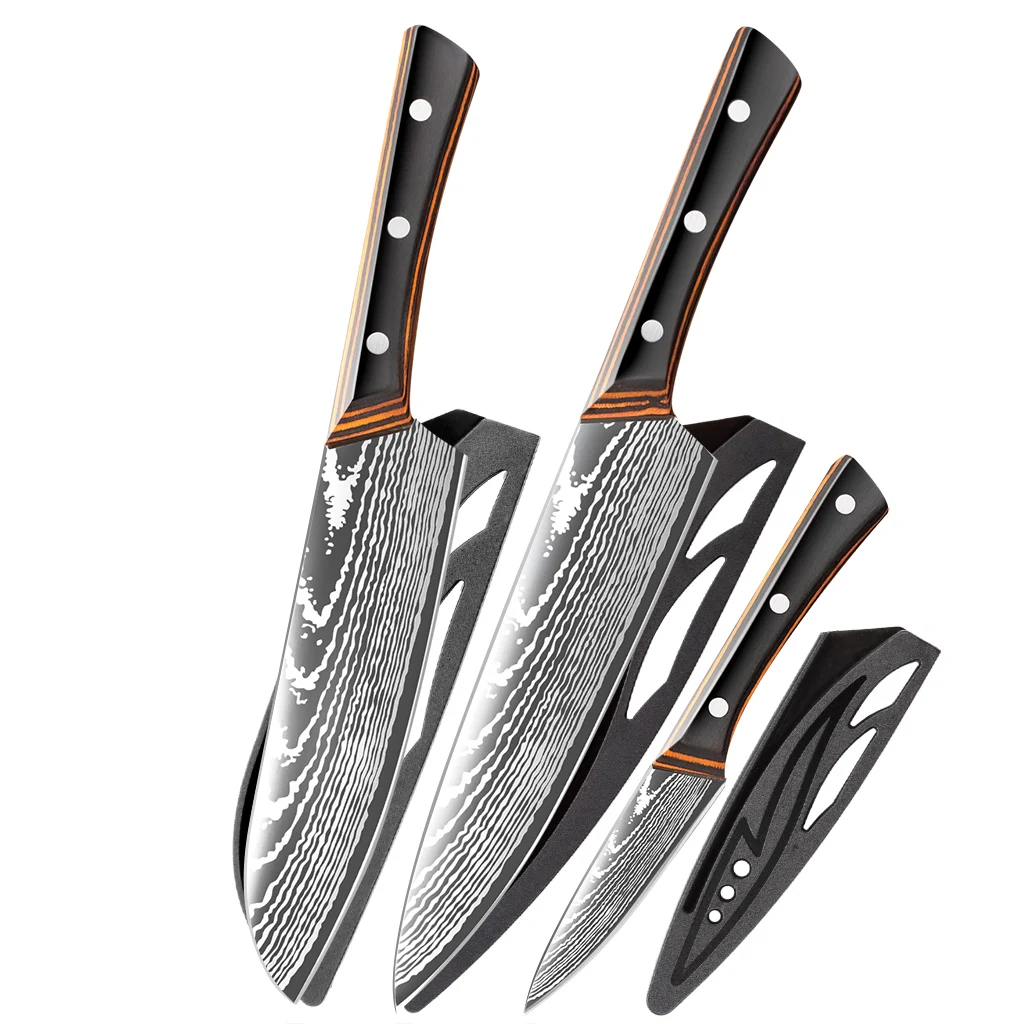
IOKO 3 PCS Stainless Steel Chef Kitchen Knife Set Santoku Sushi Japanese Style Butcher Cleaver Chef Utility Kitchen Knife Set
If you’re looking for a reliable, versatile starter set, the IOKO 3 PCS Stainless Steel Chef Kitchen Knife Set offers a chef knife, santoku, and utility knife with Japanese-style blades that handle everyday tasks with ease.
Frequently asked questions
How many knives should a kitchen knife set have?
For most home cooks, a 3-piece set (chef, utility, paring) covers 90% of tasks. Larger sets add specialty knives like bread or steak knives, but you may not need them.
What is the best blade material for kitchen knives?
High-carbon stainless steel is a great balance of edge retention, rust resistance, and ease of sharpening. German and Japanese steels are popular choices.
Are expensive knife sets worth it?
Mid-range sets ($100-$200) often provide good quality for the price. Expensive sets use premium materials and craftsmanship, but you can find excellent value without breaking the bank.
How should I care for my kitchen knives?
Hand wash and dry immediately; avoid dishwasher. Hone weekly with a steel, sharpen with a whetstone every few months, and store in a block or on a magnetic strip.
