
Blog
The Ultimate Guide to Finding the Best Chef Knife
Knife Guide
Find the Best Chef Knife for You
The best chef knife isn’t just a tool—it’s an extension of your hand. Whether you’re a home cook or a professional, choosing the right blade can transform your time in the kitchen.
Understanding Blade Materials
The blade is the heart of any chef knife. Common materials include stainless steel, carbon steel, and high-carbon stainless steel. Each has its pros and cons: stainless resists rust, carbon steel holds a sharp edge longer but requires care, and high-carbon stainless combines the best of both. For most cooks, high-carbon stainless offers a great balance of edge retention and ease of maintenance.
Handle Ergonomics and Comfort
A knife’s handle should feel like a natural extension of your hand. Materials like wood, synthetic composites, and metal each offer different grips. Wood handles absorb moisture and can be slippery when wet, while synthetic handles like G10 or Micarta provide excellent grip even in damp conditions. Consider the shape: a rounded, contoured handle reduces fatigue during long prep sessions. Always hold a knife before buying if possible.
Blade Shape and Size
The classic chef knife blade is 8 inches long, but 6 to 10 inches are common. A curved belly allows for a rocking motion, ideal for chopping herbs and vegetables. A flatter profile works better for slicing and push-cutting. Consider your cutting style: if you rock chop, a curved blade is best; if you slice, go with a flatter edge. The tip of the blade should be sharp for detail work.
Edge Retention and Sharpening
A knife that stays sharp longer saves time and frustration. Look for blades with a hardness rating of 58-62 HRC for a good balance of sharpness and durability. Softer steels are easier to sharpen but dull faster; harder steels hold an edge but can be brittle. Regular honing with a steel and occasional sharpening with a whetstone will keep your knife performing at its best. Avoid electric sharpeners that can remove too much metal.
Balance and Weight
A well-balanced knife feels light and nimble in your hand. The balance point should be at the bolster or slightly forward. Heavier knives (8-10 oz) provide more chopping power, while lighter knives (6-8 oz) offer better maneuverability for intricate cuts. Test the balance by holding the knife at the bolster; it should not tip heavily forward or backward.
Caring for Your Chef Knife
Proper care extends the life of your knife. Always hand wash with mild soap and dry immediately—dishwashers can dull and damage blades. Store knives in a block, on a magnetic strip, or in a sheath to protect the edge. Use a cutting board made of wood or soft plastic; avoid glass, stone, or hard surfaces that can chip the blade. With regular honing and sharpening, a quality knife can last a lifetime.
Budget Considerations
Chef knives range from under $50 to several hundred dollars. A good mid-range knife ($80-$150) often offers excellent performance for home cooks. Higher-end knives ($200+) typically use premium steels and craftsmanship, but the difference may be subtle for casual use. Invest in the best you can afford, but remember that a well-maintained mid-range knife can outperform a neglected luxury one.
Key Features to Look For
- Full tang (blade extends through the handle) for balance and durability
- Forged construction (vs. stamped) for better edge retention
- Comfortable, non-slip handle material
- Blade hardness between 58-62 HRC
- Good weight distribution
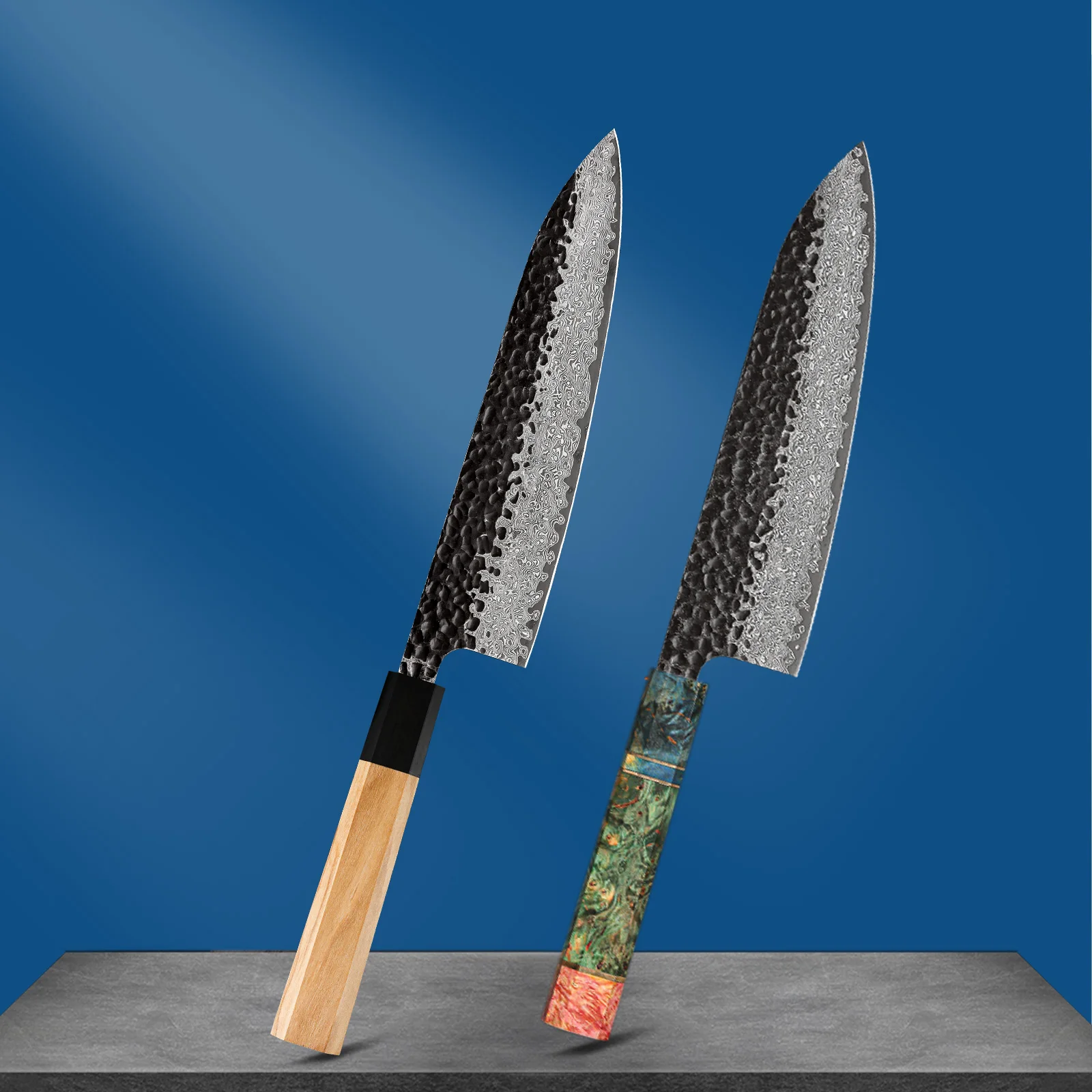
Damascus Steel Japanese Kitchen Knife, PRO Chef Knife, Handmade
For those seeking exceptional performance, our Damascus Steel Japanese Kitchen Knife offers a handcrafted blade with 67 layers of steel for superior sharpness and a beautiful pattern.
Frequently asked questions
What is the best length for a chef knife?
8 inches is the most versatile length, suitable for most tasks. However, 6-inch knives offer better control for smaller hands, while 10-inch knives provide more leverage for large cuts.
How often should I sharpen my chef knife?
Home cooks typically sharpen every 1-2 months, depending on use. Honing with a steel before each session helps maintain the edge between sharpenings.
Are expensive chef knives worth it?
High-end knives use superior materials and craftsmanship, offering better edge retention and balance. For frequent cooks, the investment can improve efficiency and enjoyment. For occasional use, a mid-range knife may suffice.
What is the difference between forged and stamped knives?
Forged knives are shaped from a single piece of steel, typically heavier and more durable. Stamped knives are cut from a sheet of steel, lighter and more affordable. Forged knives generally hold an edge longer.
