
Blog
The Best Ceramic Knife Set for Everyday Kitchen Use
Kitchen Essentials
Choosing Your Ceramic Knife Set Wisely
A ceramic knife set can transform your daily food prep, but picking the right one requires a bit of know-how. Let’s walk through what matters most.
Why Ceramic Blades?
Ceramic knives are made from zirconia, a material nearly as hard as diamond. They stay sharp far longer than steel—often months of regular use—and never rust. For acidic fruits and vegetables, that means no metallic taste or discoloration. The blades are also lighter, reducing fatigue during long chopping sessions. But they have a trade-off: they can chip if dropped or used on hard surfaces like bone or frozen food.
Key Features to Look For
Blade Hardness
Look for knives with a hardness rating of 8.5 to 9 on the Mohs scale. This ensures exceptional edge retention. Cheaper sets may use lower-grade ceramic that dulls faster.
Handle Ergonomics
Comfort matters. Handles should be non-slip and contoured to fit your grip. Textured rubber or molded plastic are common; avoid slick, round handles.
Sheath Protection
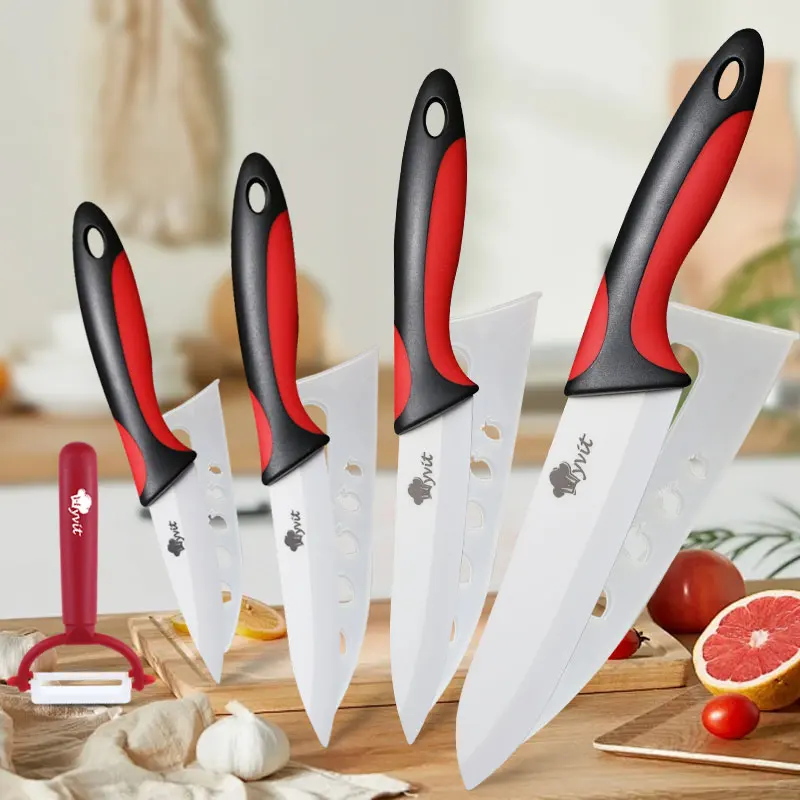
Most quality sets include blade sheaths. These protect the edge and prevent accidents in the drawer. A snug, well-designed sheath is a sign of thoughtful design.
Common Sizes You’ll Actually Use
A typical ceramic knife set includes a chef’s knife (6-8 inches), a paring knife (3-4 inches), and sometimes a utility or serrated knife. The chef’s knife handles most tasks—chopping vegetables, slicing fruit. The paring knife is perfect for peeling and detail work. Avoid sets with many redundant sizes; focus on versatility.
Care and Maintenance
Ceramic knives need different care than steel. Always hand wash with mild soap and a soft sponge—dishwashers can cause chipping. Use a wooden or plastic cutting board; glass or stone will dull the edge. When they eventually need sharpening, use a diamond stone or send them to a professional. Never use a standard steel rod.
Safety First
Because ceramic is extremely sharp, handle with care. Always cut away from your body, and use a sheath when storing. The blades are brittle, so avoid twisting or prying motions. With proper handling, they’re safer than dull steel knives that require more force.
Cost vs. Value
Good ceramic knife sets range from moderate to premium. A set of three quality knives with sheaths can cost between $40 and $100. More expensive sets may offer better handle materials or additional pieces, but the core performance is similar. Skip sets that seem too cheap—they often use low-grade ceramic that chips easily.
When a Ceramic Set Makes Sense
If you primarily cut fruits, vegetables, and boneless meats, a ceramic knife set is ideal. It’s also great for people who dislike sharpening steel knives. However, if you frequently cut cheese, bread with hard crusts, or frozen items, a steel knife is better. Ceramic excels at precision slicing with minimal effort.
Ceramic Knife Set Household Utility Fruit Kitchen Knife Chef Knife for Paring Vegetable Tomato Rustproof White Blade with Sheath
For a reliable option, consider our Ceramic Knife Set Household Utility Fruit Kitchen Knife Chef Knife for Paring Vegetable Tomato Rustproof White Blade with Sheath—it covers the essentials without unnecessary extras.
Frequently asked questions
Do ceramic knives break easily?
They can chip or break if dropped on a hard floor or used on hard surfaces like bones or frozen food. With proper care, they are durable for everyday kitchen tasks.
Can I sharpen ceramic knives at home?
Yes, but only with a diamond sharpening stone or an electric sharpener designed for ceramic. Standard steel sharpeners won’t work.
Are ceramic knives dishwasher safe?
No, the high heat and harsh detergents can damage the blade and handle. Always hand wash and dry immediately.
What cutting board is best for ceramic knives?
Wood or plastic cutting boards are best. Avoid glass, marble, or stone surfaces as they can dull or chip the blade.
