
Blog
The Perfect Ceramic Coffee Cup: A Buyer’s Guide
Buying Guide
Find Your Ideal Ceramic Coffee Cup
A ceramic coffee cup is more than just a vessel for your morning brew—it’s a daily companion that can elevate your entire coffee experience. Whether you’re a home barista or a casual sipper, choosing the right mug matters.
Why Choose a Ceramic Coffee Cup?
Ceramic has been a preferred material for drinkware for centuries, prized for its ability to retain heat without affecting flavor. Unlike metal or glass, a ceramic coffee cup provides a gentle, even warmth that keeps your coffee at the perfect drinking temperature longer. Plus, ceramic is non-reactive, so you taste only your coffee—no metallic or plastic notes.
For many, the tactile pleasure of holding a smooth, glazed ceramic mug is part of the ritual. The material also offers endless possibilities for design, from minimalist solid colors to intricate hand-painted patterns. Whether you prefer a classic white mug or something with character, ceramic delivers both function and beauty.
What to Look for in a Ceramic Coffee Cup
Material Quality
Not all ceramic is created equal. High-fired stoneware or porcelain is more durable and less porous than earthenware, meaning it resists chipping and staining better. Look for vitrified ceramic, which has been fired at high temperatures to become glass-like and non-absorbent. This ensures your cup won’t develop odors or discoloration over time.
Size and Capacity
Coffee cup sizes vary widely. A standard ceramic coffee cup holds around 250-300 ml (8-10 oz), ideal for a single serving of drip coffee or espresso-based drinks. For those who enjoy larger servings, mugs up to 400 ml (14 oz) are common. Consider your typical drink: a cappuccino might suit a 200 ml cup, while a latte drinker may prefer 350 ml. The right size ensures your coffee stays hot and doesn’t spill.
Handle Design
The handle is often overlooked but crucial for comfort. A well-designed handle should allow a secure grip, even with larger hands. Look for handles that are thick enough to hold easily but not so bulky that they feel clunky. Ergonomic curves or thumb rests can enhance comfort, especially if you tend to cradle your mug.
Shape and Rim
The shape of the cup affects the drinking experience. A slightly tapered top concentrates aromas, while a wider opening allows the coffee to cool faster. The rim should be thin and smooth—thick rims can feel clumsy and may cause drips. Many coffee enthusiasts prefer a curved interior that guides the liquid smoothly to your lips.
Design and Aesthetics: More Than Just Looks
A ceramic coffee cup is often part of your daily table setting, so its design should please your eye. Glaze finishes range from glossy to matte, and each affects the feel. Glossy glazes are easier to clean and resist stains, while matte finishes offer a softer, modern look but may show water spots.
Patterns and colors can reflect your personality. Classic white is timeless and works with any decor, while bold colors or stripes add a pop of personality. Handcrafted pieces may have slight variations, making each cup unique. Remember that the cup’s interior color can influence how your coffee looks—white interiors show the true color of the brew, while darker interiors hide stains.
Durability and Maintenance
Ceramic mugs are generally durable but can chip or crack if dropped. Look for cups that are microwave and dishwasher safe for convenience. However, hand washing is recommended to preserve decorative glazes and prevent metal trim from tarnishing. Avoid thermal shock (sudden temperature changes) by not pouring boiling water into a cold mug or placing a hot mug on a cold surface.
To clean stubborn coffee stains, use a paste of baking soda and water, or a mild bleach solution for white cups. Avoid abrasive scrubbers that can scratch the glaze.
Environmental and Health Considerations
Ceramic is a natural material made from clay, water, and minerals, and it’s fully recyclable at the end of its life. Unlike plastic, ceramic doesn’t leach chemicals into your drink. For those concerned about lead or cadmium, choose cups from reputable manufacturers that certify their glazes as food-safe and lead-free. Many artisanal potters use non-toxic glazes.
By investing in a quality ceramic coffee cup, you reduce waste from disposable cups and enjoy a more sustainable daily habit. Learn more about ceramic materials on Wikipedia.
How to Choose the Perfect Ceramic Coffee Cup for You
Start by assessing your daily coffee routine. Do you drink quickly or savor slowly? Do you prefer a classic mug or something with a modern twist? Consider your grip strength and hand size—some handles are more comfortable than others. If you often take your coffee on the go, a cup with a snug lid might be useful (though ceramic is less common for travel).
Think about your kitchen decor: a ceramic coffee cup can be a statement piece. For a cohesive look, choose mugs that complement your dinnerware. Or mix and match for an eclectic vibe. Remember, the best cup is one that makes you happy every morning.
Final Thoughts on Your Ceramic Coffee Cup Journey
Choosing a ceramic coffee cup is a personal decision that blends practicality and style. Focus on material quality, size, handle comfort, and design that speaks to you. A well-made cup can last for years, becoming a cherished part of your routine. And when you find that perfect one, each sip will feel just right.
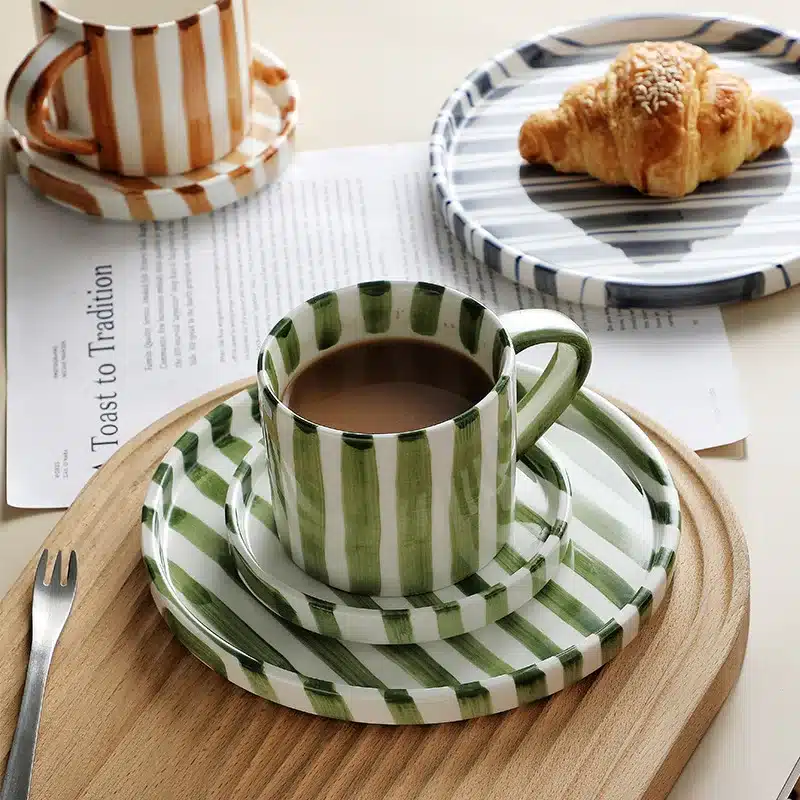
Simple Striped Ceramic Teacup Hotel Café Porcelain Coffee Cup 280ml Office Mug Breakfast Bread Dessert Mug Gift Table Decoration
For a balanced choice, consider the Simple Striped Ceramic Teacup Hotel Café Porcelain Coffee Cup 280ml—a versatile everyday mug that pairs timeless design with practical durability.
Frequently asked questions
What is the best size for a ceramic coffee cup?
The best size depends on your drink preference. For standard drip coffee or espresso-based drinks, 250-300 ml (8-10 oz) is ideal. For larger servings like lattes, consider 350-400 ml (12-14 oz).
Can ceramic coffee cups go in the microwave?
Most ceramic coffee cups are microwave-safe, but check for metallic accents or glazes containing metal, which can spark. Always test by microwaving a cup of water for 30 seconds—if the cup stays cool, it’s safe.
How do I remove coffee stains from a ceramic mug?
Make a paste of baking soda and water, apply to the stain, and gently scrub with a soft sponge. For stubborn stains, soak in a solution of equal parts water and white vinegar for an hour, then wash.
Is ceramic better than glass or stainless steel for coffee?
Ceramic is non-reactive and retains heat well without affecting flavor, making it superior to glass (which cools faster) and stainless steel (which can impart a metallic taste). Ceramic also offers more design variety.
