
Blog
The Best Borosilicate Glass Measuring Cup Guide
Kitchen Essentials
Why a Borosilicate Glass Measuring Cup Is Essential
A borosilicate glass measuring cup is a kitchen tool that combines precision with resilience. Whether you’re baking or cooking, its heat resistance and clarity make it indispensable.
What Makes Borosilicate Glass Measuring Cups Special
Borosilicate glass is made by adding boron trioxide to the silica melt, giving it a very low thermal expansion coefficient. This means it can withstand sudden temperature changes without shattering. Unlike soda-lime glass, a borosilicate glass measuring cup can go from freezer to oven without cracking. This durability is why lab beakers and high-end kitchenware use it. It’s also non-porous, so it won’t absorb odors or stains.
Key Features to Look For
- Heat Resistance: Look for cups that can handle temperatures from -40°F to 572°F. This ensures safe use with boiling liquids and cold ingredients.
- Clear Markings: Etched or printed markings that won’t fade over time are essential for accurate measuring. Check that they are easy to read from different angles.
- Pour Spout: A well-designed spout minimizes drips and allows precise pouring. Some have a small lip for controlled flow.
- Handle Comfort: A heat-resistant handle that stays cool is a plus. Borosilicate handles are often integrated into the design.
- Volume Capacity: Common sizes are 500ml, 1000ml, and 2000ml. Choose based on your typical recipes. A set with multiple sizes is versatile.
How to Use and Care for Your Borosilicate Glass Measuring Cup
To maximize lifespan, avoid rapid temperature changes even though borosilicate is tough. Don’t place a hot cup directly on a cold surface; use a trivet. Hand wash with mild detergent and a soft sponge. While some are dishwasher safe, hand washing preserves markings. Avoid abrasive scrubbers that can scratch the glass. Store in a dry place, and if stacked, place a cloth between cups to prevent chipping.
Borosilicate vs. Soda-Lime Glass vs. Plastic
Borosilicate glass outperforms soda-lime glass in thermal shock resistance. Soda-lime is cheaper but can break when exposed to sudden temperature changes. Plastic measuring cups are lightweight and unbreakable but can warp with hot liquids and absorb odors. For accuracy and durability, a borosilicate glass measuring cup is the best choice. It’s also eco-friendly as it doesn’t leach chemicals. For more on glass types, see Wikipedia’s article on borosilicate glass.
Common Mistakes to Avoid
- Microwaving empty: Always have liquid in the cup when microwaving to prevent overheating.
- Using metal utensils: They can scratch the glass and markings. Use silicone or wooden stirrers.
- Ignoring capacity limits: Don’t fill to the very top; leave room for stirring or expansion.
- Dropping: While tough, borosilicate can break if dropped. Handle with care.
Borosilicate Glass Measuring Cup in Professional and Home Kitchens
Professional bakers and chefs rely on borosilicate measuring cups for their accuracy and durability. The clear glass allows you to see the exact measurement at eye level, reducing errors. Home cooks appreciate the peace of mind that a borosilicate glass measuring cup won’t shatter when pouring hot liquids. Its versatility extends to using it as a mixing bowl for small batches, a container for melting butter, or even as a double boiler insert.
Why Accuracy Matters in Measuring
Baking is a science. Even a small discrepancy in liquid measurement can affect texture and rise. A borosilicate glass measuring cup with precise markings ensures you get consistent results. Unlike plastic, glass doesn’t expand with heat, so measurements remain accurate. The clarity also helps you see meniscus levels for precise reading. For dry ingredients, use nested measuring cups, but for liquids, a borosilicate glass measuring cup is ideal.
Eco-Friendly and Safe Choice
Borosilicate glass is made from natural materials and is fully recyclable. It doesn’t contain BPA or other harmful chemicals found in some plastics. By choosing a borosilicate glass measuring cup, you reduce plastic waste and ensure no chemical leaching into your food. It’s a sustainable choice that lasts for years with proper care.
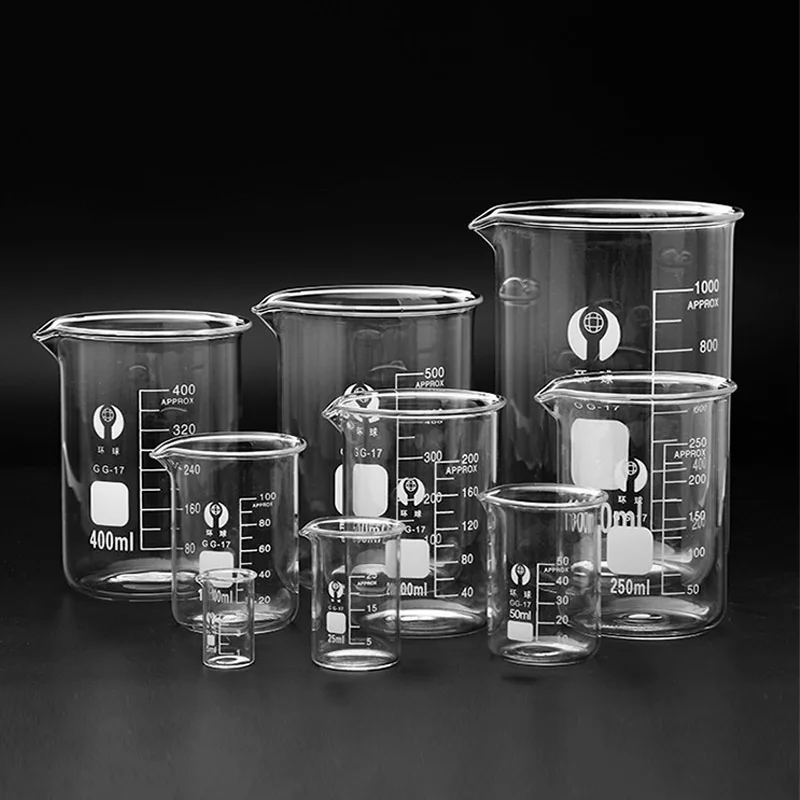
Different Sets Lab Heat-resist Scaled Measuring Cup Borosilicate Glass Chemistry Glass Beakers Measuring
For a reliable option, consider the Different Sets Lab Heat-resist Scaled Measuring Cup Borosilicate Glass Chemistry Glass Beakers Measuring, which offers lab-grade precision for your kitchen.
Frequently asked questions
Can a borosilicate glass measuring cup go in the microwave?
Yes, it’s microwave safe. However, avoid microwaving when empty and always use oven mitts as the glass can get hot.
Is borosilicate glass measuring cup dishwasher safe?
Many are, but hand washing is recommended to preserve markings. Check manufacturer instructions.
What sizes are typically available?
Common sizes include 250ml, 500ml, 1000ml, and 2000ml. Sets with multiple sizes are popular.
How does borosilicate compare to tempered glass?
Tempered glass is stronger against impact but less resistant to thermal shock. Borosilicate excels in temperature changes.
