
Blog
Stainless Steel Serving Plates: A Buyer’s Guide
Buying Guide
Your Complete Guide to Stainless Steel Serving Plates
Stainless steel serving plates are a staple in both home and commercial kitchens. This guide helps you find the perfect set for your needs.
Why Choose Stainless Steel Serving Plates?
Stainless steel serving plates offer unmatched durability and a sleek, modern look. Unlike ceramic or glass, they resist chipping and breaking, making them ideal for busy kitchens. Their non-porous surface also resists bacteria, ensuring food safety. Whether for everyday meals or special occasions, these plates deliver both function and style. For more on food safety, see Wikipedia’s guide.
Key Features to Look For in Stainless Steel Serving Plates
When shopping for stainless steel serving plates, consider these features:
- Grade: 18/8 or 18/10 stainless steel offers excellent rust resistance.
- Weight: Heavier plates feel more substantial and sturdy.
- Finish: Brushed finishes hide scratches, while mirror finishes look elegant.
- Edge Design: Rolled edges provide strength and comfort.
Types of Stainless Steel Serving Plates
Stainless steel serving plates come in various shapes and sizes. Rectangular plates are great for main courses, while square plates add a modern touch. Round plates are classic, and compartment plates are perfect for portion control. For outdoor dining, consider plates with raised edges to prevent spills. Choose based on your serving style and menu.
Caring for Your Stainless Steel Serving Plates
Proper care keeps your stainless steel serving plates looking new. Hand wash with mild soap and warm water, avoiding abrasive scrubbers that can scratch the surface. Dry immediately to prevent water spots. For stubborn stains, use a stainless steel cleaner or a paste of baking soda and water. Avoid prolonged contact with acidic foods to maintain shine.
Comparing Stainless Steel to Other Materials
Stainless steel serving plates outperform plastic and melamine in durability and heat resistance. They are lighter than cast iron but less insulating. Compared to ceramic, they are more chip-resistant and easier to store. However, they can be noisy and may not retain heat as well. Consider your priorities: if you value longevity and ease of cleaning, stainless steel is a top choice.
Best Uses for Stainless Steel Serving Plates
These plates excel in buffet settings, catered events, and casual dining. Their durability makes them ideal for outdoor barbecues and camping. In commercial kitchens, they withstand heavy use and frequent dishwashing. For home use, they work well for meal prep, serving, and even as baking trays. Their versatility is a key advantage.
How to Choose the Right Size and Quantity
Standard dinner plates are around 10-12 inches. For appetizers, 6-8 inch plates suffice. Consider buying a set of 6-12 plates for family meals or entertaining. If you host large gatherings, opt for a larger set. For commercial use, stock up on sturdy, stackable options. Measure your storage space to ensure a good fit.
Top Tips for Buying Stainless Steel Serving Plates Online
Read product descriptions carefully, focusing on material grade and dimensions. Check customer reviews for real-world feedback on durability and appearance. Look for sellers with good return policies. Compare prices across brands, but don’t sacrifice quality for a lower cost. A well-made plate can last for years, making it a worthwhile investment.
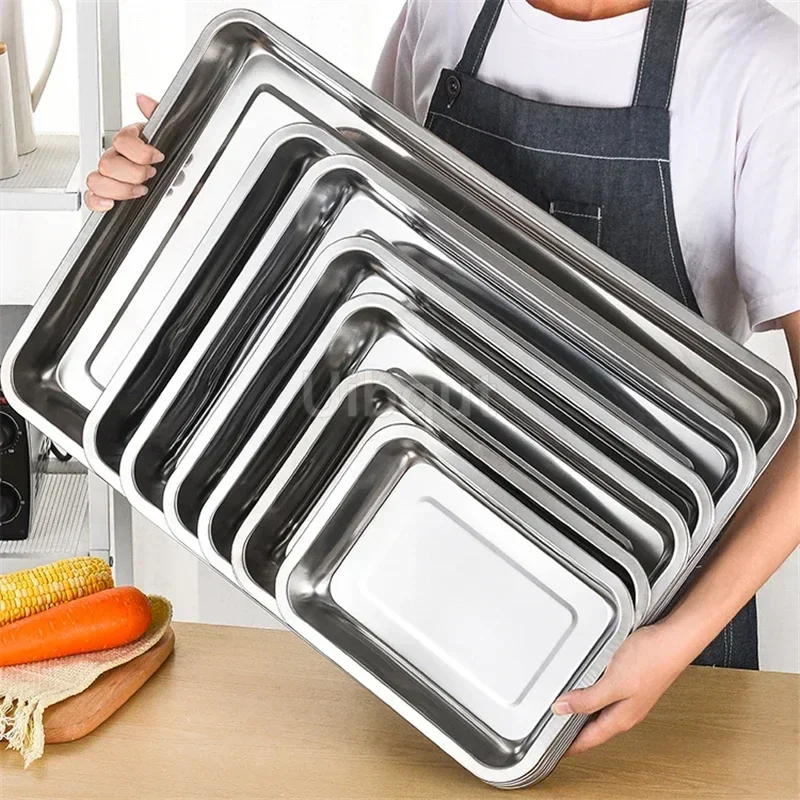
Rectangular commercial and household square plate Steamed fish dish Serving plate Barbecue plate plates set Stainless steel tray
For a versatile option, consider the Rectangular commercial and household square plate set, which includes a steamed fish dish and barbecue tray in durable stainless steel.
Frequently asked questions
Are stainless steel serving plates dishwasher safe?
Most are, but hand washing is recommended to maintain the finish. Check the manufacturer’s guidelines.
Can stainless steel plates be used in the oven?
Yes, if they are labeled oven-safe. Avoid sudden temperature changes to prevent warping.
Do stainless steel plates react with acidic foods?
High-quality 18/8 or 18/10 stainless steel is non-reactive, so it’s safe for acidic foods like tomatoes or citrus.
How do I remove scratches from stainless steel plates?
Minor scratches can be buffed out with a fine-grit abrasive pad. For deep scratches, consider replacing the plate.
