
Blog
Bone China Dinnerware: Elegance Meets Durability
Dinnerware Guide
Choose Stunning Bone China Dinnerware for Your Table
Bone china dinnerware combines strength and delicate beauty, making it a beloved choice for both daily meals and special occasions. This guide will help you navigate the world of fine porcelain.
What Makes Bone China Dinnerware Special?
Bone china is a type of porcelain that includes bone ash, which gives it a unique translucency, whiteness, and strength. Unlike standard ceramics, bone china is lighter yet more chip-resistant. This makes bone china dinnerware a practical luxury for everyday use. The material’s history dates back to 18th-century England, where it was developed to compete with imported Chinese porcelain. Today, it remains a symbol of refinement.
Key characteristics include:
- High translucency when held to light
- Smooth, non-porous surface
- Exceptional durability despite thin walls
- Resistance to thermal shock
When shopping for bone china dinnerware, look for pieces that feel balanced in hand and have a clear, bell-like ring when tapped. Genuine bone china contains at least 25% bone ash.
Types of Bone China Dinnerware Pieces
A complete set typically includes dinner plates, salad plates, bowls, and cups. However, modern collections often offer specialized items like deep dishes, soup pots, and steak flat plates. Each piece serves a distinct purpose:
Plates
Dinner plates (10-11 inches) are the workhorses. Salad or dessert plates (8-9 inches) are versatile for appetizers. Steak flat plates may have a slight rim to catch juices.
Bowls
Rice bowls are deeper and smaller, while large pasta or soup bowls hold generous portions. Deep dishes are excellent for stews or ramen.
Serving Pieces
Soup pots with lids keep contents warm. Platters and tureens complete the service. Many sets include a teapot or coffee pot for a coordinated look.
Consider your dining habits: if you host formal dinners, opt for a full set; for everyday use, a 16-piece service for four is sufficient.
How to Choose the Best Bone China Dinnerware Set
Selecting bone china dinnerware involves balancing aesthetics, functionality, and budget. Start by assessing your lifestyle:
- Microwave and dishwasher safe? Most modern bone china is, but verify.
- Stackability: Plates with recessed bases stack neatly.
- Design: Classic white or delicate floral patterns suit traditional tables; minimalist designs fit modern decor.
Check for uniformity in color and shape. High-quality pieces are free of pinholes, bumps, or crazing (fine cracks). The glaze should be smooth and glossy. A reputable brand will offer a warranty against manufacturing defects.
For those seeking a floral touch, consider sets with hand-painted motifs. Learn more about bone china on Wikipedia.
Caring for Your Bone China Dinnerware
Proper care ensures your bone china dinnerware lasts for generations. Despite its strength, avoid extreme temperature changes: don’t place a cold dish into a hot oven. Hand washing is recommended for gold-trimmed or hand-painted pieces. Use mild detergent and a soft sponge. If using a dishwasher, choose a gentle cycle and avoid abrasive detergents.
Storage tips:
- Use felt or paper plate separators to prevent scratching.
- Stack cups and bowls with care to avoid chipping.
- Store in a cabinet with adjustable shelves to avoid overcrowding.
For stubborn stains, a paste of baking soda and water can gently clean without scratching.
Bone China vs. Porcelain vs. Stoneware
Understanding differences helps you choose. Bone china is lighter and more translucent than porcelain, which is also vitrified but lacks bone ash. Stoneware is heavier, less refined, but more casual. Bone china dinnerware offers the best of both worlds: elegance and durability. It is more expensive than stoneware but less costly than fine porcelain. For daily use, bone china is a superior investment because it withstands wear while maintaining beauty.
If you prioritize chip resistance and a delicate feel, bone china wins. For rustic charm, stoneware; for ultra-formal settings, hard-paste porcelain.
Top Patterns and Styles in Bone China Dinnerware
From traditional to contemporary, patterns abound. Floral designs remain perennially popular, adding a romantic touch. Geometric patterns suit modern homes. Some sets feature multiple coordinating patterns for mixing and matching. When selecting, consider your existing decor and table linens. Neutral colors like white, ivory, or soft gray provide versatility, while bold colors make a statement.
For a cohesive look, choose a pattern that includes dinnerware, serveware, and accessories. Many collections offer open stock, allowing you to add pieces over time.
Budgeting for Bone China Dinnerware
Prices vary widely. Entry-level sets (4-piece place settings) start around $50–$100. Mid-range sets with better quality and design run $150–$300. High-end bone china can exceed $500 per place setting. Determine your budget and prioritize pieces you use most. Often, buying a set is more economical than individual pieces. Look for sales or outlet stores for discounts.
Remember, bone china dinnerware is an heirloom investment. Spending a bit more for durability and timeless design pays off.
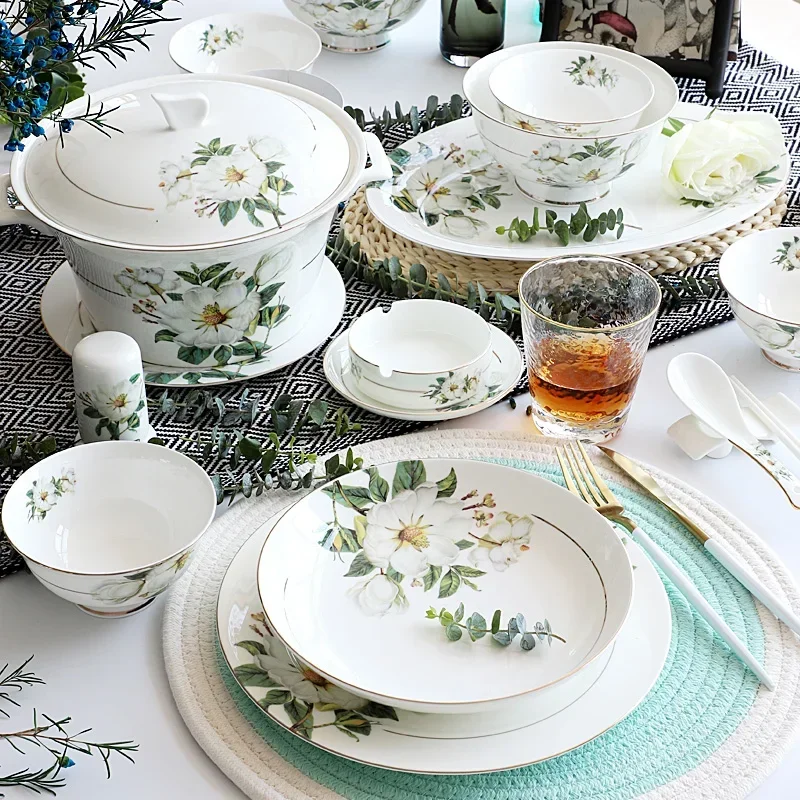
Bone China Dinnerware, Household Ceramic Rice Bowl, Deep Dishes, Soup Pots, Steak Flat Plate, Delicate Floral Tableware
For a beautiful and practical option, consider the Bone China Dinnerware set featuring delicate floral patterns, including rice bowls, deep dishes, soup pots, and steak flat plates.
Frequently asked questions
Is bone china dinnerware microwave and dishwasher safe?
Most modern bone china is microwave and dishwasher safe, but always check the manufacturer’s instructions. Pieces with metallic accents (gold or platinum trim) are not microwave safe and should be hand-washed to preserve the finish.
How can I tell if bone china is genuine?
Genuine bone china is translucent when held to light, has a smooth glaze, and produces a clear ring when tapped. Look for labels indicating it contains at least 25% bone ash. Reputable brands will clearly state ‘bone china’.
Can I mix bone china with other dinnerware?
Yes, mixing bone china with other materials like stoneware or glass can create an eclectic table setting. Just ensure the pieces have a similar weight and scale for visual harmony.
What is the best way to remove tea or coffee stains from bone china?
Make a paste with baking soda and water, gently rub onto the stain, then rinse. For stubborn stains, soak in a solution of mild bleach and water (1 part bleach to 10 parts water) for no more than an hour, then wash thoroughly.
