
Blog
The Essential Guide to Choosing Tart Rings
Baking Essentials
Your Complete Guide to Tart Rings for Perfect Pastry
Tart rings are the unsung heroes of the pastry kitchen, shaping everything from delicate fruit tarts to hearty quiches. Whether you’re a home baker or a professional, choosing the right tart rings can elevate your baking game.
Why Tart Rings Matter in Baking
Tart rings are more than just molds; they are precision tools that ensure even baking and a professional finish. Their straight sides create crisp, uniform edges, while the removable bottom (in some designs) makes unmolding a breeze. Unlike tart pans with fluted edges, rings offer versatility for both sweet and savory creations.
Key Factors When Choosing Tart Rings
Selecting the right tart rings involves considering material, size, and construction. Here are the most important aspects:
- Material: Stainless steel is durable, rust-resistant, and conducts heat evenly. Aluminum is lightweight but may warp over time. Non-stick coatings can be convenient but may scratch.
- Size: Common sizes range from 3 to 12 inches in diameter. For individual servings, 4-inch rings are popular; for larger tarts, 9-10 inches work well. Depth typically varies from 1 to 1.5 inches.
- Perforated vs. Solid: Perforated tart rings allow steam to escape, preventing soggy bottoms and promoting a crisp crust. Solid rings are better for wet fillings like custards.
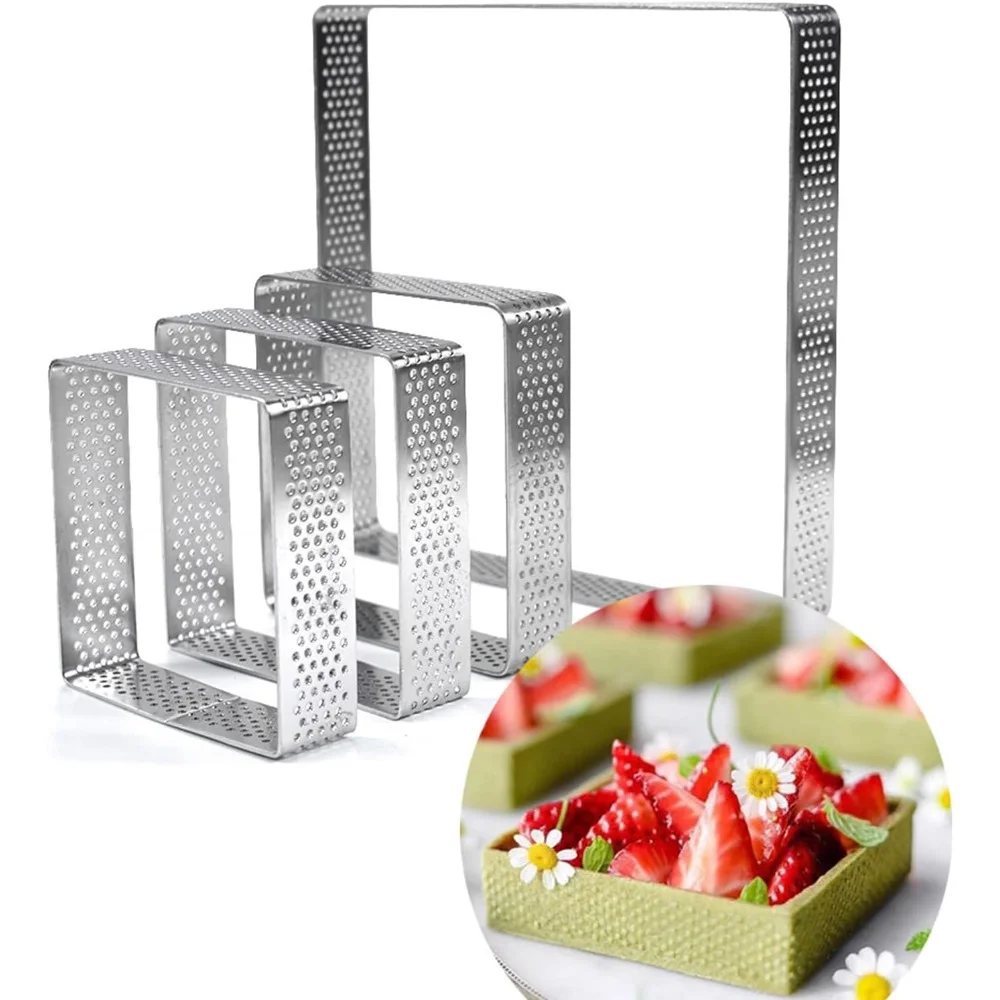
- Shape: Round is classic, but square and rectangular rings offer a modern twist. Square rings maximize space in the oven and are ideal for layered desserts.
How to Use Tart Rings Effectively
Using tart rings is straightforward, but a few tips ensure success:
Preparing the Dough
Roll out your pastry to an even thickness, slightly larger than the ring. Press the dough into the ring, ensuring it reaches the edges and corners. Chill thoroughly before baking to minimize shrinkage.
Blind Baking
Line the ring with parchment and fill with pie weights or dried beans. Bake at the recommended temperature until the edges are golden. Remove weights and continue baking until the base is dry.
Unmolding
Allow the tart to cool slightly before removing the ring. For perforated rings, gently lift the ring upward; the tart should release easily. If sticking, run a knife around the edge.
Materials Compared: Stainless Steel vs. Aluminum vs. Carbon Steel
Each material offers distinct benefits for tart rings:
- Stainless Steel: Resists corrosion, dishwasher-safe, and provides even heat distribution. Perforated stainless steel rings are excellent for puff pastry and breads.
- Aluminum: Lightweight and affordable, but can react with acidic foods and may dent. Often used for disposable rings.
- Carbon Steel: Heats up quickly and develops a non-stick patina over time. Requires seasoning and hand washing.
For most bakers, stainless steel offers the best balance of durability and performance. Learn more about stainless steel properties on Wikipedia.
Size Guide: Matching Tart Rings to Your Recipes
Choosing the right size depends on your recipe and serving needs. Here’s a quick guide:
- Mini (3-4 inches): Perfect for individual desserts, appetizers, or tartlets. Often used for petits fours.
- Standard (8-9 inches): The classic size for fruit tarts, quiches, and cheesecakes. Serves 6-8 people.
- Large (10-12 inches): Ideal for party-sized tarts or deep-dish pies. Adjust baking time accordingly.
Square tart rings offer a unique shape that stands out on a dessert table. They also stack neatly for storage.
Care and Maintenance of Tart Rings
Proper care extends the life of your tart rings:
- Hand wash with mild soap and warm water to avoid scratching. Dry immediately to prevent water spots.
- For stainless steel, occasional polishing with a stainless steel cleaner restores shine.
- Store rings flat or nested with parchment between to prevent denting.
- Never use abrasive cleaners or metal scouring pads on any tart ring.
Common Mistakes to Avoid with Tart Rings
Even experienced bakers can run into issues. Here are pitfalls to watch for:
- Skipping the chill: Failing to chill the dough-lined ring leads to shrinkage during baking.
- Overfilling: Fill the ring only two-thirds full to prevent spillover.
- Using too much grease: Lightly butter the ring, but excess oil can make the crust greasy.
- Ignoring perforations: For perforated rings, always use a solid baking sheet underneath to catch drips.
5PCS Square Shape Stainless Steel Perforated Tart Rings for Baking Puff Breads French Cake Mousse Tart Shell Mold Bakeware Rings
For a reliable set that covers most needs, consider the 5PCS Square Shape Stainless Steel Perforated Tart Rings, designed for even baking and easy release.
Frequently asked questions
What is the best material for tart rings?
Stainless steel is widely considered the best due to its durability, even heat conduction, and resistance to rust. It’s suitable for both sweet and savory bakes.
Can I use tart rings without a removable bottom?
Yes, but you may need to line the ring with parchment paper for easy removal. Alternatively, you can use a spatula to gently lift the tart out after cooling.
How do I prevent my tart crust from shrinking?
Chill the dough-lined ring for at least 30 minutes before baking. Also, avoid stretching the dough when pressing it into the ring.
Are perforated tart rings better than solid ones?
Perforated rings are ideal for crisp crusts as they allow steam to escape. Solid rings are better for wet fillings like custards or cheesecakes to prevent leakage.