
Blog
Best Induction Cookware: Top Picks for 2024
Kitchen Guide
Find the Best Induction Cookware for Your Kitchen
Searching for the best induction cookware can feel overwhelming with so many options. We’ve researched the key factors to help you make a smart choice.
What Makes Cookware Induction-Compatible?
Induction cooktops use magnetic fields to heat pans directly, so cookware must be ferromagnetic. A simple test: if a magnet sticks to the bottom, it will work. Most stainless steel, cast iron, and some nonstick pans are compatible. Avoid aluminum or copper unless they have a magnetic base.
Materials: Pros and Cons
Each material offers different benefits. Stainless steel is durable and oven-safe but can stick if not preheated properly. Cast iron retains heat beautifully but is heavy. Nonstick coatings make cooking and cleanup easy but wear over time. For the best induction cookware, consider your cooking style.
- Stainless Steel: Best for searing and deglazing; requires oil to prevent sticking.
- Cast Iron: Excellent heat retention; ideal for slow cooking and frying.
- Nonstick: Great for eggs and delicate foods; low maintenance.
Key Features to Look For
When shopping for the best induction cookware, check for a thick, flat base to ensure even heating and prevent warping. Riveted handles stay secure, and oven-safe lids add versatility. A good set includes multiple pot sizes and a frying pan. For more details, see this Wikipedia article on induction cooking.
Base Thickness
A thick base (at least 4-5 mm) distributes heat evenly and reduces hot spots. Look for encapsulated bases with aluminum or copper cores surrounded by stainless steel.
Handle Design
Handles should stay cool on the stovetop and be ergonomic. Some are silicone-coated for extra grip.
Top Materials Compared
We compared stainless steel, cast iron, and nonstick to help you choose the best induction cookware for your needs.
- Stainless Steel: Durable, dishwasher-safe, and works with all cooktops. Needs a little oil to prevent sticking.
- Cast Iron: Unmatched heat retention but heavy and requires seasoning.
- Nonstick: Easy cleanup, but coatings can scratch; use wooden or silicone utensils.
Maintenance Tips for Longevity
To extend the life of your best induction cookware, avoid overheating empty pans, use low to medium heat, and hand wash when possible. For nonstick, avoid metal utensils and abrasive cleaners.
How to Build a Versatile Set
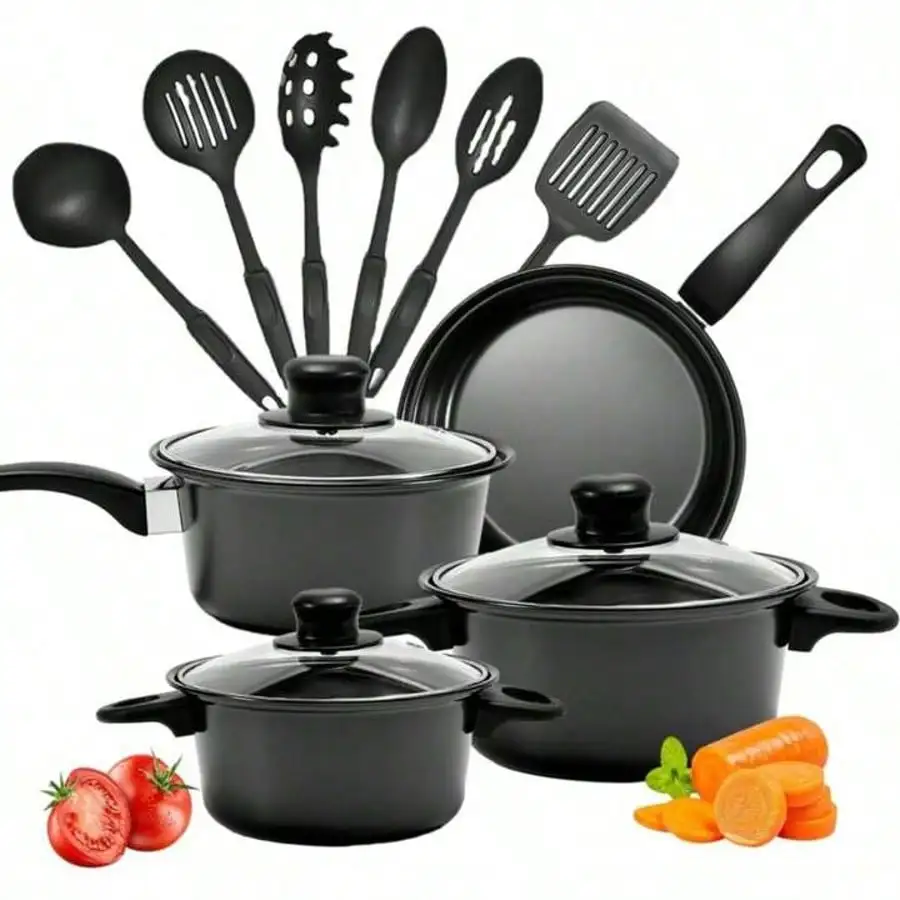
A well-rounded collection includes a 10-inch frying pan, a 2-quart saucepan, a 5-quart Dutch oven, and a stockpot. Consider your family size and cooking habits. For camping or small kitchens, a compact set like the 13 Piece Nonstick Kitchenware Set Induction Pots and Spoons Kit, Black Frying Pan & Milk Pot Perfect for Family Dinner & Camping offers convenience and portability.
Frequently Overlooked Details
Check that lids fit snugly to trap steam, and that pots have pouring rims. Oven-safe cookware expands your recipes. Always verify induction compatibility before buying.
13 Piece Nonstick Kitchenware Set Induction Pots and Spoons Kit, Black Frying Pan & Milk Pot Perfect for Family Dinner & Camping
For a versatile starter set, the 13 Piece Nonstick Kitchenware Set Induction Pots and Spoons Kit offers everything you need for family meals and camping trips.
Frequently asked questions
Can I use any cookware on an induction cooktop?
No, only cookware with a magnetic base works. Test with a magnet; if it sticks, it’s compatible.
What is the best material for induction cookware?
It depends on your needs. Stainless steel is durable, cast iron retains heat, and nonstick is easy to clean.
How do I clean induction cookware?
Most are dishwasher-safe, but hand washing with mild soap is recommended to preserve nonstick coatings.
Is induction cooking more energy-efficient?
Yes, induction heats pans directly, wasting less energy than gas or electric, and it’s faster.
