
Blog
The Complete Guide to Choosing a Vintage Sideboard
Buying Guide
Your Guide to the Perfect Vintage Sideboard
A vintage sideboard adds character and storage to any room. Whether you’re styling a living room or hallway, this guide helps you find the ideal piece for your space.
Why Choose a Vintage Sideboard?
A vintage sideboard offers timeless charm and practical storage. Unlike modern alternatives, each piece tells a story through its craftsmanship and materials. Whether you need extra space for dinnerware or a surface for decor, a sideboard combines form and function.
Key Features to Look For
When shopping for a vintage sideboard, consider these elements:
- Material: Solid wood like oak, walnut, or teak ensures longevity. Look for dovetail joints and quality hardware.
- Storage: Drawers, cabinets, and shelves should fit your needs. Adjustable shelves offer flexibility.
- Style: From mid-century modern to Victorian, choose a design that complements your decor.
- Condition: Minor wear adds character, but check for structural damage or pests.
Popular Styles of Vintage Sideboards
Explore different eras to find your perfect match:
Mid-Century Modern
Clean lines, tapered legs, and warm wood tones define this style. Ideal for minimalist or retro interiors.
Art Deco
Geometric patterns, mirrored surfaces, and rich veneers make Art Deco sideboards statement pieces.
Farmhouse
Distressed finishes, beadboard details, and sturdy construction suit cozy, rustic spaces.
How to Incorporate a Vintage Sideboard in Your Home
A vintage sideboard works beautifully in living rooms, dining rooms, or hallways. Use it to store linens, display art, or as a bar area. Pair it with modern accessories for contrast or keep it authentic with era-appropriate decor.
Caring for Your Vintage Sideboard
Preserve its beauty with these tips:
- Dust regularly with a soft cloth.
- Use coasters and placemats to prevent water rings.
- Avoid direct sunlight to prevent fading.
- Polish with beeswax every few months.
Where to Find Quality Vintage Sideboards
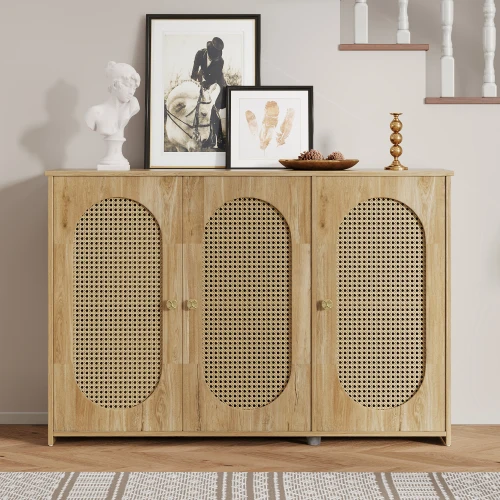
Antique shops, estate sales, and online marketplaces are great sources. Look for reputable sellers who disclose condition and history. If you prefer a curated option, consider a piece like the Vintage 3-Door Sideboard with faux rattan doors and metal handles, offering large storage and antique charm.
Vintage 3-Door Sideboard Faux Rattan Doors Metal Handles Large Storage Antique for Living Room Hallway Decorative Cabinets Wood
For a ready-to-use option with vintage flair, the Vintage 3-Door Sideboard with faux rattan doors and metal handles offers ample storage and antique appeal.
Frequently asked questions
What is the difference between a sideboard and a buffet?
Historically, a sideboard is used in dining rooms for serving and storage, often with a flat top. A buffet is similar but may have taller legs and more open shelving. Today, the terms are often used interchangeably.
How do I determine the value of a vintage sideboard?
Value depends on age, craftsmanship, materials, rarity, and condition. Look for brand marks, examine joinery, and research comparable sales online. A professional appraisal can provide an accurate estimate.
Can I paint a vintage sideboard?
Yes, but painting can reduce value if the piece is a collectible. If you decide to paint, use a primer and chalk paint for a durable finish. Consider leaving the original wood if it’s in good condition.
What size sideboard do I need?
Measure your wall space and allow for clearance. A standard sideboard is 48-60 inches wide, 18-24 inches deep, and 30-36 inches tall. Ensure it doesn’t overwhelm the room.