
Blog
Distressed Wood Sideboard Buying Guide: Charm & Storage
Buying Guide
The Ultimate Distressed Wood Sideboard Buying Guide
A distressed wood sideboard brings warmth and character to any room, blending rustic charm with practical storage. Whether you’re styling a dining room or entryway, this guide helps you find the perfect piece.
Why Choose a Distressed Wood Sideboard?
A distressed wood sideboard offers more than just storage—it adds a lived-in, welcoming feel to your home. The intentional wear marks, knots, and color variations make each piece unique. Perfect for farmhouse, cottage, or eclectic interiors, these sideboards hide daily scuffs and age gracefully. They work as a buffet, media console, or display cabinet, proving their versatility.
Key Features to Look For
When shopping for a distressed wood sideboard, consider construction and finish. Look for solid wood (like pine or mango) for durability. The distressing should look natural, not artificial. Check for dovetail drawers, soft-close hinges, and ample shelving. A quality piece will have a protective topcoat that prevents stains while maintaining the textured look.
Wood Types and Their Characteristics
Common woods for distressed sideboards include pine (lightweight, affordable), mango (hard, rich grain), and acacia (water-resistant, durable). Each takes distressing differently. Pine shows dents easily, adding to the rustic appeal, while mango offers a smoother patina. Learn more about wood types to understand grain and hardness.
Pine vs. Mango vs. Acacia
Pine is budget-friendly and light, perfect for coastal or shabby chic styles. Mango is eco-friendly (often reclaimed) and very hard. Acacia is dense and resists moisture, ideal for humid areas. Choose based on your climate and desired look.
Styling Your Distressed Wood Sideboard
Style your distressed wood sideboard with contrasting elements: sleek metal lamps, woven baskets, or fresh greenery. Keep the top balanced—layered art, a mirror, and ceramic vases work well. For a cohesive look, match the wood tone to other furniture. The distressed wood sideboard anchors the room without overpowering it.
Room Placement Ideas
In the dining room, use it as a buffet for serving dishes and linens. In the living room, it becomes a media console hiding cables. In an entryway, it offers drop-off storage for keys and mail. Measure your space first—allow at least 3 feet of clearance for walkways.
Maintenance Tips for Longevity
Dust with a soft cloth; avoid harsh chemicals that strip the finish. Use coasters and placemats to prevent rings. If the distressed surface gets scratched, lightly sand and reapply wax. A distressed wood sideboard actually improves with minor wear, but proper care keeps it beautiful for decades.
Budgeting for Your Purchase
Prices vary by wood type, size, and craftsmanship. Entry-level pieces start around $300, while handcrafted options exceed $1,000. Set a budget that prioritizes solid wood over veneer. Remember, a well-made distressed wood sideboard is an investment in your home’s character.
Where to Buy
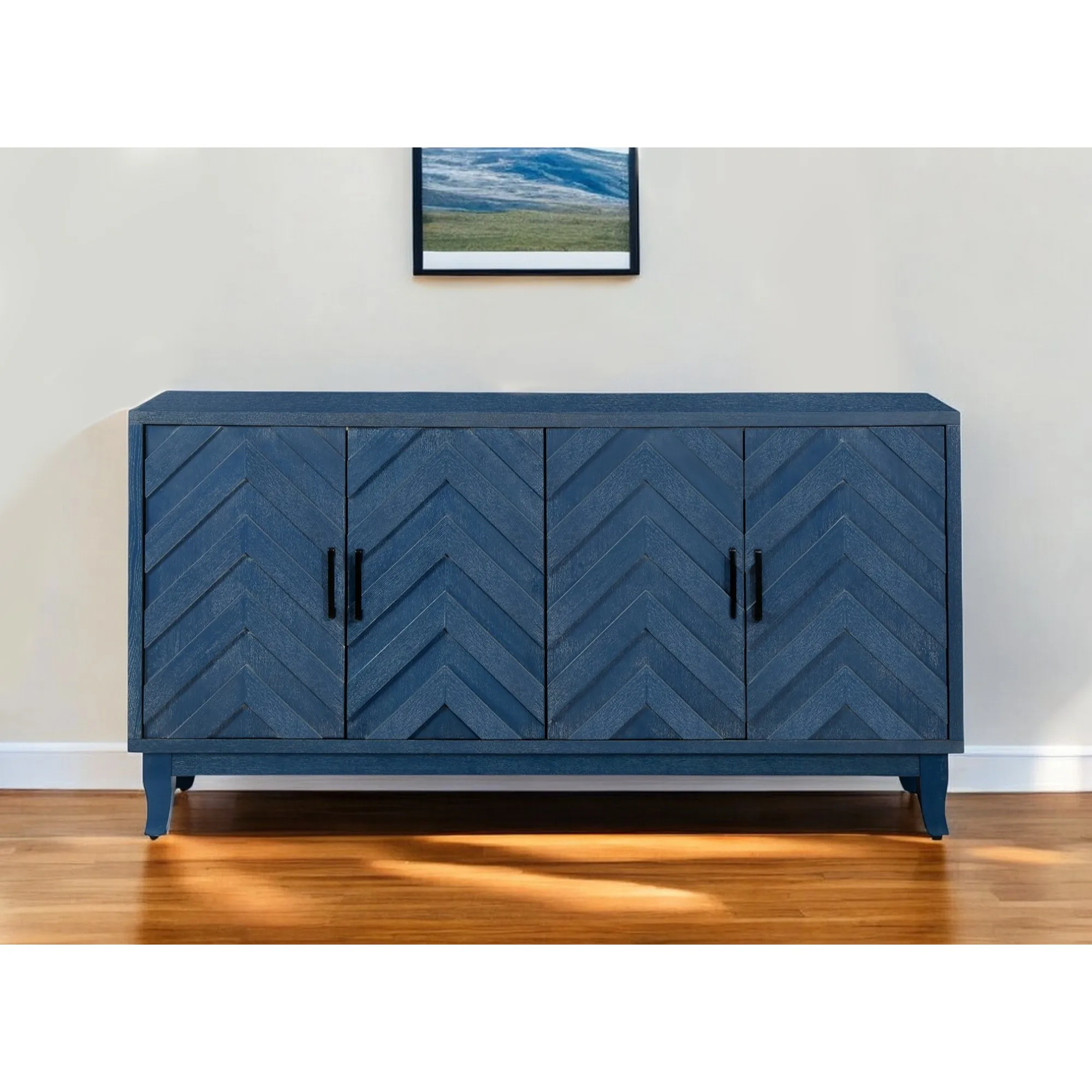
Explore online retailers that specialize in rustic furniture, or visit local antique shops for one-of-a-kind finds. Read reviews and check return policies. If you’re looking for a modern take on the classic style, consider the 60 Blue Textural Chevron Distressed Wood Sideboard with Four Doors, which combines distressed texture with a bold blue hue.
60 Blue Textural Chevron Distressed Wood Sideboard with Four Doors
For a modern twist, the 60 Blue Textural Chevron Distressed Wood Sideboard with Four Doors offers a striking blue finish and textured chevron pattern that complements both rustic and contemporary spaces.
Frequently asked questions
What is a distressed wood sideboard?
A distressed wood sideboard is a storage cabinet with intentionally worn surfaces, dents, and color variations that give it a vintage, rustic look. It typically has doors and drawers for organizing dining or living room items.
How do I clean a distressed wood sideboard?
Dust regularly with a soft, dry cloth. For spills, wipe immediately with a damp cloth and dry. Avoid abrasive cleaners or waxes that can alter the distressed finish. Use furniture polish sparingly.
Is distressed wood durable?
Yes, the distressed finish actually hides scratches and wear better than pristine surfaces. Solid wood construction ensures longevity. The intentional wear means it ages gracefully, often looking better over time.
Can I paint a distressed wood sideboard?
Yes, you can repaint or refinish it, but it will cover the original distressing. If you want a new color, lightly sand and use chalk paint for a matte finish. Test a small area first to ensure adhesion.