
Blog
How to Choose Soft Absorbent Towels for Your Home
Bathroom Essentials
Soft Absorbent Towels That Transform Your Daily Routine
Soft absorbent towels are the unsung heroes of a spa-like bathroom experience. The right towel can turn a simple shower into a moment of comfort, drying you gently while wicking away moisture efficiently.
Why Soft Absorbent Towels Matter More Than You Think
We use towels daily, yet few of us give them much thought. A truly soft absorbent towel does more than dry—it comforts. The fibers nestle against skin, lifting water without harsh rubbing. This matters especially for sensitive skin or young children. Beyond feel, absorbency affects drying time and hygiene. Towels that stay damp too long can harbor bacteria. Investing in quality means fewer washes, less waste, and a better experience every time you step out of the bath.
What Makes a Towel Soft and Absorbent? Key Factors Explained
Not all towels are created equal. Here’s what to look for:
- Fiber length: Long-staple cotton (like Egyptian or Supima) has fewer joins, creating smoother, stronger threads that feel softer and last longer.
- Weave and construction: Zero-twist or low-twist loops increase surface area for absorption. Open-loop weaves dry faster but may snag; dense loops offer plushness but take longer to dry.
- GSM (grams per square meter): A GSM of 400–600 is ideal for a balance of absorbency and quick drying. Below 400 feels thin; above 600 can be heavy and slow to dry.
- Finishing processes: Combing removes short fibers and debris, resulting in a softer hand feel. Some brands use silicone softeners that reduce absorbency—opt for natural softness instead.
For a deeper dive into cotton types and their properties, the Wikipedia article on cotton offers excellent background.
Best Materials for Soft Absorbent Towels: Cotton vs. Bamboo vs. Linen
Cotton remains the gold standard for soft absorbent towels. Bamboo rayon is soft and eco-friendly but can lose absorbency after many washes due to fiber degradation. Linen is highly absorbent and dries quickly, but it feels rougher initially and softens over time. For everyday luxury, 100% combed long-staple cotton is unbeatable. It offers a plush feel, excellent water pickup, and durability. Avoid blends with polyester—they reduce absorbency and can feel scratchy.
How to Choose the Right GSM for Your Needs
GSM determines weight and performance. Lightweight towels (300–400 GSM) are quick-drying and great for travel or gym use. Mid-weight (400–600 GSM) strikes the perfect balance for bathroom towels—absorbent yet fast-drying. Heavyweight (600+ GSM) feels like a spa towel but can take hours to dry, which may lead to musty odors in humid climates. For face and hands, a lower GSM (300–450) works well; for bath and body, aim for 500–600 GSM.
Caring for Your Towels to Maintain Softness and Absorbency
Even the best soft absorbent towels can become stiff and less absorbent without proper care. Follow these tips:
- Wash before first use to remove manufacturing residues.
- Use half the recommended detergent—excess soap builds up and blocks fibers.
- Avoid fabric softeners and dryer sheets; they coat fibers and reduce absorbency.
- Add half a cup of white vinegar to the rinse cycle every few washes to strip residue.
- Tumble dry on low or line dry. Overdrying makes fibers brittle.
- Shake towels before folding to fluff loops.
With care, quality towels can stay soft for years.
Common Towel Mistakes That Ruin Softness and Absorbency
Many people unknowingly damage their towels. Overloading the washer prevents proper rinsing, leaving detergent trapped. Using too much detergent or bleach breaks down fibers. High heat drying shrinks and stiffens. Washing towels with zippers or hooks snags loops. And folding damp towels invites mildew. Avoid these pitfalls to keep your soft absorbent towels performing at their best.
Towels for Every Use: Face, Hands, Bath, and Kids
Different tasks call for different towel qualities. Face towels should be ultra-soft and gentle, with a lower GSM to avoid irritation. Hand towels need quick drying and a compact size. Bath towels prioritize absorbency and plushness. Kids’ towels often benefit from smaller dimensions and playful designs, but the same softness and absorbency standards apply. A versatile set that covers all uses simplifies shopping and ensures consistency.
How to Test Absorbency Before You Buy
If you’re shopping online, look for customer reviews that mention “dries well” or “soaks up water quickly.” Check the product details for fiber type and GSM. A simple home test: place a drop of water on the towel—if it soaks in immediately, the towel is absorbent. If it beads up, it likely has a coating. Also, feel the fabric: a soft hand feel often correlates with good absorbency, but not always—some towels are soft due to chemicals that hinder absorption.
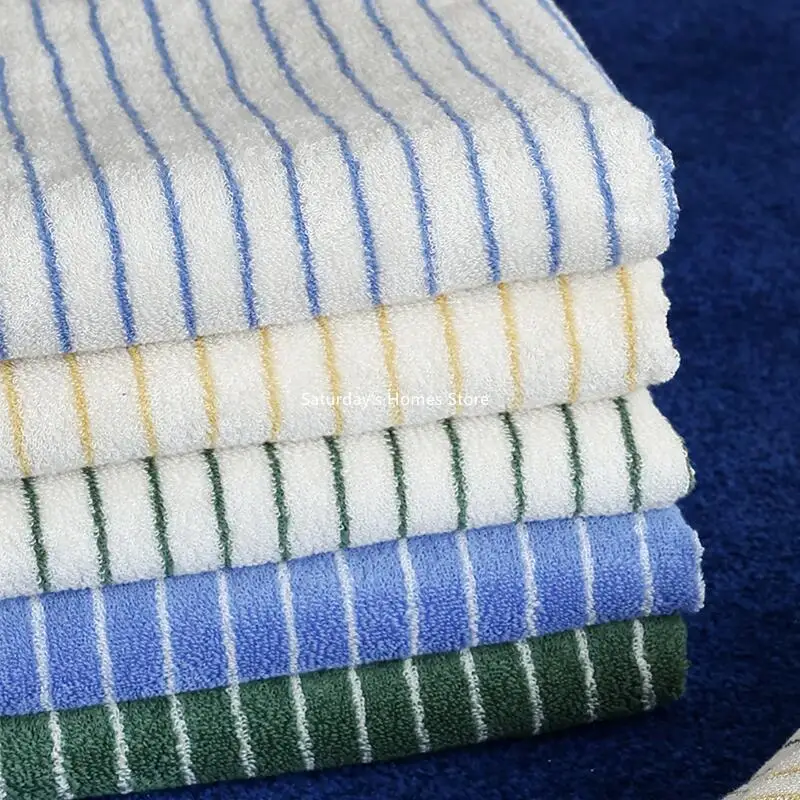
Striped Geometric Rhombuses Cotton Towels Soft Absorbent Face Towel Combed Long Staple Kids Hands Towel Adult Bath Household To
For a reliable choice that combines softness and absorbency, consider Goldoma’s Striped Geometric Rhombuses Cotton Towels, made from combed long-staple cotton with a balanced GSM.
Frequently asked questions
What does GSM mean in towels?
GSM stands for grams per square meter, measuring fabric density. For soft absorbent towels, 400–600 GSM is ideal—it offers good absorbency without being too heavy or slow to dry.
Why do my towels feel stiff after washing?
Stiffness often results from detergent buildup, hard water minerals, or using fabric softener. Try washing with half the detergent and adding white vinegar to the rinse cycle to restore softness.
Are bamboo towels more absorbent than cotton?
Bamboo rayon can be very soft and absorbent initially, but it may lose absorbency over time due to fiber breakdown. High-quality long-staple cotton typically maintains absorbency longer with proper care.
How often should I replace my bath towels?
With proper care, quality towels last 2–3 years. Replace them when they lose absorbency, develop frayed edges, or feel rough even after washing.