
Blog
How to Choose the Perfect Rubberwood Dining Table
Buying Guide
Your Complete Rubberwood Dining Table Guide
A rubberwood dining table offers a unique blend of sustainability and durability that makes it a top choice for modern homes. In this guide, we’ll walk you through everything you need to know to find the perfect one.
What Makes a Rubberwood Dining Table Special?
Rubberwood is a hardwood harvested from rubber trees that have reached the end of their latex-producing life. Instead of being discarded, the wood is repurposed into furniture, making it an eco-friendly choice. Its tight grain and light color accept stains beautifully, so you can find rubberwood dining tables in a range of finishes from natural to dark espresso. The wood is also resistant to warping and cracking, especially when properly kiln-dried.
One of the biggest advantages of a rubberwood dining table is its affordability compared to other hardwoods like oak or maple. You get the look and feel of a premium wood without the premium price tag. Plus, rubberwood is surprisingly heavy and sturdy, ensuring your table will last for years of family meals and gatherings.
Key Factors to Consider When Buying
Before you start shopping, think about your space and lifestyle. Here are the most important factors:
- Size and Shape: Measure your dining area carefully. Oval tables are great for narrow rooms, while rectangular ones fit longer spaces. Round tables encourage conversation but take up more visual space.
- Leaf Options: Many rubberwood dining tables come with extension leaves. If you host often, look for a table with built-in storage for the leaves.
- Finish and Color: Rubberwood takes stain well. Antique white finishes offer a farmhouse look, while dark walnut feels more formal. Consider your existing decor.
- Construction Quality: Check for solid wood construction (not veneer on particleboard) and sturdy joinery. Dovetail joints or metal brackets indicate good craftsmanship.
Rubberwood vs. Other Hardwoods
You might wonder how a rubberwood dining table compares to oak, maple, or walnut. Rubberwood is generally less expensive and more sustainable, but it is also slightly softer. This means it can dent more easily than oak, but it is still harder than pine. For everyday use, rubberwood holds up well. If you have young children, consider a table with a durable finish that can withstand spills and scratches.
Another difference is grain pattern. Rubberwood has a subtle, straight grain that is less pronounced than oak. This makes it a versatile choice that works with both traditional and modern styles. For more on wood types, check out Wikipedia’s article on rubberwood.
Care and Maintenance Tips
To keep your rubberwood dining table looking its best, follow these simple care tips:
- Use coasters and placemats to prevent heat rings and stains.
- Wipe up spills immediately with a soft, damp cloth.
- Avoid placing the table in direct sunlight to prevent fading.
- Apply a quality furniture polish or wax every few months to maintain the finish.
- Use felt pads under heavy objects to prevent dents.
With minimal care, your rubberwood table will remain beautiful for decades.
Styling Your Rubberwood Dining Table
A rubberwood dining table is a blank canvas for your dining room decor. For a rustic look, pair it with farmhouse chairs and a linen runner. For a modern vibe, choose sleek metal or upholstered chairs. Add a centerpiece like a vase of fresh flowers or a wooden bowl to anchor the table. Remember to balance function and style: leave enough space for place settings and serving dishes.
If you love the idea of a rubberwood table but want a unique shape, consider an oval design. Oval tables are great for conversation and fit comfortably in both small and large rooms. They also eliminate sharp corners, making them safer for households with kids.
Common Myths About Rubberwood
Some people think rubberwood is not real wood or that it is low quality. That’s not true. Rubberwood is a genuine hardwood that is dense and durable. Another myth is that it is not eco-friendly because it comes from monoculture plantations. In reality, using rubberwood furniture gives a second life to trees that would otherwise be burned. It’s a sustainable choice.
Finally, don’t confuse rubberwood with rubber tree sap. The wood itself is non-toxic and safe for dining tables. So you can enjoy your meals without worry.
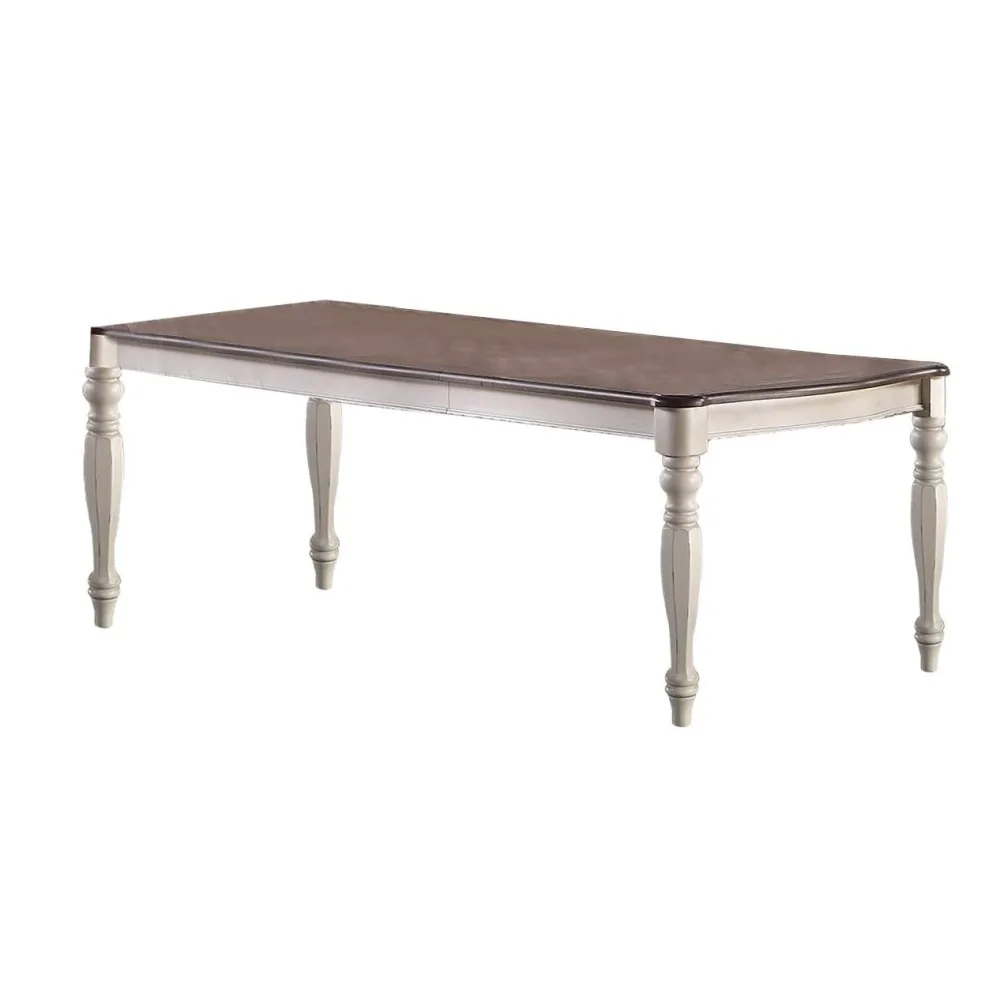
Antique White Oval Dining Table with 2 Leaves – Rubberwood & Oak Veneer
For a beautiful and practical option, consider our Antique White Oval Dining Table with 2 Leaves – Rubberwood & Oak Veneer, which combines classic style with everyday durability.
Frequently asked questions
Is rubberwood dining table durable?
Yes, rubberwood is a hardwood that is dense and sturdy. It resists warping and cracking when properly dried, making it a durable choice for everyday use. However, it is slightly softer than oak, so it may dent if subjected to heavy impact.
How do I clean a rubberwood dining table?
Clean your rubberwood table with a soft, damp cloth and mild soap if needed. Avoid harsh chemicals or abrasive cleaners. Wipe spills immediately to prevent stains. Periodically apply furniture polish to maintain the finish.
Can rubberwood be painted or refinished?
Absolutely. Rubberwood accepts paint and stain very well due to its tight grain. You can sand and refinish it multiple times. If you want to change the color, lightly sand the surface and apply a new stain or paint.
Is rubberwood eco-friendly?
Yes, rubberwood is considered an eco-friendly material because it uses wood from rubber trees that have completed their latex production cycle. This reduces waste and promotes sustainable forestry. It is a renewable resource.