
Blog
Curvy Wood Sideboard: A Buyer’s Guide to Elegant Storage
Buying Guide
The Allure of a Curvy Wood Sideboard
A curvy wood sideboard brings warmth and fluidity to any room, blending storage with sculptural charm. Whether you’re styling a dining area or entryway, this piece offers both function and grace.
Why Choose a Curvy Wood Sideboard?
A curvy wood sideboard softens the sharp lines typical of traditional furniture. Its rounded edges and flowing silhouette create a welcoming focal point, while the natural wood grain adds texture. Unlike rigid rectangular cabinets, a curved design invites touch and complements both minimalist and eclectic interiors. The organic shape also helps the piece feel lighter, making it suitable for smaller spaces where visual weight matters.
Key Materials and Craftsmanship
Solid hardwoods like oak, walnut, and teak are prized for durability and rich color. Look for sideboards with dovetail joints or mortise-and-tenon construction—these indicate quality that will last for decades. Veneers can be a budget-friendly option, but ensure the core is plywood or MDF for stability. The finish matters too: a matte lacquer highlights the wood’s natural character, while a glossy sheen offers a more contemporary look. Always check for smooth edges and consistent staining, especially on the curved surfaces.
Wood Selection Tips
- Oak: Prominent grain, very sturdy, takes stain well.
- Walnut: Rich dark tones, naturally elegant, medium hardness.
- Teak: Water-resistant, ideal for humid climates, golden brown hue.
Size and Proportion for Your Space
Measure your wall length and allow at least 6 inches of clearance on each side. The depth typically ranges from 15 to 20 inches—enough for dinnerware but not obstructive. Height should align with your eye level or slightly lower; standard sideboards are 30 to 36 inches tall. A curvy wood sideboard often appears smaller than its actual dimensions due to the tapered edges, so don’t shy away from a larger piece if your room can accommodate it. For open-plan living, consider a piece that echoes other curved elements like an arched mirror or round coffee table.
Storage Configurations and Functionality
Consider what you’ll store: wine glasses, linens, electronics? Adjustable shelves are invaluable for accommodating varying heights. Drawers with soft-close glides keep the experience seamless. Some designs feature open cubbies or glass doors for displaying decorative objects while hiding clutter behind solid panels. A curvy wood sideboard with doors that open fully—ideally 180 degrees—makes access easier. If you plan to use it as a media console, ensure there are cable management cutouts and sufficient ventilation.
Style Integration: From Mid-Century to Modern
The curvy wood sideboard originated in mid-century design but has evolved into a versatile piece. Pair it with tapered legs for a retro vibe, or with a sleek metal base for industrial contrast. In a boho setting, layer it with plants and woven baskets. For a contemporary look, keep the top clear except for a single art piece. The key is balance: let the sideboard’s curves be the star, and choose accessories that echo its organic feel. Avoid overcrowding the surface, as the beauty of the wood deserves breathing room.
Caring for Your Curvy Wood Sideboard
Dust regularly with a soft, dry cloth. Avoid harsh chemicals—use a damp cloth with mild soap only for sticky spots. Place coasters under drinks and use felt pads under heavy objects to prevent scratches. Wood can expand or contract with humidity, so maintain indoor levels between 40-60%. Periodically apply a wood conditioner or wax to preserve the luster, especially on the curved edges where the finish may wear first. Direct sunlight can fade the color over time, so position the sideboard away from windows or use UV-filtering curtains.
Where to Place a Curvy Wood Sideboard
Beyond the dining room, consider the hallway: it offers a landing spot for keys and mail while making a strong first impression. In the living room, it can anchor a seating area and hold media components. A bedroom version works as a dresser alternative, with the curves softening the room’s lines. Even in a home office, it provides storage for supplies while adding warmth to what might be a clinical space. The versatility of a curvy wood sideboard means it adapts to your needs—just ensure it’s easily accessible and not cramped.
For more on the history of curved furniture, see Mid-century modern design.
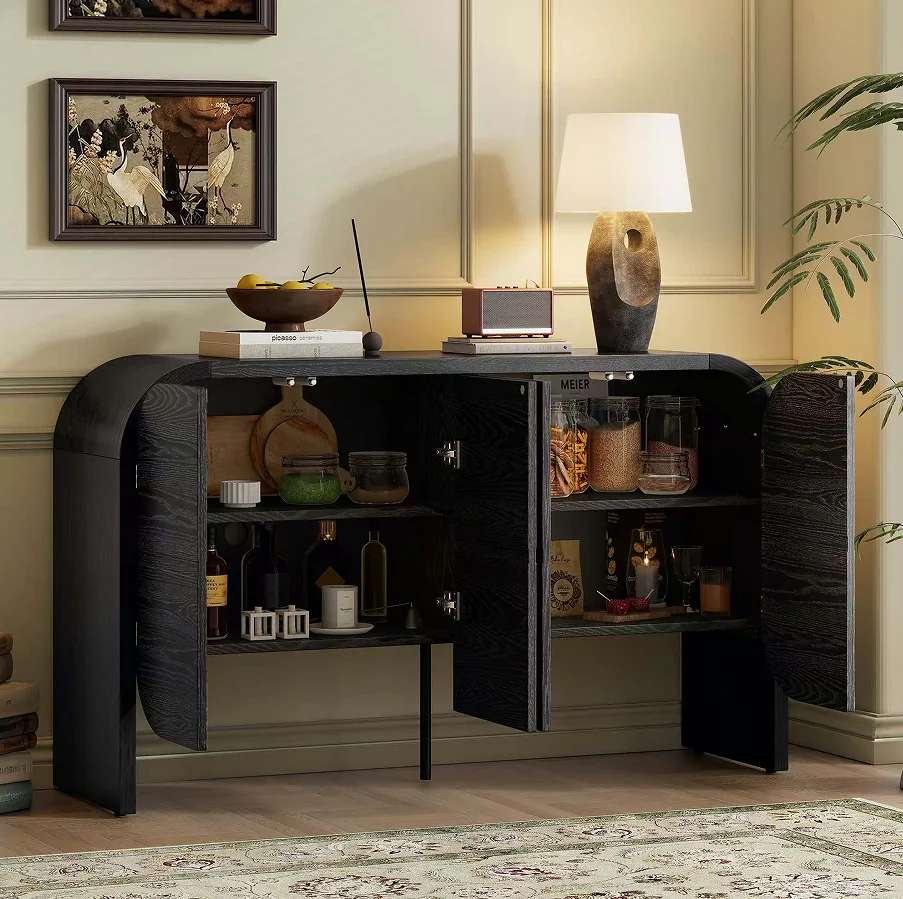
Modern Wood Sideboard Cabinet Curvy Edge 4 Doors Storage Adjustable Shelves Portable Living Room
For a graceful and practical option, consider the Modern Wood Sideboard Cabinet Curvy Edge 4 Doors Storage Adjustable Shelves Portable Living Room, which embodies these design principles.
Frequently asked questions
What is a curvy wood sideboard?
A curvy wood sideboard is a storage cabinet with soft, rounded edges and flowing lines, typically made from solid wood or wood veneer. It combines the functionality of a traditional sideboard with an organic, sculptural aesthetic.
How do I choose the right size curvy wood sideboard?
Measure your wall space and allow at least 6 inches clearance on each side. Standard depths are 15-20 inches, heights 30-36 inches. Consider what you’ll store and ensure adjustable shelves for flexibility.
What wood is best for a curvy sideboard?
Oak, walnut, and teak are top choices for durability and beauty. Oak is strong with prominent grain, walnut offers rich dark tones, and teak is water-resistant. Choose based on your style and climate.
How do I maintain a curvy wood sideboard?
Dust with a soft cloth, use coasters, and avoid direct sunlight. Apply wood conditioner periodically. Maintain indoor humidity between 40-60% to prevent warping.