
Blog
How to Choose a Live Edge Dining Table for Your Home
Buying Guide
Find Your Perfect Live Edge Dining Table
A live edge dining table brings the raw beauty of nature into your home. Choosing the right one involves understanding wood species, size, and finish to match your lifestyle.
Why Choose a Live Edge Dining Table
A live edge dining table preserves the natural contour of the tree, offering a unique piece that no two are alike. This style celebrates imperfections—knots, grain patterns, and bark inclusions—creating a conversation starter. Unlike mass-produced furniture, each slab tells a story of its origin, from forest to workshop.
Wood Species: From Acacia to Walnut
The wood species determines durability, color, and grain. Acacia is dense and water-resistant, ideal for daily use. Walnut offers rich chocolate hues, while oak provides classic strength. For a sustainable choice, look for reclaimed or FSC-certified wood.
- Acacia: Hard, durable, with warm golden tones.
- Walnut: Dark, luxurious, ages gracefully.
- Oak: Robust, prominent grain, takes stain well.
- Reclaimed: Eco-friendly, rustic character.
Size and Shape: Round, Rectangular, or Oval?
Measure your dining area to allow at least 36 inches around the table for chairs. Round tables, like a 47-inch diameter, seat 4–6 people and encourage conversation. Rectangular works for longer rooms, while oval softens edges in tight spaces.
Standard Dimensions
- 4-person: 36–48 inches round or 48×36 inches rectangle.
- 6-person: 48–60 inches round or 60×36 inches rectangle.
- 8-person: 60+ inches round or 72×40 inches rectangle.
Base and Support: Pedestal vs. Legs
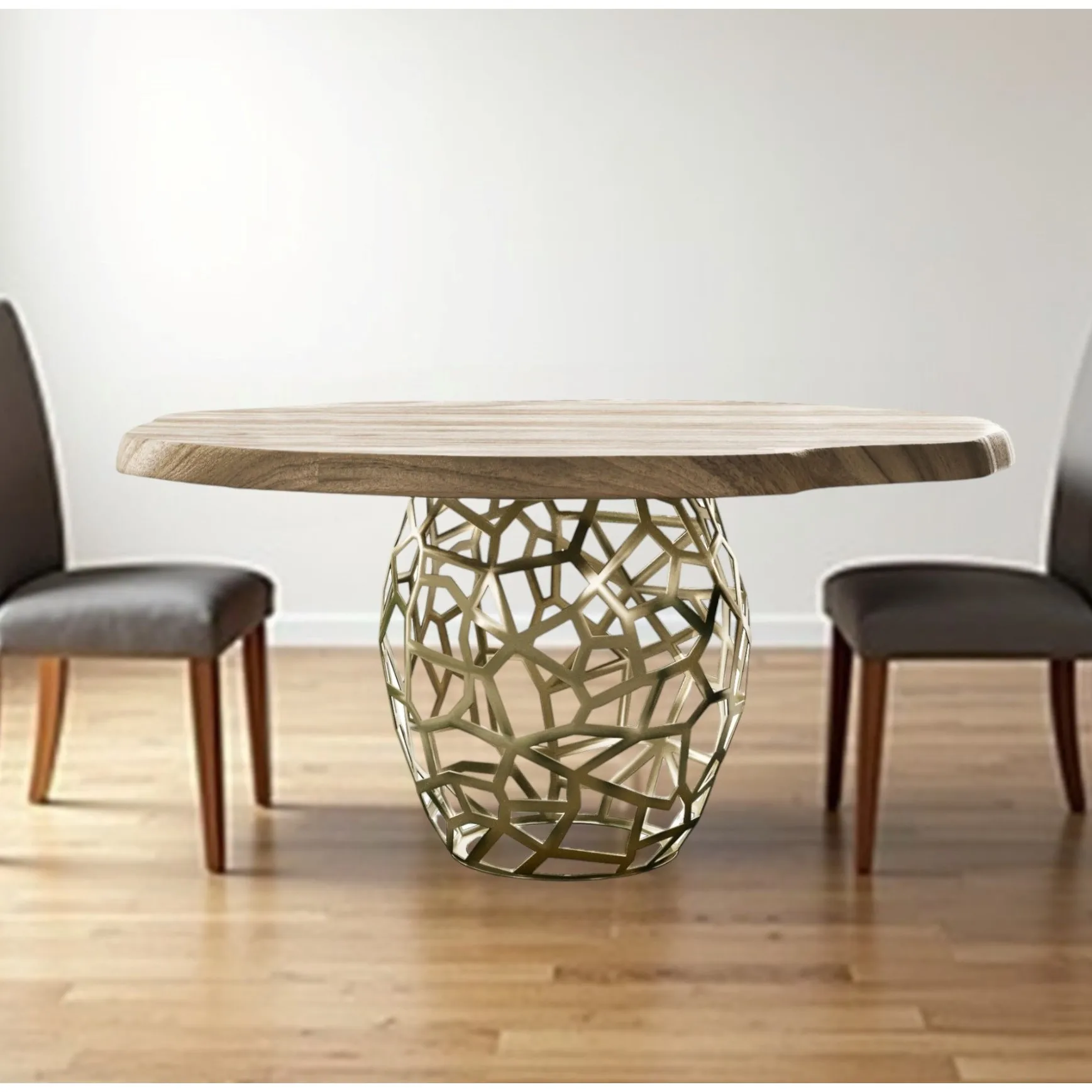
Pedestal bases maximize legroom and work well with round tables. Trestle or hairpin legs suit rectangular designs. Metal bases, like brass or black steel, add industrial contrast to the organic wood top.
Finish and Maintenance
Oil finishes (e.g., tung or Danish) penetrate the wood, enhancing grain and allowing easy touch-ups. Polyurethane provides a hard, water-resistant coat. For live edges, consider a matte finish to maintain natural texture. Clean with a damp cloth and avoid harsh chemicals.
Learn more about wood finishes from Wikipedia’s wood finishing guide.
Integrating a Live Edge Table into Your Decor
Pair with neutral walls to let the wood shine. Mix materials—metal chairs, wool rugs, or ceramic lighting—for balance. The table’s organic shape softens modern interiors and adds warmth to minimalist spaces.
47″ Acacia Live Edge Round Dining Table with Brass Base
For a stunning round option, consider the 47″ Acacia Live Edge Round Dining Table with Brass Base, which combines durability with elegant natural edges.
Frequently asked questions
What is a live edge dining table?
A live edge dining table retains the natural, uneven edge of the tree slab, showcasing the wood’s original contour and bark. Each table is unique in grain and shape.
How do I clean a live edge dining table?
Dust regularly with a soft cloth. For spills, wipe immediately with a damp cloth and dry. Avoid harsh cleaners; use a mild soap if needed. Reapply oil finish as recommended.
What size live edge table fits 6 people?
A round table 48–60 inches in diameter or a rectangular table 60–72 inches long comfortably seats 6. Ensure 24 inches of width per person.
Is live edge wood durable?
Yes, especially hardwoods like acacia, walnut, or oak. Properly finished, they resist scratches and moisture. Reclaimed wood may have character marks but is structurally sound.