Follow us on Instagram @goldomallc
Free shipping on orders over $53 USD
Handcrafted with love
New home décor collection available now
Use code GOLDOMA15 for 15 % off
Follow us on Instagram @goldomallc
Free shipping on orders over $53 USD
Handcrafted with love
New home décor collection available now
Use code GOLDOMA15 for 15 % off


How to Choose the Perfect Solid Wood Dining Table
Buying Guide
Find Your Perfect Solid Wood Dining Table
Choosing a solid wood dining table is a decision that brings warmth and durability to your home for years. This guide will help you navigate the options and find the one that fits your space and lifestyle.
Wood Types Size Matters Style Guide
Why Choose a Solid Wood Dining Table?
A solid wood dining table offers unmatched longevity and natural beauty. Unlike veneers or particleboard, solid wood can be refinished and repaired, lasting for generations. It brings a unique grain pattern and warmth that synthetic materials cannot replicate. Plus, it’s an eco-friendly choice when sourced from sustainable forests.
Key Wood Species for Your Table
Different woods offer varying hardness, grain, and color. Here are common options:
- Oak: Durable with prominent grain, perfect for heavy use.
- Walnut: Rich dark color, elegant and softer than oak.
- Maple: Light and subtle grain, very hard.
- Cherry: Reddish-brown that darkens with age, medium hardness.
- Teak: Weather-resistant, ideal for indoor and outdoor.
Consider Your Lifestyle
If you have kids or pets, choose a harder wood like oak or maple to resist scratches. For a formal dining room, walnut or cherry adds sophistication.
Size and Shape: Fit Your Space
Measure your room before buying. Allow at least 36 inches around the table for chairs and movement. Rectangular tables seat more, while round tables encourage conversation. For small spaces, consider extendable tables. A dining table should leave enough clearance for comfort.
Construction and Durability
Look for solid wood, not veneer. Check joints: dovetail or mortise-and-tenon are strongest. Table legs should be sturdy; a pedestal base offers legroom, while four-leg designs are classic. Ensure the finish is non-toxic and resistant to heat and moisture.
Table Tops and Edges
A thick top feels substantial. Edges like beveled or eased are gentle on elbows. Live-edge tables highlight natural wood shapes.
Style and Finish
Match your decor. Rustic tables with distressed finishes suit farmhouse styles. Sleek, mid-century modern tables have clean lines. The finish can be matte, satin, or glossy. Darker finishes hide stains better, while light woods brighten a room.
Maintenance Tips for Longevity
Use coasters and placemats. Clean with a damp cloth and dry immediately. Avoid direct sunlight to prevent fading. Apply furniture oil or wax annually to nourish the wood. With proper care, your solid wood dining table will remain beautiful for decades.
Worth a look
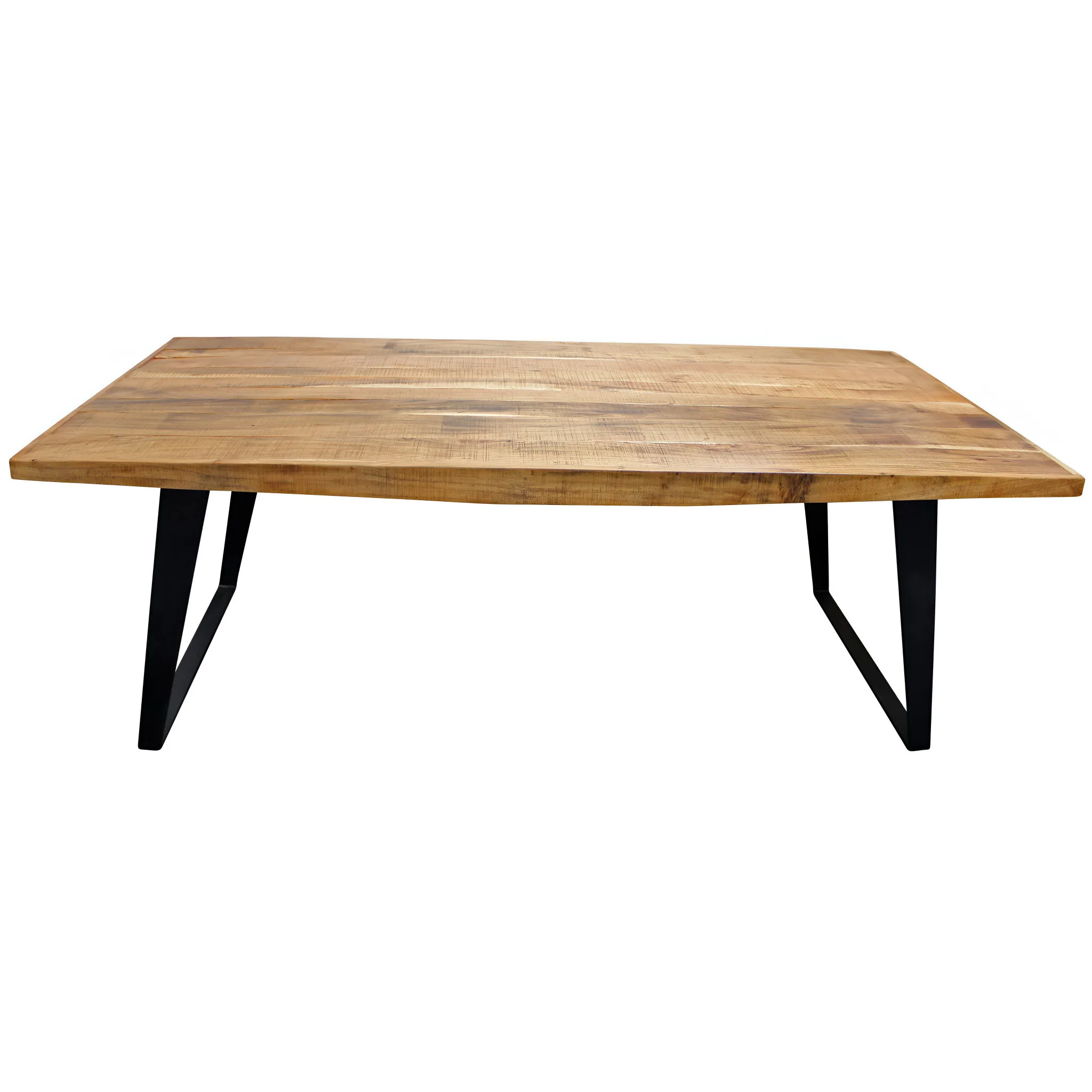
63″ Solid Wood and Iron Sled Base Dining Table – Natural & Black
For a blend of durability and modern style, consider the 63″ Solid Wood and Iron Sled Base Dining Table – Natural & Black, which pairs a solid acacia top with a sturdy iron base.
Frequently asked questions
What is the best wood for a solid wood dining table?
The best wood depends on your needs. Oak is durable and affordable; walnut is elegant but softer; maple is hard and light; cherry darkens over time. Choose based on your style and usage.
How do I measure for a dining table?
Measure your dining area and allow at least 36 inches of clearance around the table for chairs and walking. For a rectangular table, add 24 inches per person for width and 12 inches per person for length.
Are solid wood dining tables heavy?
Yes, solid wood tables are heavier than veneer or particleboard. This adds stability but requires help moving. Consider the weight if you plan to rearrange often.
Can I use a solid wood table outdoors?
Only if specifically treated for outdoor use. Teak and some hardwoods are weather-resistant, but most indoor solid wood tables will warp or rot if exposed to moisture.