
Blog
The Ultimate Guide to Choosing a Wood Nightstand
Buying Guide
Find Your Perfect Wood Nightstand
A wood nightstand is more than just a place to set your lamp; it’s a foundational piece that can define your bedroom’s character. Choosing the right one involves balancing function, style, and durability.
Why a Wood Nightstand Is a Timeless Choice
Wood has been a preferred material for furniture for centuries, and for good reason. Its natural grain, durability, and warmth make it an ideal choice for a nightstand. Unlike metal or plastic, a wood nightstand ages gracefully, developing a patina that adds character to your room. Whether you prefer a rustic farmhouse look or a sleek modern aesthetic, wood can be finished to suit any style. Additionally, wood is a renewable resource when sourced responsibly, making it an eco-friendly option for the conscious consumer.
Key Features to Look for in a Wood Nightstand
When shopping for a wood nightstand, several features will determine how well it fits your needs. First, consider the size. Measure the height of your bed frame—ideally, the nightstand surface should be level with your mattress for easy access. Depth and width matter too; you want enough surface area for a lamp, book, and maybe a glass of water, but not so large that it overwhelms the space. Storage is another crucial aspect. Some nightstands have a single drawer, others have multiple drawers or shelves. Think about what you need to store: remotes, reading glasses, chargers, or bedtime essentials.
Drawer Construction
Drawers should have dovetail joints and run smoothly on metal glides. Full-extension glides allow you to access the entire drawer, which is handy for deeper items. Avoid particleboard drawers; solid wood or plywood is more durable.
Finish and Material
The wood species (oak, walnut, pine, etc.) affects the look and longevity. Hardwoods like oak and walnut are more durable but heavier and pricier. Softwoods like pine are lighter and more affordable but can dent easily. The finish should be non-toxic and resistant to spills.
How to Choose the Right Style for Your Bedroom
Your wood nightstand should complement your existing decor. If your bedroom has a modern minimalist vibe, look for clean lines, simple hardware, and a light or dark stain without ornate details. For a traditional or rustic room, consider nightstands with turned legs, paneled doors, or distressed finishes. Mid-century modern styles often feature tapered legs and geometric shapes. Don’t forget about color: the nightstand can either match your bed frame or create a contrast for visual interest.
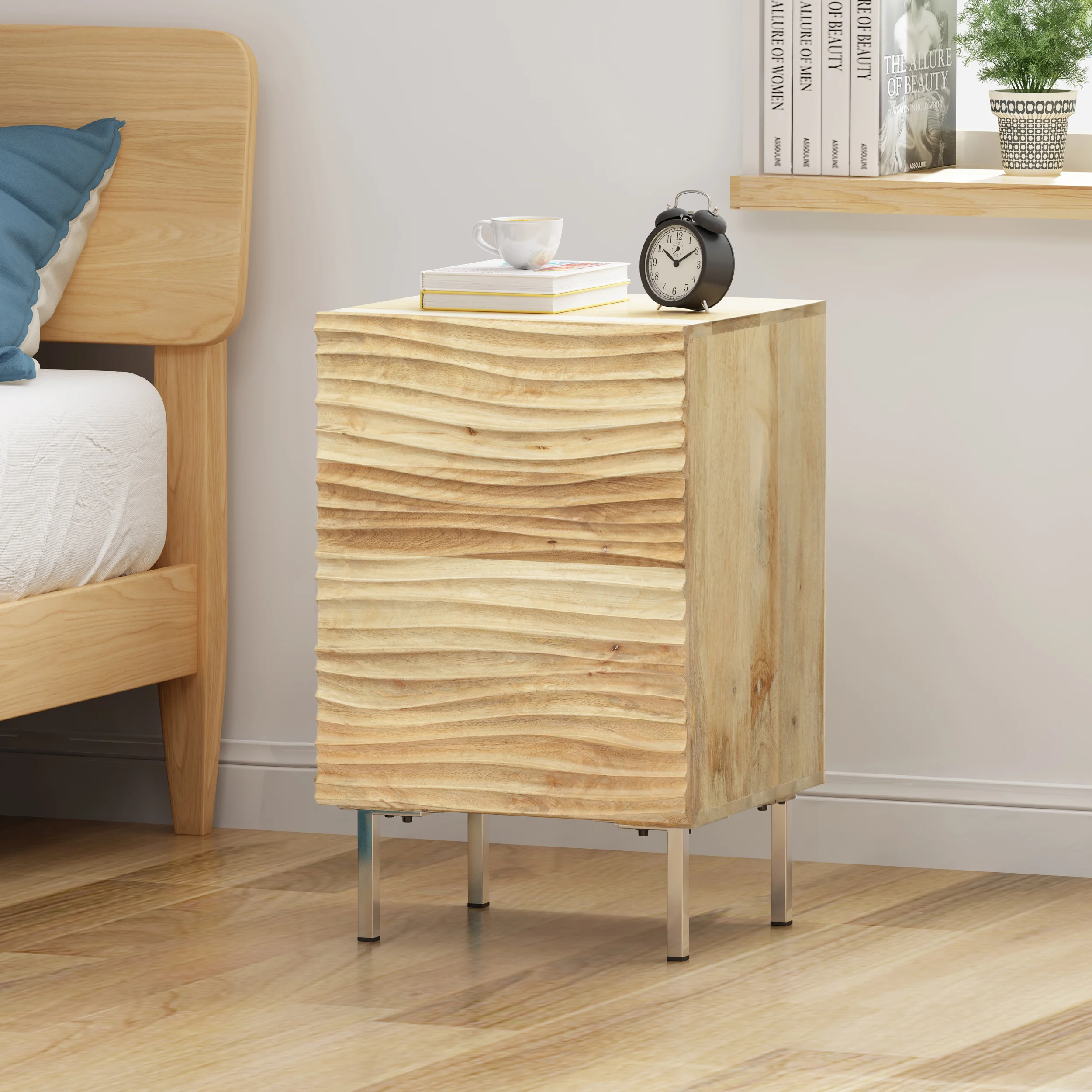
One popular style is the wavy front design, which adds a touch of elegance and movement to an otherwise simple piece. The gentle curves catch the light and create a focal point without being overpowering.
Size and Proportion: Getting It Right
As a rule of thumb, your nightstand should be roughly the same height as the top of your mattress, give or take an inch. If it’s too low, you’ll have to reach down; too high, and it feels awkward. The width should be proportional to your bed—a king bed can handle a wider nightstand, while a twin bed might look better with a slim model. Also, consider the layout: if you have a small room, a floating nightstand or one with open shelving can make the space feel larger.
Storage Solutions: Drawers, Shelves, and More
Think about what you’ll keep in your nightstand. If you’re a reader, a drawer for books and a surface for a reading lamp are essential. If you need to charge devices, look for a nightstand with a built-in USB port or a hole for cord management. Some nightstands have a single drawer and an open shelf, which is great for storing baskets or a decorative item. For maximum storage, consider a model with multiple drawers or a cabinet door. The nightstand you choose should make your bedtime routine easier, not harder.
Caring for Your Wood Nightstand
To keep your wood nightstand looking its best, dust it regularly with a soft cloth. Use coasters for drinks and avoid placing hot items directly on the surface. If the finish gets scratched, you can often buff it out with a furniture polish or touch-up marker. Avoid placing the nightstand in direct sunlight, as UV rays can fade the wood over time. With proper care, a quality wood nightstand can last for decades.
Materials and Construction: What to Know
Not all wood nightstands are created equal. Solid wood is the gold standard, but it’s also the most expensive. Engineered wood like MDF with a wood veneer can be a budget-friendly alternative, but it won’t have the same longevity. Check the joinery—dovetail drawers, mortise-and-tenon frames, and screwed or doweled connections indicate better craftsmanship. Avoid staples and glue alone. Also, look for a smooth, even finish without drips or bubbles.
Bedside Cabinet 1 Door Wood Nightstand with Wavy Front
For a unique blend of elegance and practicality, consider the Bedside Cabinet 1 Door Wood Nightstand with Wavy Front, which adds a subtle artistic touch to your space.
Frequently asked questions
What is the ideal height for a wood nightstand?
The ideal height is level with the top of your mattress, so you can easily reach items. Measure your bed height and look for a nightstand within an inch of that measurement.
What type of wood is best for a nightstand?
Hardwoods like oak, walnut, and maple are durable and long-lasting. Softwoods like pine are more affordable but may dent more easily. Choose based on your budget and desired aesthetic.
How do I clean and maintain a wood nightstand?
Dust regularly with a soft cloth, use coasters for drinks, and avoid direct sunlight. For scratches, use a furniture polish or touch-up marker. Wipe spills immediately to prevent stains.
Can I use a wood nightstand in a small bedroom?
Yes, choose a slim or floating design to save space. Look for models with open shelves or a small footprint to avoid overwhelming the room.
