
Blog
The Best Memory Foam Mattress Queen: Comfort & Support Guide
Buying Guide
Your Ultimate Memory Foam Mattress Queen Guide
Choosing a memory foam mattress queen is a big decision—it’s where you’ll spend a third of your life. This guide cuts through the noise to help you find the perfect balance of comfort, support, and durability.
Why Choose a Memory Foam Mattress Queen?
A memory foam mattress queen offers an ideal blend of personal space and room efficiency. Queen size (60″ x 80″) fits most couples without overwhelming a bedroom. Memory foam contours to your body, relieving pressure points and reducing motion transfer—perfect if you share a bed. Unlike traditional innersprings, memory foam absorbs movement, so you won’t wake when your partner shifts. For side sleepers, the foam cradles hips and shoulders; for back sleepers, it supports the spine’s natural curve. The key is density: higher density foam lasts longer but may sleep warmer. Look for open-cell or gel-infused options if heat is a concern. Ultimately, a memory foam mattress queen delivers personalized comfort that adapts to your body.
Key Factors: Firmness, Cooling, and Durability
Not all foam is created equal. When shopping for a memory foam mattress queen, focus on these three pillars:
- Firmness: Medium firm (around 5-7 on the firmness scale) works for most sleepers. Too soft and you sink too deep; too firm and pressure points hurt. For combination sleepers, medium offers versatility.
- Cooling: Traditional memory foam retains heat. Modern solutions include gel beads, copper infusions, or breathable covers. A washable, breathable cover also helps regulate temperature.
- Durability: Density matters. Foam with 4-5 lbs per cubic foot resists sagging longer. Also check the warranty—at least 10 years is standard for quality beds.
Don’t forget the base: a solid foundation or slatted frame (slats no more than 3 inches apart) prevents sagging and ensures proper support for your memory foam mattress queen.
Pocket Springs vs. All-Foam: What’s the Difference?
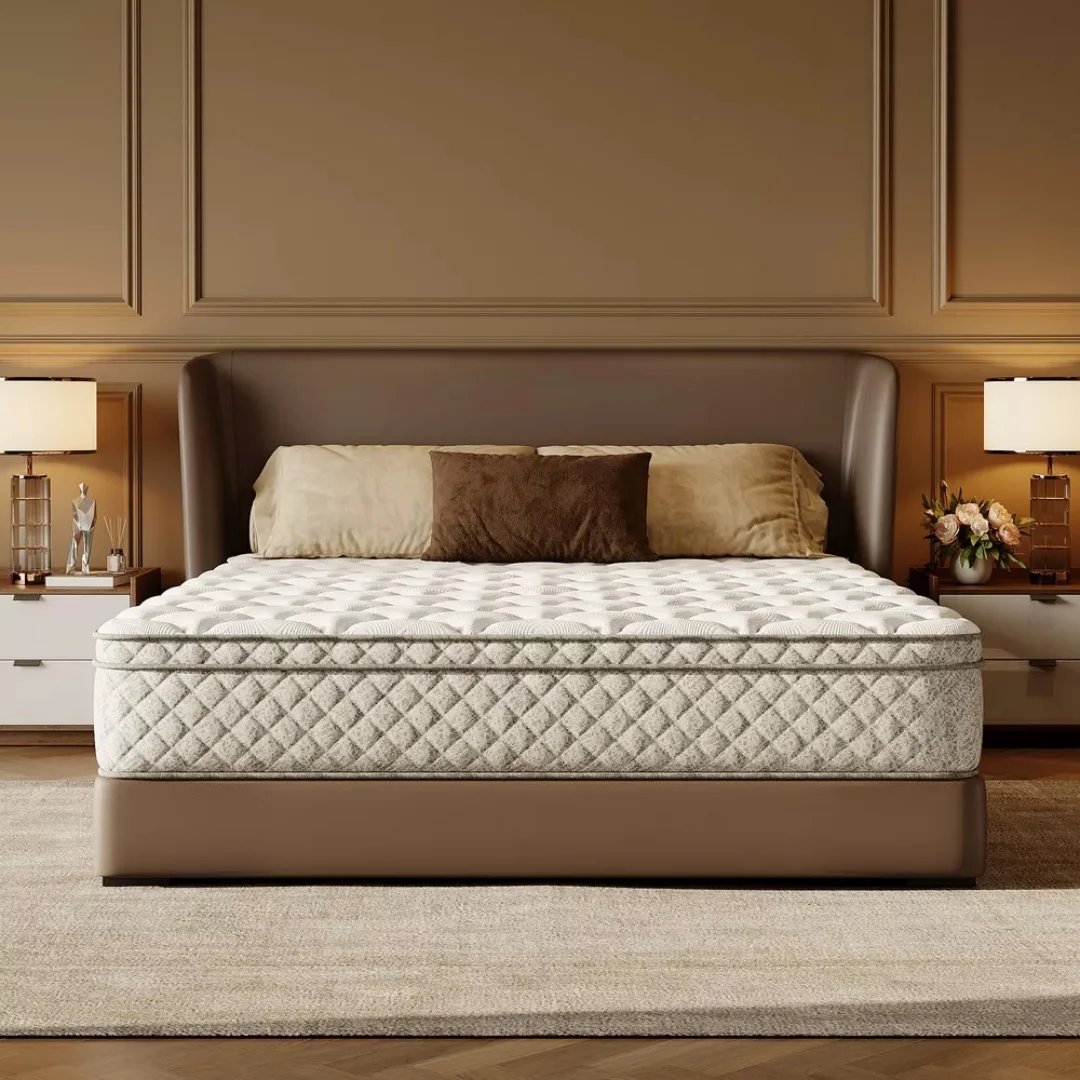
Hybrid mattresses combine pocket springs with memory foam layers. The springs provide edge support and airflow, while the foam adds contouring. All-foam beds are simpler and often more affordable, but they may lack bounce and edge support. A hybrid like the Goldoma 10″ Pocket Spring Memory Foam Mattress marries the best of both: individually wrapped coils reduce motion transfer and add support, while the foam top layer provides pressure relief. For couples, this design minimizes disturbance when one person moves. If you prefer a classic foam feel, an all-foam memory foam mattress queen can still be excellent if it has a high-density core and a comfort layer that suits your sleeping style.
How to Choose the Right Thickness
Queen mattresses typically range from 8 to 14 inches thick. For most adults, 10-12 inches is ideal—it offers enough foam to contour without bottoming out. Thinner mattresses (8-9 inches) work for guest rooms or children, but may not provide enough support for heavier individuals. Thicker mattresses (12+ inches) often include extra comfort layers, but can make bed frames look disproportionate. Consider your weight: if you’re over 200 lbs, aim for at least 10 inches with a high-density support core. A memory foam mattress queen at 10 inches strikes a great balance for average to slightly heavier sleepers.
Care and Maintenance of Your Mattress
To extend the life of your memory foam mattress queen, use a waterproof protector to guard against spills and dust mites. Rotate the mattress head-to-foot every 6 months (most foam mattresses cannot be flipped). Vacuum the surface occasionally with an upholstery attachment. Avoid jumping on the bed, which can break down foam cells. If your mattress has a removable cover, wash it according to the care label—typically cold water and low heat dry. Good habits can add years to your mattress’s lifespan.
Understanding Certifications and Safety
Memory foam is made from polyurethane, which can off-gas volatile organic compounds (VOCs). Look for certifications like CertiPUR-US® or GREENGUARD Gold, which indicate low emissions and no harmful chemicals. Many reputable brands, including Goldoma, use foams that meet these standards. A memory foam mattress queen with these certifications is safer for your indoor air quality. For more on mattress safety standards, see the Wikipedia article on mattress safety regulations.
Budgeting for Your Queen Mattress
Prices for a memory foam mattress queen range from $200 to over $1,500. In the $400-$800 range, you can find quality options with good foam density and cooling features. Don’t overspend on brand names; instead, focus on materials and reviews. A mattress-in-a-box often offers better value because it ships directly to you. Consider the total cost: include a foundation or box spring if needed, and a mattress protector. A well-chosen $600 mattress can outperform a $1,200 one if it matches your sleep needs.
Goldoma 10″ Pocket Spring Memory Foam Mattress, Washable Cover, Medium Firmness, Queen
For a balanced choice, consider the Goldoma 10″ Pocket Spring Memory Foam Mattress, Washable Cover, Medium Firmness, Queen—it combines pocket springs for support with a cooling, washable cover for easy care.
Frequently asked questions
How long does a memory foam mattress queen last?
Typically 7-10 years with proper care. Higher density foam (4+ lbs/ft³) can last closer to 10 years. Rotating the mattress and using a protector helps extend its life.
Is a memory foam mattress queen good for side sleepers?
Yes, memory foam excels at pressure relief for hips and shoulders. Medium firmness is often ideal for side sleepers, as it cradles curves while keeping the spine aligned.
Do memory foam mattresses sleep hot?
Traditional memory foam can retain heat, but many modern mattresses incorporate gel, copper, or breathable covers to dissipate heat. Look for cooling features if you sleep warm.
Can I use a memory foam mattress on an adjustable base?
Absolutely. Memory foam is flexible and works well with adjustable bases. Just ensure the mattress is thick enough (at least 8 inches) to flex without damage.
