
Blog
The Ultimate Guide to Choosing a Jute Pouf Ottoman
Buying Guide
How to Choose the Perfect Jute Pouf Ottoman
A jute pouf ottoman can transform any room with its natural texture and versatile functionality. Whether you need extra seating, a footrest, or a decorative accent, this guide will help you find the ideal one for your space.
Why Choose a Jute Pouf Ottoman?
Jute is a sustainable, biodegradable fiber that brings warmth and earthiness to interiors. A jute pouf ottoman is lightweight yet sturdy, making it easy to move around. Its woven texture complements bohemian, coastal, and rustic styles, while its neutral tones blend seamlessly with various color palettes. Plus, many designs offer hidden storage for blankets or magazines.
Key Features to Look For
Material Quality
Ensure the jute is tightly woven for durability. Look for a dense weave that can withstand daily use. Some poufs combine jute with cotton or wool for added softness.
Construction
Handmade options often have superior craftsmanship. Check for reinforced seams and a sturdy base. A hidden zipper or closure can make the cover removable for cleaning.
Size and Shape
Standard poufs are around 18 inches in diameter and height, perfect for use as a footrest or extra seat. Square or cube shapes offer a modern twist, while round poufs feel more casual. Consider your available space and how you plan to use it.
Styling Your Jute Pouf Ottoman
Place it in a living room corner with a floor lamp and a potted plant for a cozy reading nook. In a bedroom, it can serve as a bedside table or a place to sit while putting on shoes. For outdoor covered patios, jute adds a natural touch—just protect it from moisture.
Pair your jute pouf ottoman with textiles like a chunky knit throw or velvet cushions to contrast textures. A tray on top turns it into a coffee table. For more inspiration, explore jute’s history and production.
Caring for Your Jute Pouf
Vacuum regularly with a brush attachment to remove dust. Spot clean spills immediately with a dry cloth—avoid soaking jute as it can weaken fibers. For deeper cleaning, use a mild soap solution and blot gently. Keep away from direct sunlight to prevent fading.
Eco-Friendly and Ethical Benefits
Jute is a renewable crop that requires little water and no pesticides. Many jute poufs are handmade by artisans in regions like India and Bangladesh, supporting traditional crafts. Choosing a jute pouf ottoman reduces plastic use and promotes sustainable decor.
Where to Place a Jute Pouf
- Living room: as a footrest or extra seating
- Bedroom: at the foot of the bed or beside a chair
- Entryway: a quick seat for removing shoes
- Kids’ room: soft, lightweight stool
Their portability lets you easily rearrange your space. A jute pouf ottoman can also double as a yoga block or meditation cushion.
Conclusion
A jute pouf ottoman is a versatile, eco-friendly addition to any home. Focus on quality, size, and style to find one that fits your needs. With proper care, it will last for years.
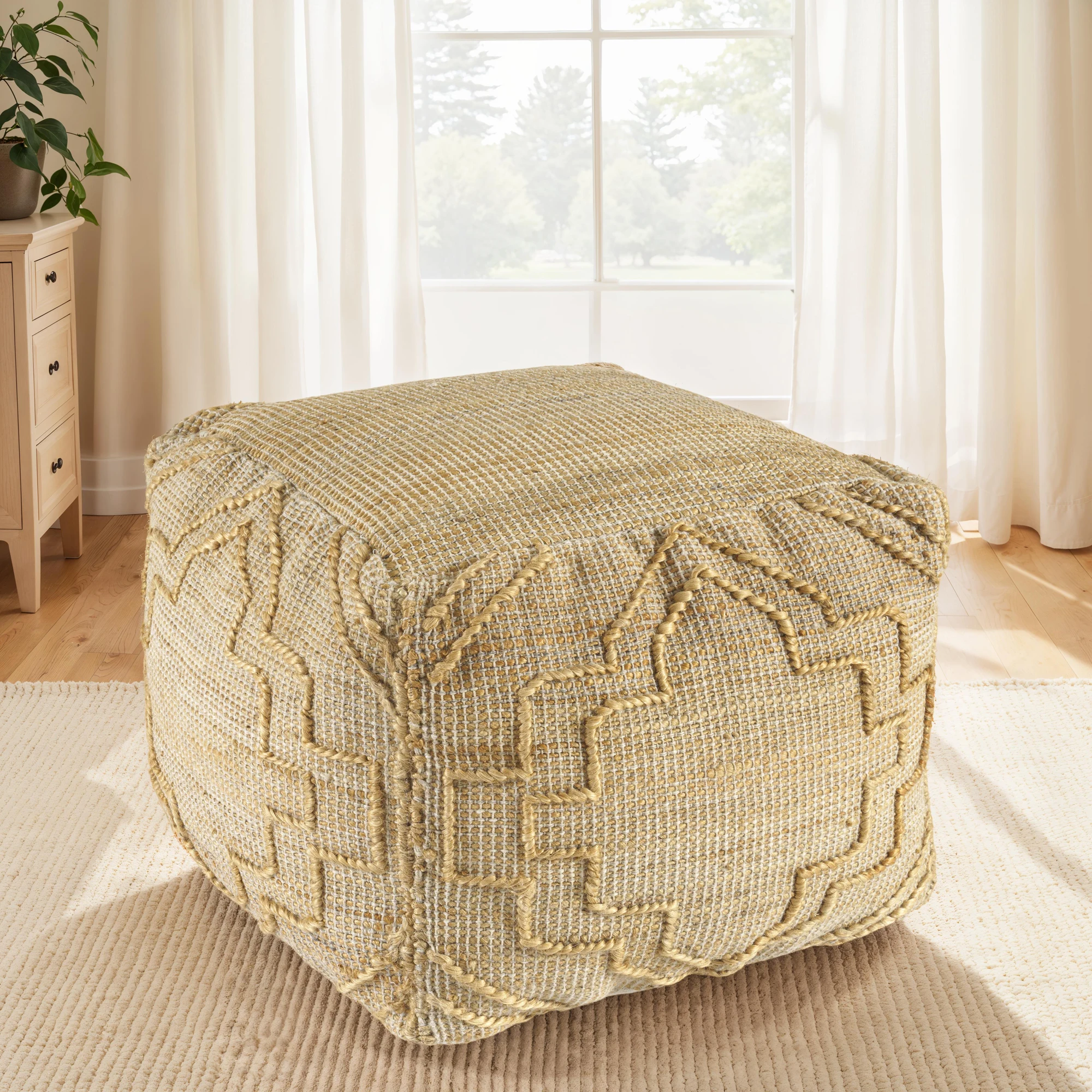
Goldoma 18″ Natural Jute Cube Quatrefoil Pouf Ottoman – Handmade Storage Seat
For a well-crafted option, consider the Goldoma 18″ Natural Jute Cube Quatrefoil Pouf Ottoman – Handmade Storage Seat, which offers both style and hidden storage.
Frequently asked questions
What is a jute pouf ottoman used for?
It serves as a footrest, extra seating, a side table, or decorative accent. Many also include storage for blankets or books.
How do I clean a jute pouf?
Vacuum regularly with a brush attachment. Spot clean with a dry cloth; avoid soaking. For stains, use a mild soap solution and blot gently.
Is jute durable for daily use?
Yes, high-quality jute with tight weave is sturdy. However, it may shed slightly at first and is best kept dry.
Can I use a jute pouf outdoors?
Only on covered patios protected from rain and direct sunlight, as moisture can damage jute fibers.