
Blog
Ultimate Entertainment Center with Bookshelves Guide
Buying Guide
Entertainment Center with Bookshelves Buying Guide
An entertainment center with bookshelves is the backbone of a well-organized living room. It marries media storage with display space, keeping your TV, books, and decor in one cohesive unit.
Why Choose an Entertainment Center with Bookshelves?
An entertainment center with bookshelves does more than hold your TV. It consolidates your media equipment, books, and decorative items into a single piece of furniture, reducing clutter and creating a focal point. Unlike a simple TV stand, it offers vertical storage that makes use of wall space, ideal for smaller rooms or open-concept layouts. You can display family photos, plants, or art alongside your electronics, making the unit both practical and personal.
For those who love reading or collecting, the bookshelves provide easy access to your favorite titles or collectibles. This dual-purpose design means you don’t need separate shelving units, saving floor space and keeping your decor cohesive. Plus, many units include closed cabinets or drawers to hide cables, game consoles, and other unsightly items.
Key Features to Look For
When shopping for an entertainment center with bookshelves, consider the following features to ensure it meets your needs:
- TV Size Compatibility: Measure your TV’s width and ensure the center can support its weight. Most units specify a maximum TV size, like 65 or 80 inches.
- Adjustable Shelves: Look for shelves that can be moved or removed to accommodate tall books or larger electronics.
- Cable Management: Built-in grommets or channels keep wires hidden and organized.
- Material and Finish: Solid wood offers durability, while engineered wood is lighter and more affordable. Choose a finish that complements your room.
- Storage Options: A mix of open shelves, closed cabinets, and drawers gives flexibility for displaying vs. hiding items.
Size and Placement Tips
Before buying, measure your wall space and the room’s dimensions. An entertainment center with bookshelves should be proportionate to your TV and room. As a rule of thumb, the unit should be at least as wide as your TV, and the center of the screen should sit at eye level when seated. Leave a few inches of clearance on each side for airflow if you have components like a receiver or gaming console.
Consider the depth of the shelves: shallow shelves (around 12 inches) are fine for books and small decor, while deeper shelves (15-18 inches) can hold larger items. Also, think about traffic flow—don’t block doorways or paths. If your room has low ceilings, a taller unit might make the space feel cramped; a horizontal layout may work better.
Style and Design Considerations
The style of your entertainment center with bookshelves should harmonize with your existing decor. Modern units feature clean lines, glass doors, and dark finishes like espresso or black. Traditional styles often have wood tones, crown molding, and raised panel doors. For a rustic look, reclaimed wood or distressed finishes add warmth. If you prefer a minimalist aesthetic, choose a unit with simple hardware and a light color palette.
Don’t forget the visual weight: a dark, massive unit can dominate a small room, while a light, airy design can make a large room feel more intimate. Mixing open and closed storage also affects the look—too many open shelves can appear cluttered, while too many closed cabinets can feel heavy. Strike a balance based on what you plan to display.
Material and Build Quality
Solid hardwoods like oak or maple are durable and can last decades, but they come at a higher price. Engineered woods like MDF or particleboard are common in mid-range units; they’re stable and less prone to warping, but may not withstand heavy weight as well. Look for units with a sturdy back panel (often hardboard or plywood) that adds rigidity. Drawers should have dovetail joints or metal slides for smooth operation.
Check customer reviews for comments on assembly, stability, and finish quality. A unit that wobbles or has a poor finish will be a constant annoyance. Also, note the weight capacity of shelves—some are designed for light decor only, while others can hold heavy books.
Storage and Organization Ideas
Once you have your entertainment center with bookshelves, organizing it effectively enhances both function and aesthetics. Group books by color or size for a visually pleasing display. Use baskets or bins on lower shelves to hide remote controls, chargers, or kids’ toys. For media components, leave space around them for ventilation. Consider using shelf risers or small stands to elevate items and create layers.
Personalize the shelves with a mix of art, plants, and personal mementos. Avoid overcrowding—leave some empty space to let the eye rest. Rotate items seasonally to keep the look fresh. If you have small children, secure the unit to the wall with anti-tip straps for safety.
For more design inspiration, check out Wikipedia’s overview of entertainment centers.
Our Recommendation
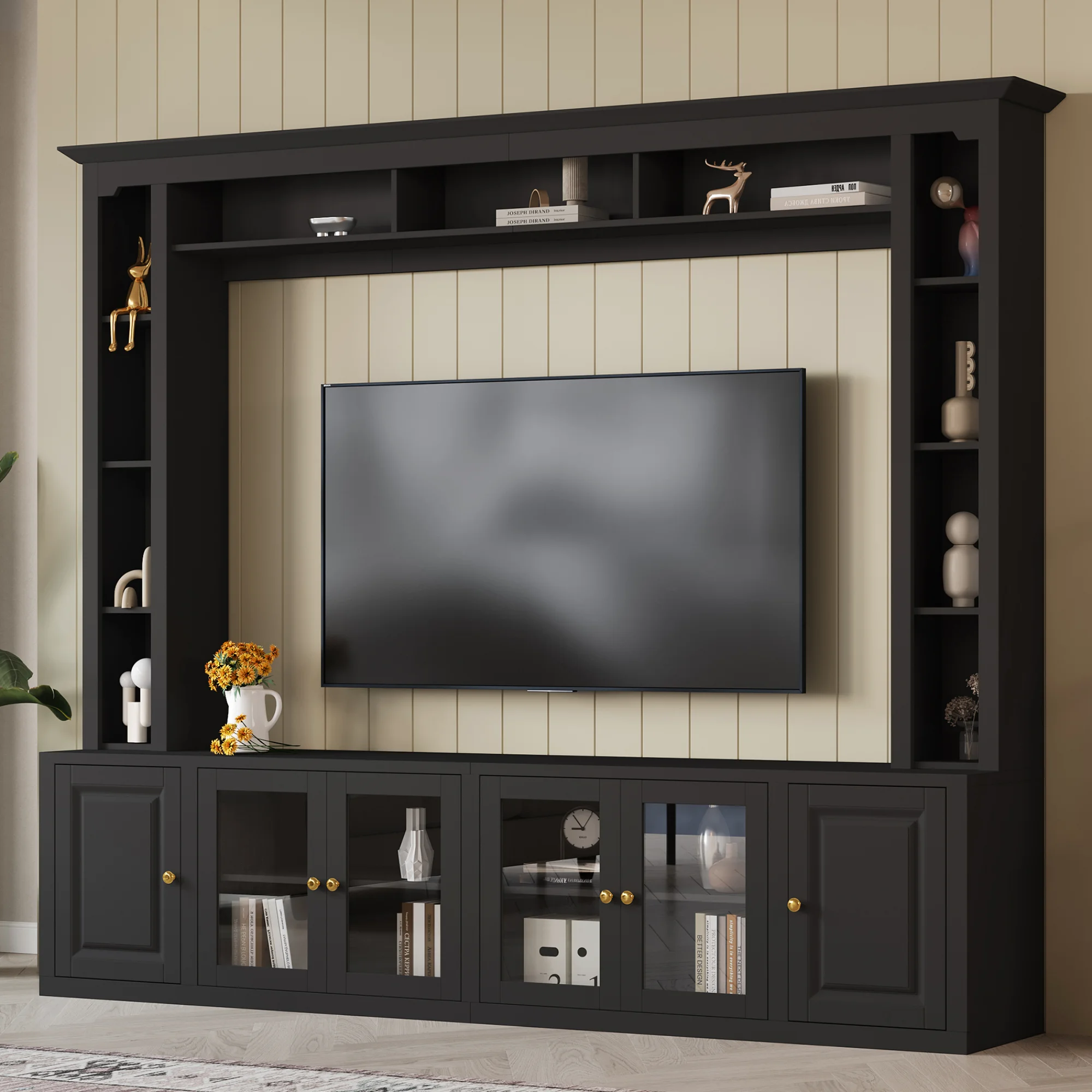
If you’re looking for a comprehensive solution, consider our 4-Piece Modern Entertainment Center Wall Unit with Bookshelves – All-in-1 Large TV Stand, Fits TVs up to 80″. It offers ample storage with adjustable shelves, cable management, and a sleek modern design that works in many living rooms.
4-Piece Modern Entertainment Center Wall Unit with Bookshelves – All-in-1 Large TV Stand, Fits TVs up to 80″
For a complete solution, our 4-Piece Modern Entertainment Center Wall Unit with Bookshelves offers versatile storage and fits TVs up to 80 inches.
Frequently asked questions
What is the ideal height for an entertainment center with bookshelves?
The ideal height places the center of your TV at eye level when seated, typically around 42 inches from the floor. For bookshelves, ensure top shelves are reachable, usually not exceeding 72 inches from the floor.
Can an entertainment center with bookshelves support a heavy TV?
Yes, but check the manufacturer’s weight capacity. Most units specify a maximum TV weight (e.g., 100 lbs). Always use the provided mounting hardware and consider anchoring the unit to the wall for stability.
How do I organize books and decor on the shelves?
Group similar items, vary heights, and leave some negative space. Use bookends for books, and layer frames or art. Baskets can hide small items. Rotate decor seasonally for a fresh look.
What materials are best for durability?
Solid wood (oak, maple) is most durable but expensive. High-quality MDF with veneer offers a good balance. Avoid particleboard for heavy loads. Check reviews for long-term performance.