Blog
The Ultimate Console Table Buying Guide
Furniture Guide
Find Your Ideal Console Table Today
A console table is more than just a surface—it’s a statement piece that anchors your space. Whether you need a spot for keys by the door or a display for art in the living room, choosing the right console table can transform your home.
What Is a Console Table and Why Do You Need One?
A console table is a long, narrow table typically placed against a wall. It’s perfect for entryways, hallways, living rooms, or behind a sofa. Unlike a coffee table, a console table is designed for vertical space—great for lamps, mail, or decorative objects. Its slim profile makes it ideal for tight spots where a bulky piece won’t fit.
Beyond storage, a console table sets the tone for your home. A well-chosen console table can act as a focal point, tying together your decor. Whether you’re welcoming guests or adding a touch of elegance, this piece is a versatile workhorse.
Key Considerations When Choosing a Console Table
Before you buy, think about size, material, and style. Measure your wall space: the table should be about two-thirds the length of the wall. Height matters too—most console tables are 30–36 inches tall, matching standard sofa arms or entryway counters. For depth, aim for 12–18 inches to keep walkways clear.
Material impacts durability and look. Solid wood offers warmth, while metal brings modern edge. Glass tops feel airy but require upkeep. Stone tops, like marble or granite, add luxury but are heavy. Learn more about table styles on Wikipedia.
Popular Styles of Console Tables
Console tables come in countless designs. Here are three favorites:
- Modern Minimalist: Clean lines, metal legs, neutral colors. Fits contemporary homes.
- Rustic Farmhouse: Reclaimed wood, chunky legs, distressed finish. Adds character to casual spaces.
- Glamorous: Mirrored surfaces, gold accents, curved silhouettes. Perfect for a touch of opulence.
Your choice should reflect your existing decor. A modern console table can anchor a minimalist room, while a rustic piece softens a sleek space.
Material Matters: Wood, Metal, Glass, and Stone
The material defines the console table’s personality. Wood is classic and warm—oak, walnut, or mahogany offer different grains and colors. Metal (iron, steel, brass) brings industrial or mid-century vibes. Glass tops create an illusion of space, ideal for small rooms. Stone tops, like marble or granite, are durable and elegant but need sealing.
Combining materials can yield stunning results. For instance, a stone top with an iron frame balances heaviness with lightness. Think about maintenance: wood may scratch, metal can dent, glass shows fingerprints, and stone is porous. Choose what fits your lifestyle.
How to Style a Console Table
Styling a console table is an art. Start with a focal point: a large mirror or artwork above. Then layer items of varying heights—a lamp, a stack of books, a vase. Keep it balanced but not symmetrical. Use trays to corral small items like keys or remotes. Add personal touches like framed photos or a plant.
For entryways, prioritize function: a bowl for keys, a catchall for mail. In living rooms, display collectibles or a seasonal vignette. Remember, less is more; avoid clutter to let the table shine.
Size and Placement: Getting It Right
Measure twice, buy once. A console table in a narrow hallway should be shallow—12–14 inches deep. In an entryway, ensure at least 36 inches of clearance for foot traffic. Behind a sofa, the table should be at least as wide as the sofa’s back. For a console table in a living room, consider it as a room divider if open-concept.
Height is crucial: most console tables are 30–32 inches tall, but if using behind a sofa, match the sofa’s back height. If placing in a foyer, consider a lower table for a bench-like effect.
Console Table Trends to Watch
Current trends include mixed materials (stone and metal), curved shapes, and bold colors like deep green or navy. Sustainable options like reclaimed wood are gaining traction. Also, multifunctional designs—with drawers or shelves—are popular for small spaces. A console table with a stone top and iron frame combines durability with modern appeal, fitting both traditional and contemporary homes.
Another trend: using a console table as a mini bar or home office desk. With remote work rising, a narrow console table can double as a workspace in a corner.
Caring for Your Console Table
Proper care extends the life of your console table. Dust regularly with a soft cloth. For wood, use polish occasionally. For stone, seal annually and wipe spills immediately. Metal frames can be cleaned with a damp cloth; avoid harsh chemicals. Glass tops need glass cleaner. Always use coasters and felt pads under decor to prevent scratches.
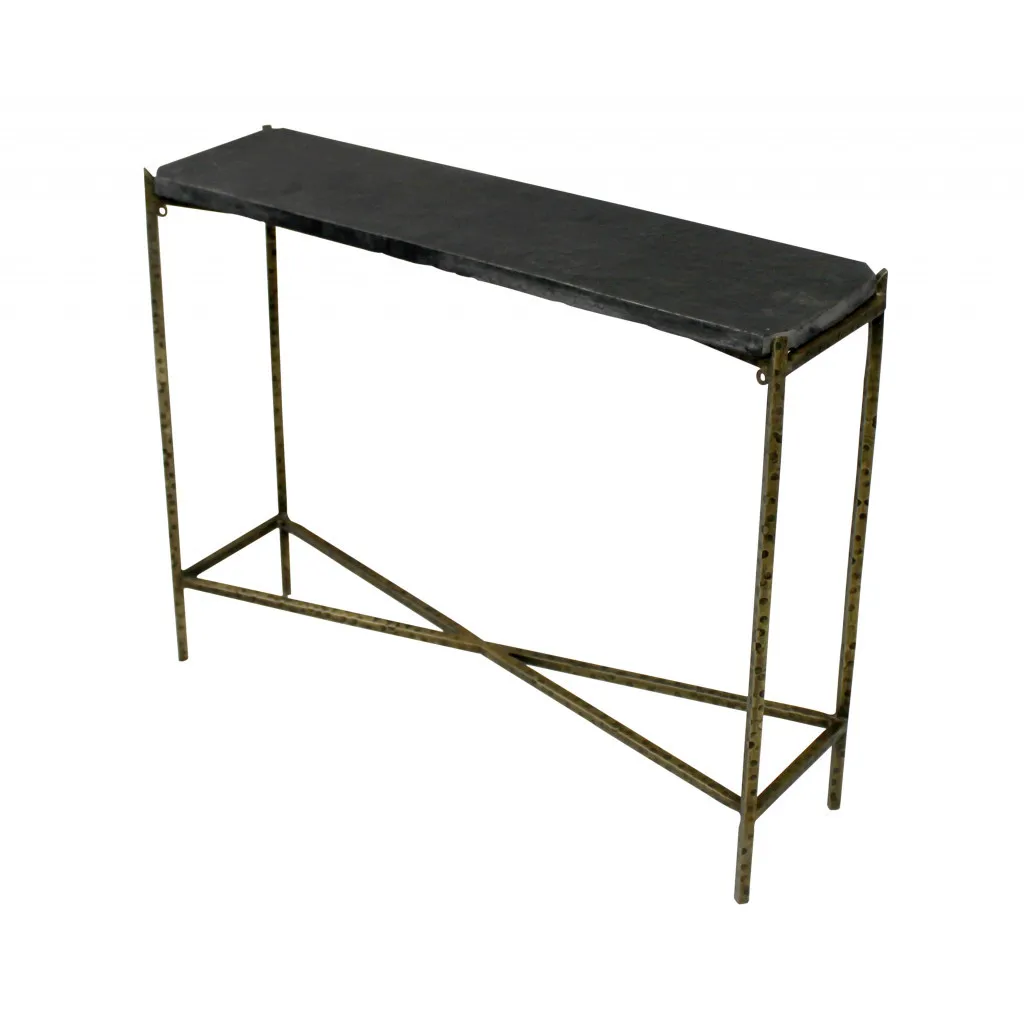
Goldoma 32″ Black and Gold Console Table with Stone Top and Iron Frame
For a durable yet elegant option, consider the Goldoma 32″ Black and Gold Console Table with Stone Top and Iron Frame, which combines a sleek stone surface with a sturdy iron base.
Frequently asked questions
How long should a console table be?
A console table should be about two-thirds the length of the wall it’s placed against. For a standard entryway, 48–60 inches works well.
Can I use a console table behind a sofa?
Yes, a console table behind a sofa is a popular placement for lamps and decor. Ensure the table is at least as wide as the sofa back and about 30–32 inches tall.
What is the best material for a console table?
It depends on your style and needs. Wood is classic, metal is modern, glass is airy, and stone is luxurious. Consider durability and maintenance.
How do I style a console table in a small entryway?
Keep it minimal: a small lamp, a bowl for keys, and a mirror above. Use a shallow table (12–14 inches deep) to save space.