
Blog
Embrace Imperfection: Wabi-Sabi Coffee Table Guide
Design Philosophy
The Art of Choosing a Wabi-Sabi Coffee Table
A wabi-sabi coffee table is more than furniture—it’s a meditation on beauty found in imperfection. This guide helps you find one that truly resonates.
What Makes a Coffee Table Wabi-Sabi?
Wabi-sabi is a Japanese aesthetic centered on the acceptance of transience and imperfection. A wabi-sabi coffee table often features asymmetrical shapes, raw edges, visible wood grain, and a matte, natural finish. The goal is to create a piece that feels grounded, honest, and connected to nature.
Unlike mass-produced glossy tables, these pieces celebrate knots, cracks, and variations in color. They invite you to touch and appreciate the materiality. For a deeper understanding, read about wabi-sabi on Wikipedia.
Key Materials: Solid Wood, Glass, and Stone
Solid oak is a classic choice for a wabi-sabi coffee table. Its strength and distinct grain pattern age beautifully. Walnut offers a darker, richer tone. Reclaimed wood adds history and character. Glass tops can be used to protect the wood while still showcasing its texture. Stone like slate or marble introduces a cool, organic element.
- Oak: Durable, warm, and develops a patina over time.
- Walnut: Rich brown hues, smooth grain.
- Reclaimed Wood: Unique marks from previous use.
- Glass Top: Preserves the wood while adding a modern touch.
Shape and Form: Asymmetry and Organic Lines
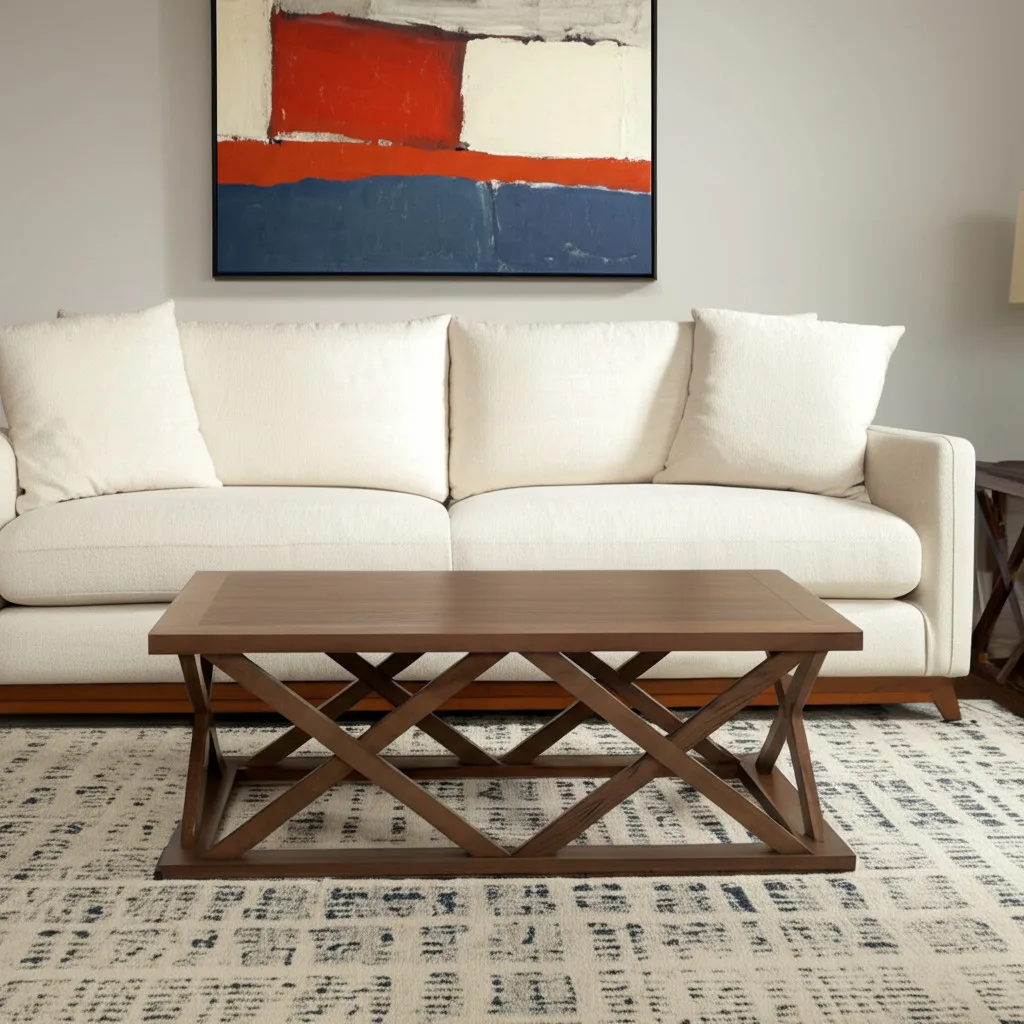
Wabi-sabi coffee tables often stray from perfect rectangles or circles. Look for live-edge slabs, irregular ovals, or geometric frames with intentional asymmetry. The form should feel balanced yet slightly off—like nature itself. A Geo Frame design, for example, combines angular lines with organic wood.
Consider how the table interacts with your space. A low, grounded profile aligns with wabi-sabi’s humility. Avoid overly polished or symmetrical shapes.
Color Palette and Finish
Earthy, muted tones dominate: warm browns, soft grays, off-whites, and deep charcoals. The finish should be matte or low-sheen—never glossy. Oils, waxes, or water-based sealers that let the wood breathe are ideal. Avoid heavy lacquers that hide the natural texture.
A whitewashed oak can lighten a room, while a dark stain adds coziness. The key is to let the wood’s natural color shine through.
How to Style a Wabi-Sabi Coffee Table
Keep styling minimal. Place a single ceramic vase with dried branches, a stack of worn books, or a stone bowl. Avoid clutter. The table itself is the statement. Consider pairing it with a soft linen rug, a low sofa, and plenty of natural light.
Accessories that Complement
- Hand-thrown pottery
- Linen or cotton textiles
- Raw-edge wooden trays
- Bonsai or dried botanicals
Durability and Daily Use
A wabi-sabi coffee table is meant to be used. Scratches and marks add character. However, protect it from excessive moisture and direct sunlight. Use coasters for hot drinks and wipe spills promptly. Over time, the table will develop a unique patina that tells its story.
Solid wood tables can last generations with proper care. Re-oiling every year maintains the finish.
Where to Place Your Wabi-Sabi Coffee Table
These tables work well in living rooms, reading nooks, or even bedrooms. They anchor a space without dominating it. Pair with neutral walls, natural fiber rugs, and plants. The table should feel like a natural extension of the room.
In a modern interior, a wabi-sabi table provides a grounding contrast. In a rustic setting, it blends seamlessly.
Goldoma 48″ Wabi-Sabi Solid Oak Wood Geo Frame Coffee Table with Glass Top
For a table that embodies this philosophy, consider the Goldoma 48″ Wabi-Sabi Solid Oak Wood Geo Frame Coffee Table with Glass Top—it combines raw oak with a geometric steel frame and a clear glass top.
Frequently asked questions
What is a wabi-sabi coffee table?
A wabi-sabi coffee table embraces imperfection, asymmetry, and natural materials like solid wood or stone. It often features raw edges, visible grain, and a matte finish, reflecting the Japanese aesthetic of finding beauty in transience.
How do I care for a wabi-sabi coffee table?
Dust regularly with a soft cloth. Clean spills immediately with a damp cloth and dry. Avoid harsh chemicals. Re-oil or wax the wood every 6-12 months to maintain its finish and protect against drying.
Can a wabi-sabi coffee table work in a modern home?
Absolutely. The organic, imperfect nature of wabi-sabi provides a beautiful contrast to clean, modern lines. It adds warmth and character to minimalist spaces.
Is a glass top appropriate for a wabi-sabi coffee table?
Yes, a glass top can protect the wood while still allowing the natural texture and grain to be visible. It also adds a contemporary touch without hiding the wabi-sabi essence.
