
Blog
The Best Whitening Body Lotion for Dark Skin in 2025
Skin Care
Your Go-To Whitening Body Lotion Guide
Choosing a whitening body lotion can feel overwhelming, but it doesn’t have to be. We break down what actually works for dark skin.
Why Use a Whitening Body Lotion?
A whitening body lotion helps even out skin tone, fade dark spots, and boost radiance. Unlike harsh treatments, a good lotion works gradually while moisturizing. For those with dark skin, it can address hyperpigmentation from sun exposure, acne scars, or friction. Look for ingredients like vitamin C, niacinamide, and licorice extract. Avoid hydroquinone-heavy formulas that may irritate. Consistency is key—results appear in weeks, not days.
Key Ingredients to Look For
Effective whitening body lotions rely on proven ingredients. Niacinamide (vitamin B3) reduces melanin transfer, while vitamin C brightens and protects. Kojic acid, derived from mushrooms, inhibits tyrosinase. Alpha arbutin is a gentle alternative to hydroquinone. For moisturizing, shea butter and coconut oil prevent dryness. Avoid sulfates and parabens if you have sensitive skin. Always patch test new products.
How to Choose for Dark Skin
Dark skin needs careful formulation to avoid ashy or uneven results. Opt for a whitening body lotion with SPF to prevent darkening from sun exposure. Look for non-greasy textures that absorb quickly. Ingredients like glycolic acid can exfoliate gently, but use sparingly. If you have eczema or keratosis pilaris, choose fragrance-free options. Reading reviews from people with similar skin tones helps narrow choices.
Application Tips for Best Results
Apply whitening body lotion twice daily—after showering when skin is damp. Use upward strokes to boost circulation. Focus on elbows, knees, and dark patches. Exfoliate weekly with a gentle scrub to remove dead cells. Avoid mixing with other active products like retinoids at the same time. Patience: visible lightening takes 4–8 weeks. For stubborn spots, consider layering with a serum.
Common Myths Debunked
Myth: Whitening body lotions bleach skin. Truth: They inhibit melanin production, not strip pigment. Myth: They work overnight. Reality: Gradual change is healthier. Myth: Only fair skin needs whitening. Fact: Many use it for uneven tone or sun damage. Myth: All lotions are equal. Ingredients and concentration matter. Always check labels and avoid unrealistic promises.
Our Pick
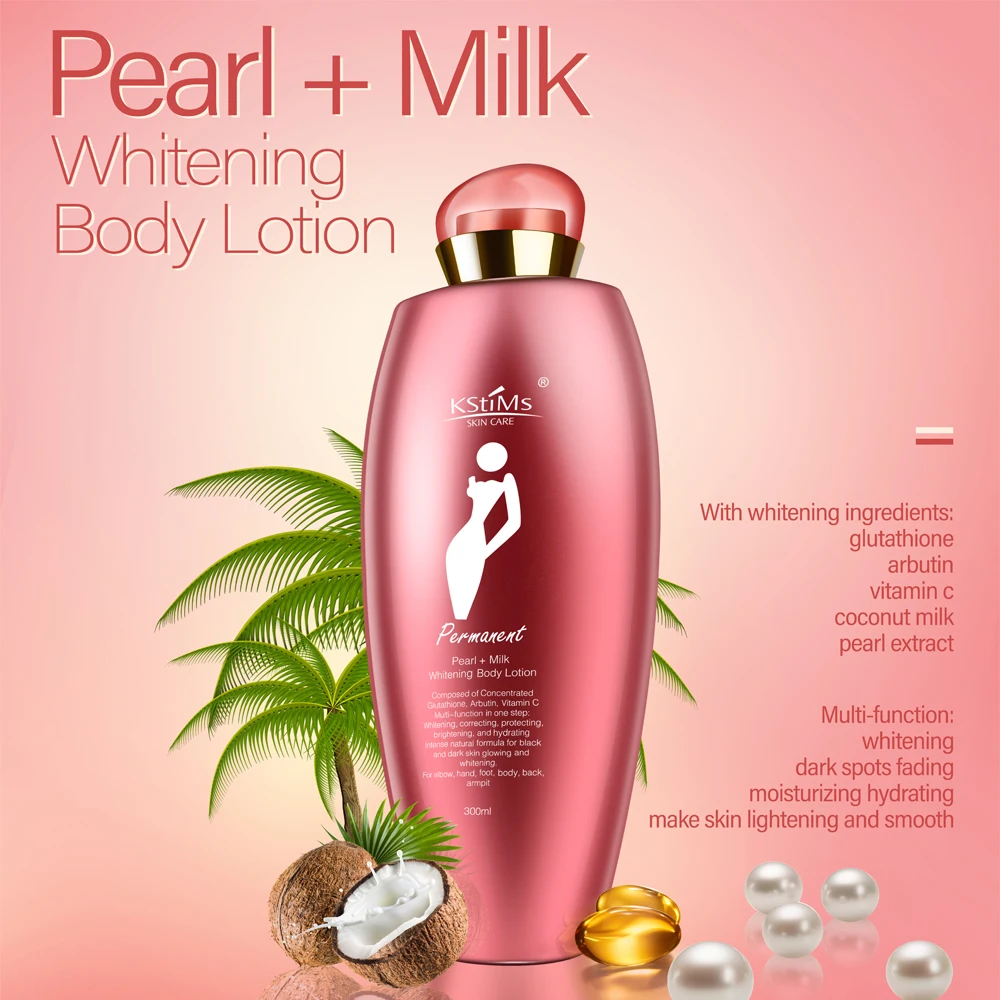
For a balanced formula, consider the Korea Women Whitening Coconut Pearl Milk Body Lotion. It combines coconut oil and pearl extract to brighten and nourish. Suitable for dark skin, it lightens without irritation. Use daily for a gradual, even glow.
Lifestyle Habits That Enhance Results
Diet affects skin tone. Vitamin C-rich foods (oranges, bell peppers) support collagen. Stay hydrated. Wear sunscreen even indoors—UV rays penetrate windows. Sleep helps skin repair. Avoid smoking and excessive alcohol. These habits amplify your whitening body lotion’s effects.
When to Consult a Dermatologist
If hyperpigmentation persists or worsens, see a dermatologist. They can prescribe stronger treatments like chemical peels or laser therapy. Also, if you experience allergic reactions (redness, itching), discontinue use. Professional advice ensures safety and efficacy.
Korea Women Whitening Coconut Pearl Milk Body Lotion Whitening Skin Body Lotion Lightening for Dark Skin and Black Skin 300ml
For a gentle yet effective option, the Korea Women Whitening Coconut Pearl Milk Body Lotion uses coconut oil and pearl extract to gradually lighten dark skin.
Frequently asked questions
How long does it take for a whitening body lotion to show results?
Typically 4–8 weeks of consistent use, depending on the ingredients and your skin type.
Can whitening body lotion be used on sensitive skin?
Yes, but choose fragrance-free, gentle formulas with niacinamide or aloe. Patch test first.
Do I need to use sunscreen with a whitening body lotion?
Absolutely. Sun exposure darkens skin and counteracts lightening effects. Use SPF 30+ daily.
Is a whitening body lotion safe during pregnancy?
Most are safe, but avoid ingredients like hydroquinone and retinoids. Consult your doctor.