
Blog
Floating Bathroom Vanity Buying Guide: Style & Function
Buying Guide
Your Complete Floating Bathroom Vanity Guide
A floating bathroom vanity can transform your space, adding a modern touch while making cleaning a breeze. In this guide, we’ll walk you through everything you need to know to choose the perfect one for your home.
What Is a Floating Bathroom Vanity?
A floating bathroom vanity is mounted directly to the wall, leaving the floor clear beneath it. This design creates an airy, open feel and makes cleaning the floor effortless. Unlike traditional vanities that sit on the floor, floating vanities can make a small bathroom appear larger by exposing more floor area.
They come in various styles, from sleek modern to rustic natural wood, and can be paired with different sink types. The key advantage is the illusion of space, but they also offer practical benefits like easy floor mopping and extra storage options below.
Key Benefits of Choosing a Wall-Mounted Vanity
Opting for a floating bathroom vanity brings several advantages beyond aesthetics. First, it clears floor space, making the room feel larger and less cluttered. This is especially valuable in compact bathrooms where every inch counts.
- Easy Cleaning: No obstructions on the floor mean you can sweep or mop without moving furniture.
- Accessibility: The open space underneath can accommodate a small stool or storage baskets.
- Modern Look: The floating effect instantly updates the bathroom’s style.
- Customizable Height: You can mount it at the perfect height for your family.
How to Choose the Right Size and Layout
Before purchasing a floating bathroom vanity, measure your available wall space carefully. Standard widths range from 24 to 60 inches. A 24-inch vanity works well for powder rooms or small guest baths, while larger families may prefer a double sink vanity.
Consider the sink type: integrated sinks are seamless and easy to clean, while vessel sinks sit on top and make a statement. Also, think about counter space. If you need room for toiletries, choose a vanity with a wider counter or a backsplash ledge.
Materials Matter: Durability and Style
The material of your floating bathroom vanity affects both its look and longevity. Solid wood offers warmth and can be refinished, but it requires sealing against moisture. Engineered wood like MDF with a veneer is more budget-friendly and resistant to warping.
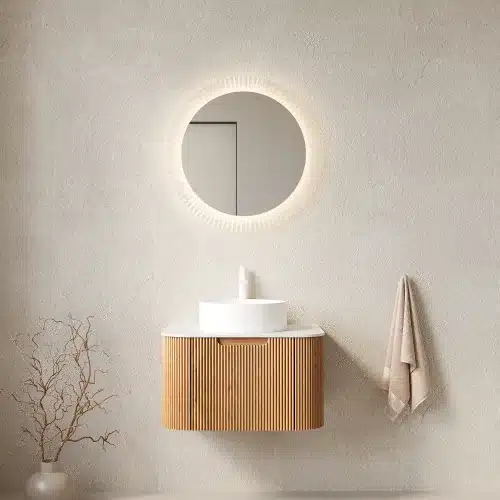
For a natural look, consider vanities with a natural woodgrain finish. They bring organic texture to the bathroom. Pair with a white ceramic basin for a clean, timeless contrast. Avoid particleboard in humid areas as it may swell over time.
Installation Tips for a Secure Mount
Installing a floating bathroom vanity requires proper wall support. Since the vanity bears weight without floor contact, it must be anchored into wall studs. Use a stud finder to locate studs and mark their positions.
If your wall has no studs where needed, use heavy-duty toggle bolts or a mounting bracket. Always follow the manufacturer’s instructions. For a 24-inch vanity, two studs are usually sufficient. Ensure the vanity is level before tightening all screws. If you’re unsure, hire a professional.
Design Ideas to Complement Your Vanity
A floating bathroom vanity pairs well with various design themes. For a spa-like retreat, combine it with natural stone tiles and soft lighting. In a modern minimalist bathroom, choose a vanity with clean lines and a glossy finish.
Add a large mirror above to enhance the sense of space. Under-vanity lighting can create a dramatic floating effect. For storage, install open shelving or a small cabinet nearby. Remember, the vanity is the focal point, so keep surrounding decor simple.
For more on bathroom design principles, check out this Wikipedia article on bathrooms.
Maintenance and Care for Longevity
To keep your floating bathroom vanity looking new, wipe spills immediately and avoid harsh chemicals. Use a soft cloth with mild soap and water. For wood finishes, apply a furniture polish occasionally to maintain luster.
Check the mounting hardware annually to ensure it remains tight. If you notice any movement, tighten screws or consult a professional. With proper care, a quality vanity can last for years.
Floating Vanity vs. Traditional Vanity: Which Is Better?
Both options have pros and cons. A floating bathroom vanity offers a modern aesthetic and easier cleaning, but requires secure wall mounting and may have less storage. Traditional vanities provide more storage and are easier to install, but they take up floor space and can feel bulky.
Your choice depends on your priorities. If you value a clean, open look and don’t mind a bit of DIY, go floating. If you need maximum storage and simplicity, traditional might be better. For most modern homes, the floating style is a popular upgrade.
24″ Bathroom Vanity&Sink, Floating Curved Edges Striped, White Round Ceramic Basin Natural Woodgrain Color
For a stylish and space-saving option, consider the 24″ Bathroom Vanity & Sink, Floating Curved Edges Striped, White Round Ceramic Basin Natural Woodgrain Color, which blends modern design with natural warmth.
Frequently asked questions
Can a floating bathroom vanity be installed in any bathroom?
Yes, as long as the wall can support the weight. It’s best to mount into studs or use heavy-duty anchors. Check local building codes.
How much weight can a floating vanity hold?
It depends on the mounting method and materials. Typically, a 24-inch vanity can hold 100-200 pounds when properly installed. Always check manufacturer specs.
What is the standard height for a floating vanity?
Standard height is 32-36 inches from the floor, but you can adjust based on user needs. Measure from the floor to the top of the counter.
Are floating vanities hard to clean underneath?
Not at all. The open space makes it easy to sweep or mop. You can even use a robot vacuum in some cases.