
Blog
How to Choose a Bathroom Vanity with Sink
Buying Guide
The Ultimate Bathroom Vanity with Sink Guide
A bathroom vanity with sink is the centerpiece of any bathroom remodel. Whether you’re upgrading a powder room or renovating a master bath, choosing the right vanity combines style, storage, and functionality.
Why a Bathroom Vanity with Sink Matters
A well-chosen bathroom vanity with sink anchors the room and sets the tone. It’s where you start and end your day, so it needs to be both beautiful and practical. The right vanity provides essential storage for toiletries, towels, and cleaning supplies, while the sink and countertop must withstand daily use. Think about how you use your bathroom: Do you need double sinks for busy mornings? A single sink with extra counter space? Understanding your habits is the first step.
Measure Your Space for the Best Bathroom Vanity with Sink
Before shopping, measure your bathroom carefully. Standard vanity widths range from 24 to 72 inches, but custom sizes are available. Leave at least 21 inches of clearance in front for comfortable use, and ensure the vanity depth (typically 18–22 inches) doesn’t obstruct doors or walkways. Don’t forget to account for plumbing rough-in—the distance from the wall to the drainpipe center, usually 12–16 inches. A common mistake is buying a vanity that won’t fit the existing plumbing. Always double-check measurements.
Materials: What to Look for in a Bathroom Vanity with Sink
The material of your bathroom vanity with sink affects durability, maintenance, and style. Solid wood (like oak or maple) offers timeless appeal and can be refinished, but it’s susceptible to water damage if not sealed properly. Plywood is more moisture-resistant and often used in high-quality vanities. MDF (medium-density fiberboard) is budget-friendly but less durable. For countertops, quartz and granite are popular for their durability and easy cleaning, while marble adds luxury but requires more care. Sink materials include porcelain, ceramic, and solid surface—each with its own pros and cons.
Plywood vs. Solid Wood
Plywood is engineered to resist warping and moisture, making it an excellent choice for bathrooms. Solid wood may expand and contract with humidity. For a balance of durability and cost, many experts recommend plywood construction with a hardwood veneer. Learn more about wood types at Wikipedia’s plywood article.
Sink Styles for Your Bathroom Vanity with Sink
The sink is an integral part of your bathroom vanity with sink. Undermount sinks sit below the countertop for a seamless look and easy wipe-down. Drop-in (self-rimming) sinks are easier to install but have a visible rim. Vessel sinks sit on top of the counter and make a bold design statement, though they require taller faucets. Integrated sinks are molded as part of the countertop, offering a sleek, modern appearance with no crevices for grime. Choose a style that matches your maintenance preferences and aesthetic.
Storage Solutions in a Bathroom Vanity with Sink
Storage is a key factor when selecting a bathroom vanity with sink. Drawers provide easy access to small items, while cabinets with shelves are great for bulky bottles. Consider vanities with built-in organizers, pull-out trays, or hidden compartments. For small bathrooms, a vanity with a single sink and plenty of drawers can maximize space. If you have a large family, a double vanity with two sinks and generous cabinetry might be worth the investment. Think about what you need to store—from hair dryers to extra toilet paper—and choose a layout that accommodates it.
Installation Considerations for a Bathroom Vanity with Sink
Installing a bathroom vanity with sink can be a DIY project or left to a professional. Pre-assembled vanities save time and reduce errors. Make sure the vanity is level and securely anchored to the wall, especially if it’s a floor-standing model. For wall-mounted vanities, ensure the wall can support the weight. Connect the plumbing carefully to avoid leaks. If you’re not confident in your skills, hiring a licensed plumber is wise. Also, check local building codes for venting and drain requirements.
Style and Design Trends for Bathroom Vanities with Sink
From classic to contemporary, the style of your bathroom vanity with sink should complement your home’s decor. Vintage-inspired vanities with carved legs and ornate details add charm. Modern designs feature clean lines, minimal hardware, and floating installations. Mid-century modern vanities with tapered legs and warm wood tones are popular. Color trends include navy, sage green, and soft gray, while white remains a timeless choice. Don’t forget hardware—knobs and pulls can transform the look. Ultimately, choose a vanity that makes you happy every time you walk into the bathroom.
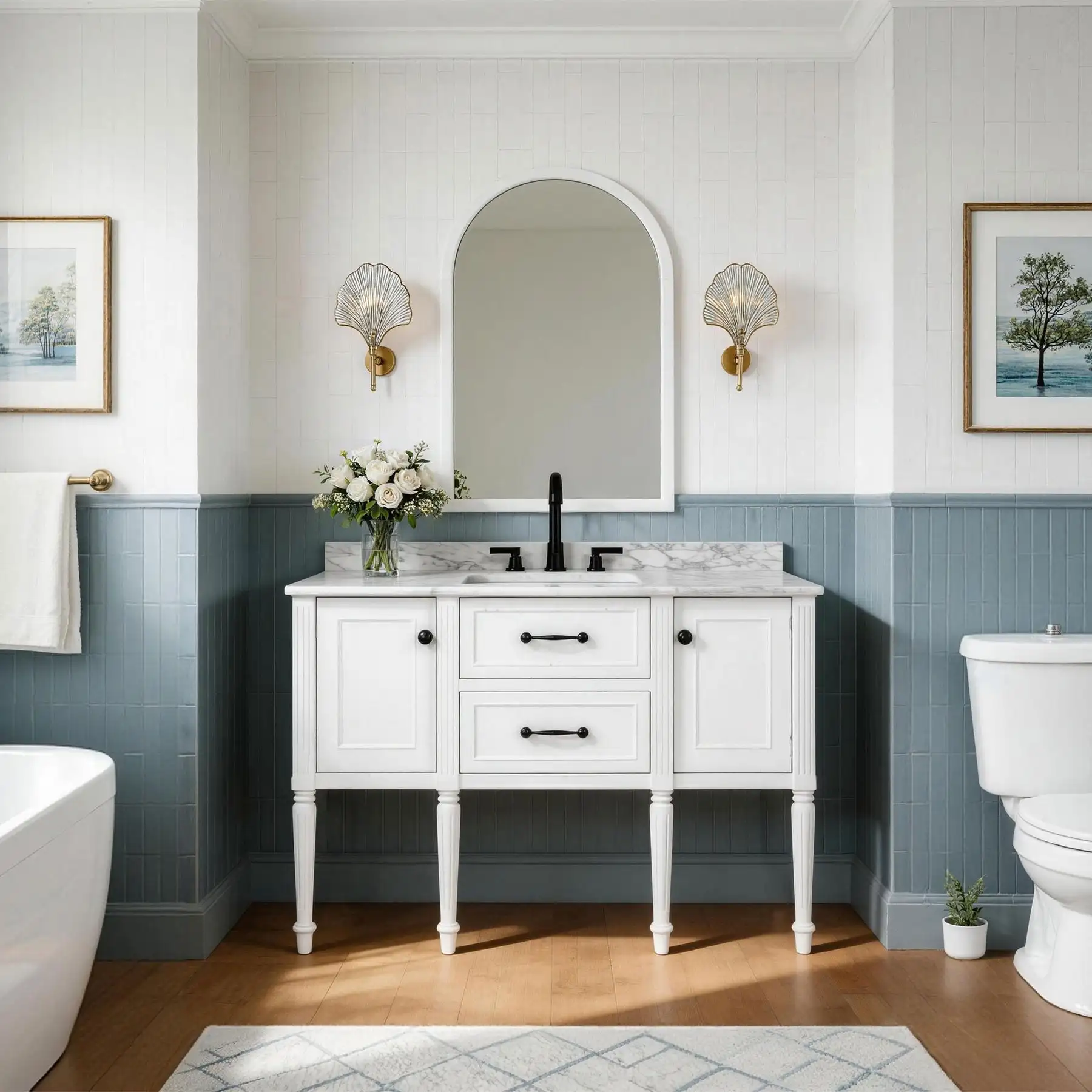
US Free Shipping Classic Elegant Vintage Plywood Floor Standing Pre-assembled Bathroom Vanity Washbasin Cabinets with Sink
For a timeless choice, consider our US Free Shipping Classic Elegant Vintage Plywood Floor Standing Pre-assembled Bathroom Vanity Washbasin Cabinets with Sink, which combines durability with old-world charm.
Frequently asked questions
What size bathroom vanity with sink should I choose?
Measure your space leaving at least 21 inches of clearance in front. Common widths are 24, 30, 36, 48, 60, and 72 inches. Depth is usually 18–22 inches. Ensure the vanity fits your plumbing rough-in (typically 12–16 inches from wall to drain). For small bathrooms, a 24–30 inch vanity works well; larger spaces can accommodate double vanities.
What is the best material for a bathroom vanity with sink?
Plywood is highly recommended for its moisture resistance and durability. Solid wood is classic but needs proper sealing. MDF is budget-friendly but less durable. For countertops, quartz and granite are top choices; for sinks, porcelain or ceramic are easy to clean. Choose based on your budget and maintenance preferences.
How do I install a bathroom vanity with sink?
Start by turning off water and disconnecting old plumbing. Position the new vanity, level it, and secure to wall studs. Connect the drain and water supply lines, then seal gaps with caulk. Pre-assembled vanities simplify installation. If unsure, hire a professional plumber.
Can I use a vessel sink on any bathroom vanity with sink?
Vessel sinks require a countertop with a hole for the drain and enough height for the sink. They also need a tall faucet (at least 6 inches high). Ensure your vanity countertop is solid and flat. Vessel sinks add style but may splash more, so consider placement.