
Blog
Black White Chandelier Buying Guide: Style & Light
Lighting Guide
The Black White Chandelier: A Timeless Statement
A black white chandelier is more than just a light fixture—it’s a design anchor that can define an entire room. Whether you’re renovating or simply refreshing a space, this guide will help you choose the perfect one for your home.
Why Choose a Black White Chandelier?
The contrast of black and white is a classic pairing that brings a sense of balance and sophistication to any interior. A black white chandelier can serve as a striking focal point in a dining room, entryway, or living area. The monochromatic palette allows it to blend seamlessly with various design styles—from modern and minimalist to industrial and traditional.
Beyond its aesthetic appeal, a black and white chandelier offers versatility. It can anchor a room with bold geometric shapes or provide a subtle accent when designed with clean lines. The key is to find a piece that resonates with your personal taste and the character of your space.
Understanding Chandelier Styles
Chandeliers come in a myriad of styles, each bringing its own personality. When you’re looking at a black white chandelier, consider the overall vibe you want to achieve:
- Modern: Sleek lines, minimal ornamentation, and often featuring materials like metal and glass. A black white chandelier in this style might have a simple drum shade or a linear frame.
- Industrial: Raw materials, exposed bulbs, and a utilitarian feel. Think black metal cages or white enamel shades combined with rustic elements.
- Traditional: Classic shapes, ornate details, and often using materials like brass or crystal. A black white chandelier can reinterpret these with a two-tone finish.
- Transitional: A blend of traditional and modern, featuring clean lines with a hint of classic elegance. This style often incorporates both black and white in balanced proportions.
Take time to browse different designs and imagine how they would look in your space. The right style will enhance your existing decor without overwhelming it.
Size and Scale: Getting It Right
One of the most common mistakes in choosing a chandelier is selecting the wrong size. A black white chandelier that’s too small will get lost in a large room, while one that’s too large can dominate and feel cramped. Here are some guidelines to help you measure correctly:
- Diameter: For a dining table, the chandelier should be about half to two-thirds the width of the table. For a room, add the length and width in feet, and that number (in inches) is a good starting diameter.
- Height: The bottom of the chandelier should hang about 30 to 36 inches above a dining table. In a foyer, the bottom should be at least 7 feet from the floor to allow clearance.
- Proportion: Consider the scale of the room and other furniture. A large, dramatic chandelier can work in a grand space, while a smaller, delicate piece suits a cozy nook.
When in doubt, go slightly larger than you think. A chandelier that makes a statement is often more impactful than one that’s too timid.
Placement Tips for Maximum Impact
Where you hang your black white chandelier can transform the ambiance of a room. Here are some placement ideas to consider:
- Dining Room: Center it over the table, ensuring it’s not too high or too low. The light should illuminate the table without blocking conversation.
- Entryway: A chandelier in the foyer creates a warm welcome. Hang it so it’s visible from outside through windows, if possible.
- Living Room: Use it as a central feature, perhaps over a coffee table or seating area. Make sure it doesn’t obstruct walkways.
- Bedroom: For a softer touch, consider a chandelier with a dimmer switch. Place it off-center to create visual interest, or in a reading nook.
Always consider the traffic flow and the line of sight. The chandelier should be a highlight, not a hazard.
Lighting and Bulb Choices
The type of bulbs you choose can dramatically affect the mood of your black white chandelier. Here’s what to keep in mind:
- Warm vs. Cool Light: Warm white (2700K-3000K) creates a cozy, inviting atmosphere, perfect for living spaces. Cool white (3500K-4100K) is more energizing and works well in kitchens or workspaces.
- Bulb Shapes: The shape of the bulb can add to the aesthetic. Edison bulbs give a vintage vibe, while globe bulbs offer a modern touch. Candles are classic for traditional designs.
- Dimmers: Installing a dimmer switch gives you control over the brightness, allowing you to shift from bright task lighting to soft ambient glow.
Remember, some chandeliers come with specific bulb requirements, so always check the specifications. And if your chandelier doesn’t include bulbs, factor that into your budget.
Materials and Durability
When investing in a black white chandelier, consider the materials used. Quality materials ensure longevity and ease of maintenance. Here are some common options:
- Metal: Iron, steel, and aluminum are sturdy and can be finished in various ways—matte black, brushed nickel, or white powder coating.
- Glass: Shades or globes made of glass diffuse light beautifully and are easy to clean.
- Wood: Some designs incorporate wood accents, adding warmth and texture.
Think about the environment: a humid bathroom may require rust-resistant materials, while a coastal home might benefit from finishes that withstand salt air. Always follow the manufacturer’s care instructions.
Mixing with Your Decor
A black white chandelier can be the perfect complement to your existing decor. Here’s how to integrate it seamlessly:
- Match or Contrast: If your room has black or white elements, the chandelier can echo them. Or, use it as a contrast piece to add drama.
- Color Accents: The monochrome palette provides a neutral base, allowing you to introduce color through other accessories like pillows, rugs, or artwork.
- Style Fusion: Don’t be afraid to mix styles. A modern chandelier can look great in a traditional room, adding an unexpected twist.
Ultimately, trust your instincts. The best chandelier is one that makes you smile every time you enter the room.
Installation and Safety
Proper installation is crucial for both safety and performance. While some handy homeowners can install a chandelier themselves, it’s often best to hire a licensed electrician, especially if you’re replacing an existing fixture or need to add new wiring. Here are a few safety tips:
- Turn off power: Always cut electricity at the breaker before starting any work.
- Check weight: Ensure your ceiling box can support the weight of the chandelier. Heavy fixtures may require additional support.
- Follow codes: Adhere to local building codes and regulations.
- Use proper hardware: Use the included mounting hardware and tighten all connections securely.
If you’re unsure about any step, consult a professional. It’s better to be safe than sorry.
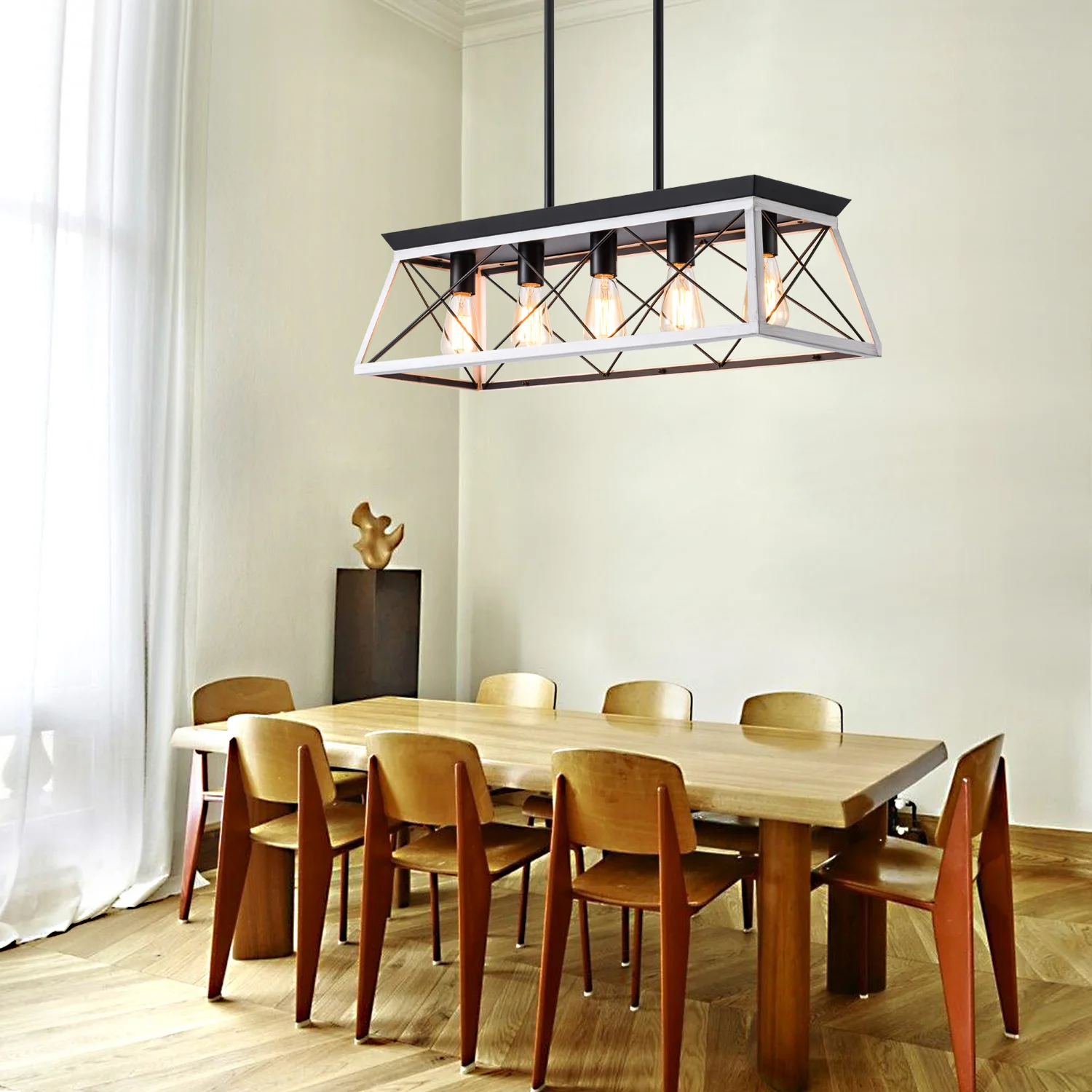
32″ Black White 5-Light Pendant Chandelier, Modern Metal Cage Design, Adjustable Hanging Light (No Bulbs)
If you’re looking for a versatile and stylish option, consider our 32″ Black White 5-Light Pendant Chandelier with a modern metal cage design and adjustable hanging height—it’s a perfect fit for various spaces.
Frequently asked questions
How do I choose the right size chandelier for my room?
Measure the length and width of the room in feet, add them together, and that sum (in inches) is a good diameter for the chandelier. For dining tables, choose a fixture that is about half to two-thirds the table’s width.
Can I use a black white chandelier in a room with low ceilings?
Yes, but you’ll need to be careful about hanging height. Look for chandeliers with adjustable chains or rods, and ensure the bottom hangs at least 7 feet from the floor. A flush mount or semi-flush mount might be a better option for very low ceilings.
What kind of bulbs should I use for a chandelier?
It depends on the look you want. Warm white LED bulbs (2700K-3000K) create a cozy ambiance, while cool white (3500K-4100K) offers brighter, more energizing light. Choose bulb shapes that complement the fixture’s style, and check if the chandelier has a maximum wattage.
Are black white chandeliers suitable for coastal or humid environments?
Yes, but you’ll need to select materials that resist corrosion, such as stainless steel or powder-coated metal. Avoid raw iron or other rust-prone materials. Also, ensure proper ventilation to reduce humidity buildup.
