
Blog
Dimmable LED Chandelier Buying Guide: Bright Ideas
Lighting Guide
Choosing Your Perfect Dimmable LED Chandelier
A dimmable LED chandelier can transform a room, offering both ambiance and energy efficiency. This guide will walk you through the key considerations to find the ideal fixture for your home.
Why Choose a Dimmable LED Chandelier?
Dimmable LED chandeliers are more than just a lighting fixture; they are a versatile tool for setting the mood in any room. Unlike traditional chandeliers, which often require separate dimmer switches and special bulbs, a dimmable LED chandelier integrates the dimming capability into the fixture itself or works seamlessly with compatible dimmers. This means you can go from bright, functional light for everyday activities to a soft, warm glow for entertaining or relaxing.
LED technology also offers significant energy savings and a longer lifespan compared to incandescent or halogen bulbs. According to the U.S. Department of Energy, LEDs use at least 75% less energy and last 25 times longer than incandescent lighting. This makes a dimmable LED chandelier an eco-friendly and cost-effective choice for your home.
Key Factors to Consider When Buying
Before you start shopping, it’s helpful to understand the main features that differentiate one dimmable LED chandelier from another. Here are the critical factors to keep in mind:
- Light Output (Lumens): This measures brightness. Consider the size of your room and how much light you need. A larger room may require a chandelier with higher lumens.
- Color Temperature: Measured in Kelvin (K), this indicates the warmth or coolness of the light. Lower Kelvin numbers (2700K-3000K) produce a warm, cozy glow, while higher numbers (3500K-5000K) emit a cooler, more energizing light.
- Dimmable Range: Check if the chandelier can dim down to a very low level (like 5%) or if it only dims to 20%. A wider range gives you more flexibility.
- Compatibility: Some LED chandeliers come with their own remote or smart control, while others require a compatible wall dimmer. Make sure you choose one that fits your existing setup or is easy to install.
- Size and Scale: The chandelier should be proportional to your room and table or foyer. As a rule of thumb, the diameter of the chandelier should be about half to two-thirds the width of your dining table or entryway.
Understanding Light Output and Color Temperature
Light output and color temperature are two technical specs that greatly affect the ambiance of your space. Let’s break them down.
Lumens: How Bright Is Bright?
Lumens measure the total amount of visible light emitted by a source. For a chandelier, you’ll want to consider the room’s purpose. For a dining room, you might want around 3000-6000 lumens to properly illuminate the table. For a foyer or hallway, 2000-4000 lumens might be sufficient. A dimmable LED chandelier lets you adjust the brightness to suit the moment, so you can have bright light for reading or cleaning, and dim light for a romantic dinner.
Kelvin: Warm vs. Cool Light
Color temperature affects the mood. Warm white (2700K-3000K) is flattering and cozy, ideal for living rooms and bedrooms. Neutral white (3500K-4000K) is crisp and invigorating, great for kitchens and workspaces. Cool white (5000K and above) mimics daylight and can be harsh for residential settings. Many dimmable LED chandeliers offer a selectable color temperature, allowing you to switch between warm and cool light depending on your preference and the time of day.
Size and Placement: Getting the Scale Right
One of the most common mistakes in choosing a chandelier is getting the size wrong. A chandelier that is too large can overwhelm a room, while one that is too small can get lost. Here are some guidelines to help you choose the right size.
- For a Dining Room: The chandelier should be about 12 inches narrower than the table it’s over. Hang it so the bottom is about 30-36 inches above the table surface.
- For a Foyer: The chandelier should be at least 2 feet from the walls. Hang it so the bottom is at least 7 feet above the floor to avoid head bumps.
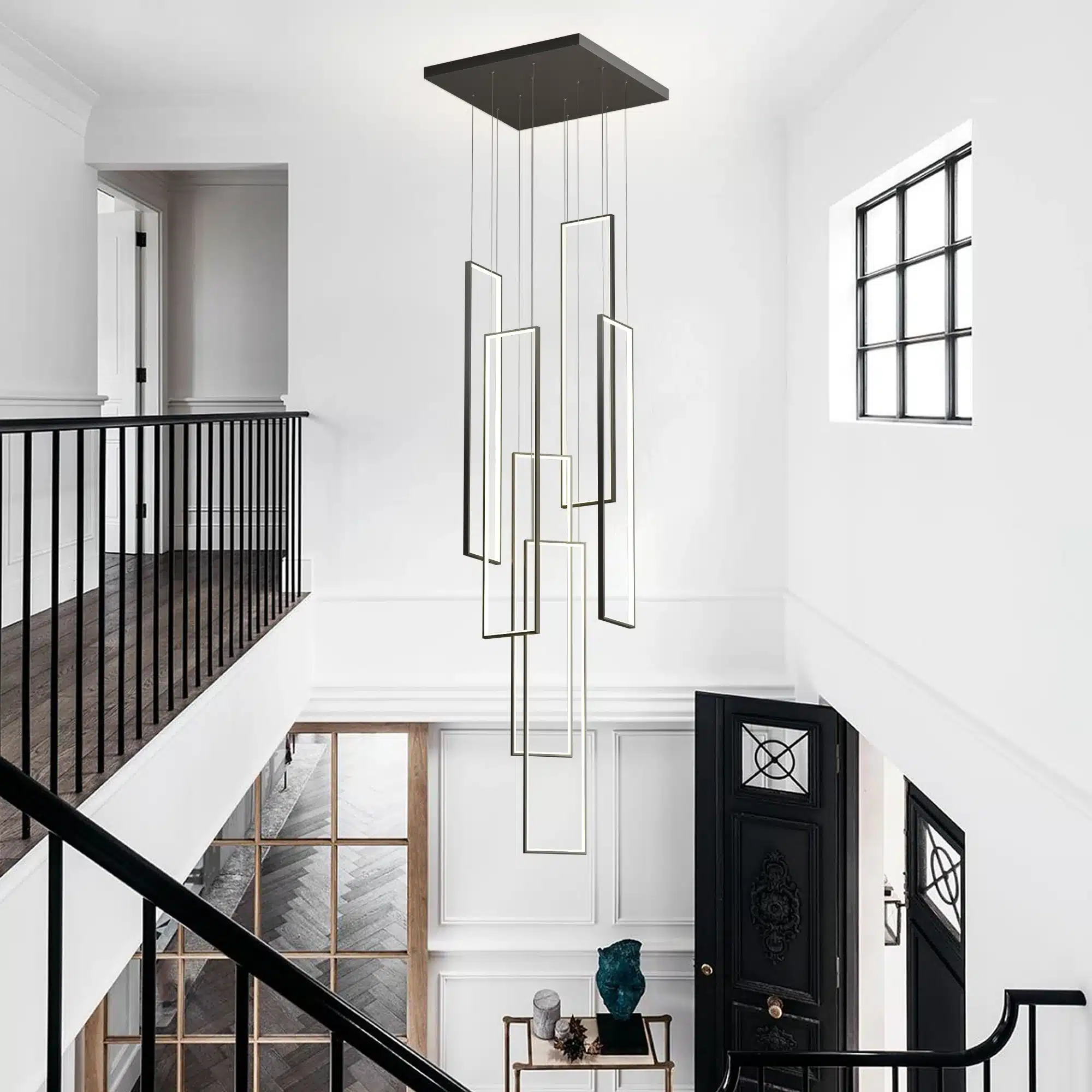
- For a Staircase: Consider the vertical space. A linear or rectangular chandelier can work well over a staircase, but make sure it’s hung high enough to not obstruct the path.
Also, think about the visual weight of the fixture. A heavy, ornate chandelier might not suit a minimalist space, while a sleek, modern design can complement contemporary interiors.
Style and Design: Matching Your Decor
A chandelier is often a focal point, so its style should harmonize with your existing decor. Whether your home is modern, traditional, industrial, or transitional, there’s a dimmable LED chandelier to match.
Modern and Minimalist
Clean lines, geometric shapes, and metallic finishes define modern chandeliers. They often feature integrated LEDs and come in black, brass, or chrome. A black rectangle pendant light, for instance, adds a sleek, architectural touch to a contemporary space.
Traditional and Classic
Classic chandeliers feature ornate details, crystal accents, and candle-style bulbs. Many now come with LED-compatible sockets or built-in LEDs that mimic the warm glow of incandescent bulbs.
Rustic and Industrial
Wood, wrought iron, and exposed bulbs give a rustic or industrial vibe. These chandeliers often use Edison-style LED bulbs that provide a warm, amber light.
When choosing a style, consider the overall theme of your home and the specific room where the chandelier will be installed. Don’t be afraid to mix styles – a modern chandelier can add an interesting contrast to a traditional room.
Smart Features and Controls
Technology has made it easier than ever to control your lighting. Many dimmable LED chandeliers now come with smart features that enhance convenience and energy savings.
- Remote Control: Adjust brightness, color temperature, and sometimes even set schedules from the comfort of your couch.
- Smart Home Integration: Some chandeliers work with Amazon Alexa, Google Assistant, or Apple HomeKit, allowing you to control them with voice commands.
- App Control: Dedicated apps let you fine-tune lighting scenes, set timers, and monitor energy usage.
- Memory Function: This remembers your last settings when you turn the light off and on.
If you’re tech-savvy, these features can significantly improve your lighting experience. However, even a basic dimmable LED chandelier with a wall dimmer can provide excellent versatility.
Energy Efficiency and Longevity
One of the primary benefits of LED lighting is its energy efficiency. LEDs convert most of the energy they use into light, rather than heat, making them much more efficient than traditional bulbs. According to Energy.gov, LEDs use up to 90% less energy and last up to 25 times longer than incandescent lighting. This means significant savings on your electricity bill and fewer bulb replacements.
Dimmable LED chandeliers also allow you to reduce energy consumption even further. Dimming the lights by 25% can save about 20% on electricity, and it extends the lifespan of the LED chips. So not only do you get the perfect ambiance, but you also contribute to a more sustainable home.
Modern Dimmable 6-Light LED Chandelier, Black Rectangle Pendant Light with Remote for High Ceiling, Staircase, Foyer, Entryway
For a versatile and stylish option, consider the Modern Dimmable 6-Light LED Chandelier from Goldoma, which features a sleek black rectangular design and a convenient remote for adjusting light levels in high-ceiling spaces.
Frequently asked questions
Can I use a dimmable LED chandelier with my existing dimmer switch?
Many dimmable LED chandeliers are compatible with standard trailing-edge dimmers, but it’s essential to check the product specifications. Some require specific dimmer types or come with their own remote. If you’re unsure, consult an electrician or choose a chandelier with its own remote control.
What is the ideal color temperature for a living room chandelier?
For a living room, a warm white around 2700K-3000K is generally recommended as it creates a cozy and inviting atmosphere. However, some modern chandeliers offer adjustable color temperatures, allowing you to switch to a cooler, more energizing light for tasks like reading.
How do I determine the right size chandelier for my room?
A simple rule is to add the room’s length and width in feet, and the sum in inches should be the chandelier’s diameter. For example, a 12×14-foot room would suit a chandelier around 26 inches in diameter. Also, ensure the chandelier hangs at least 7 feet above the floor.
Are LED chandeliers more expensive than traditional ones?
The upfront cost of an LED chandelier can be higher, but you’ll save money in the long run through lower energy bills and reduced maintenance. LEDs last much longer than incandescent bulbs, so you won’t need to replace them as often.
