
Blog
LED Pendant Lamp Buying Guide: Style & Light
Lighting Guide
Find Your Perfect LED Pendant Lamp
Choosing the right LED pendant lamp can transform a room, but with so many options, it’s easy to feel overwhelmed. This guide will help you navigate the key factors to make an informed decision.
Why Choose an LED Pendant Lamp?
LED pendant lamps have become a favorite in modern interiors for good reason. They offer energy efficiency, long lifespan, and a sleek aesthetic that fits various design styles. Unlike traditional incandescent bulbs, LEDs produce less heat and consume significantly less electricity, which is better for both your wallet and the environment.
Moreover, pendant lamps provide focused task lighting or ambient glow, making them versatile for kitchens, dining areas, and living spaces. Their suspended design adds visual interest and can draw the eye upward, making ceilings appear higher.
Finding the Right Style for Your Space
When selecting an LED pendant lamp, consider the existing decor. For a minimalist or Scandinavian look, opt for clean lines and neutral colors like black, white, or wood tones. Industrial spaces might benefit from metal finishes and exposed bulbs, while a bohemian room could embrace woven or rattan shades.
Think about the mood you want to create. A globe or dome pendant provides diffused light, perfect for cozy corners. Linear or multi-light pendants are excellent over kitchen islands, offering both function and style.
Sizing and Proportion: Get the Scale Right
Size matters more than you think. A pendant that’s too small gets lost in a large room, while an oversized one overwhelms a compact area. As a rule of thumb, add the room’s length and width in feet, and convert that sum to inches for a suitable diameter. For example, a 12×14-foot room would call for a pendant around 26 inches in diameter.
Over a dining table, the fixture should be about one-third to one-half the table’s width. Hang it so the bottom is 30 to 36 inches above the tabletop. For kitchen islands, leave 32 to 36 inches from the counter to the bottom of the light, and space multiple pendants about 24 to 30 inches apart.
Understanding Light Output and Color Temperature
Light output is measured in lumens, not watts. For ambient lighting, aim for about 300 to 400 lumens per square meter. For task areas like reading nooks or kitchen counters, you’ll want brighter output, around 500 to 700 lumens per square meter.
Color temperature affects mood: warm white (2700K-3000K) creates a cozy, inviting atmosphere, ideal for living rooms and bedrooms. Neutral white (3500K-4500K) suits kitchens and bathrooms, where clarity is important. Cool white (5000K-6500K) mimics daylight and is best for workspaces, but can feel stark in residential settings.
Dimmable Options and Smart Controls
Many LED pendant lamps are dimmable, allowing you to adjust brightness to suit different occasions. Check if the fixture is compatible with your existing dimmer switch; some LEDs require a specific type. Alternatively, consider smart pendants that connect to apps or voice assistants, offering convenient control and scheduling.
Dimmability adds flexibility, letting you transition from bright task lighting to a soft evening glow.
Installation and Maintenance Tips
Installing a pendant lamp may require basic electrical knowledge. If you’re not confident, hire a licensed electrician to ensure safety. Pay attention to the ceiling’s weight capacity and use appropriate mounting hardware. Also, consider the cord length – many pendants come with adjustable cords or chains, but you may need to trim them to achieve the desired height.
Maintenance is simple: dust the fixture regularly and replace the LED module if it ever fails (though good quality LEDs can last 25,000 hours or more).
Where to Place LED Pendant Lamps
The placement of your LED pendant lamp can dramatically affect the room’s functionality and aesthetics. Over a kitchen island, a row of pendants provides focused light for meal prep. In a dining room, a single statement pendant creates a focal point. In a living room, consider placing pendants over side tables or in reading corners for task lighting.
In hallways or entryways, a pendant can make a stylish first impression. For staircases, a linear pendant can illuminate the path safely. Always ensure the fixture is hung at a height that doesn’t obstruct views or traffic.
For more inspiration on lighting design, you can explore [architectural lighting principles](https://en.wikipedia.org/wiki/Lighting_design).
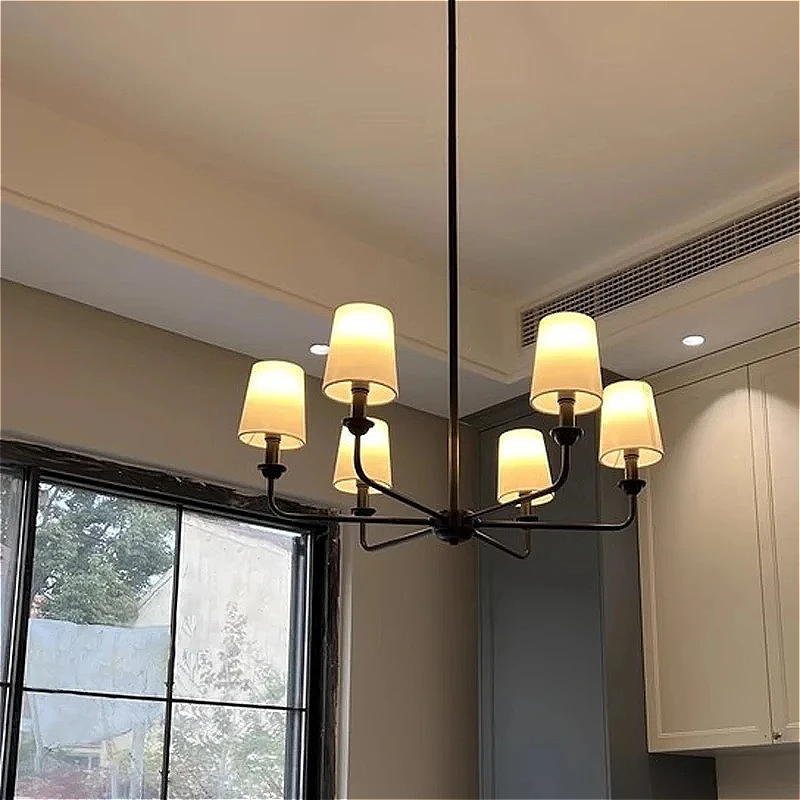
American Style LED Pendant Lamp Modern Minimalist Chandelier Kitchen Island Restaurant Bar Living Room Home Decor Factory Direct
For a stylish and affordable option, consider the American Style LED Pendant Lamp Modern Minimalist Chandelier, which offers clean lines and versatile design suitable for kitchens, islands, and living spaces.
Frequently asked questions
How do I choose the right size LED pendant lamp?
Measure the room’s length and width in feet, add them together, and convert the sum to inches for a recommended diameter. For table lighting, the fixture should be about one-third to one-half the table’s width, and hang it 30-36 inches above the tabletop.
What color temperature is best for a kitchen island?
For a kitchen island, a neutral white (3500K-4500K) is often recommended because it provides clear, bright light that helps with food preparation and looks clean. You can also use warm white if you prefer a cozier feel.
Can I install a pendant lamp on a sloped ceiling?
Yes, but you’ll need a sloped ceiling adapter or a pendant designed for sloped ceilings. Make sure to follow the manufacturer’s instructions or consult an electrician to ensure proper installation and clearance.
Are LED pendant lamps dimmable?
Many LED pendant lamps are dimmable, but check the product specifications for compatibility with dimmer switches. Some require specific dimmers or may not be dimmable at all. Look for a ‘dimmable’ label or consult the manufacturer.
