
Blog
Solar Bird Feeder: A Bright Idea for Your Garden
Garden Guide
Solar Bird Feeder: Light Up Your Backyard
A solar bird feeder is more than just a feeding station—it’s a warm welcome for birds and a soft glow for your evening garden. Here’s how to choose and use one.
Why Choose a Solar Bird Feeder?
Solar bird feeders combine the joy of bird watching with sustainable technology. They use sunlight to power a small light that illuminates the feeder at night, creating a magical ambiance. But beyond aesthetics, they offer practical benefits: you can enjoy watching evening visitors without disturbing them, and the light can help deter predators.
Unlike traditional feeders, solar models require no wiring or batteries—just sunlight. This makes them an eco-friendly choice that reduces waste and energy consumption. Plus, they add a decorative element to your garden that changes with the seasons.
How Solar Bird Feeders Work
The concept is simple: a small solar panel on the roof of the feeder captures sunlight during the day, converting it into electricity stored in a rechargeable battery. As dusk falls, a light sensor triggers the LED lamp, casting a gentle glow around the feeder. This automatic on/off feature means you don’t have to worry about timers or switches.
Most solar feeders use energy-efficient LEDs that last for years. The battery capacity determines how long the light stays on—typically 6 to 8 hours on a full charge. In winter or cloudy weather, the light may be dimmer or shorter, but many feeders have a switch to turn off the light if you prefer.
Benefits Beyond Illumination
A solar bird feeder does more than light up your yard. It creates a focal point that draws birds closer, making them easier to observe. The gentle light can also extend your viewing time into the evening, especially for nocturnal species like owls or nightjars.
For bird enthusiasts, it’s a way to connect with nature without interfering. The light is usually soft and warm, not harsh, so it doesn’t scare birds away. In fact, some birds are attracted to the light, as it may highlight insects near the feeder.
Additionally, solar feeders are low maintenance. There’s no wiring to install, and the solar panel requires only occasional cleaning to maximize efficiency. This makes them ideal for busy gardeners or those who want a hassle-free addition to their outdoor space.
What to Look for in a Solar Bird Feeder
When shopping for a solar bird feeder, consider these key features:
- Solar Panel Quality: Look for a panel that’s large enough to charge efficiently, even in partial shade. Monocrystalline panels are more efficient than polycrystalline.
- Battery Capacity: A higher capacity (measured in mAh) means longer illumination. Some feeders have replaceable batteries, which is a plus.
- Material and Durability: Choose weather-resistant materials like metal or treated wood. Metal feeders are sturdy and can withstand harsh weather.
- Light Settings: Some models offer different modes—steady glow, blinking, or off. This lets you customize the ambiance.
- Ease of Cleaning: A feeder that’s easy to disassemble will make maintenance simpler. Look for removable trays or roofs.
Also, check the size of the feeding ports to ensure they accommodate the bird species in your area. A good feeder will have drainage holes to prevent water accumulation and seed spoilage.
Placement Tips for Maximum Efficiency
To get the most from your solar bird feeder, placement is crucial. The solar panel needs direct sunlight for several hours a day to charge fully. Ideally, place the feeder in an open area that receives morning sun, as this charges the battery early.
Avoid hanging it under dense foliage or eaves that block sunlight. If your garden is shaded, consider a feeder with a separate solar panel that can be mounted elsewhere. Also, place the feeder near shrubs or trees to give birds a quick escape route from predators, but keep it visible from your window for easy viewing.
Finally, ensure the feeder is stable and won’t swing too much in the wind, as this can spill seed and deter birds. A hook or pole mount can provide stability.
Integrating Solar Feeders into Your Garden Design
A solar bird feeder isn’t just functional; it’s a design element. Choose a style that complements your garden’s aesthetic—whether modern, rustic, or whimsical. Metal feeders with a decorative finish can add a touch of elegance, while wooden ones blend naturally.
Consider the feeder’s color and shape. Some feeders come with intricate patterns or even stained glass accents that catch the light. At night, the illuminated feeder becomes a lantern-like feature, casting interesting shadows.
You can also group multiple feeders or pair them with other solar lights to create a cohesive look. Think of the feeder as a piece of garden art that changes from day to night.
Maintenance and Care
Regular maintenance keeps your solar feeder in top condition. Clean the solar panel with a soft, damp cloth every few weeks to remove dust and bird droppings. This ensures maximum sunlight absorption.
Check the battery and light bulb periodically. If the light dims or doesn’t stay on long, the battery may need replacing. Most batteries are standard rechargeable types, easily found online or in stores.
Also, clean the feeder itself to prevent mold and bacteria. Empty and wash it every two weeks, especially in wet weather. Use a mild soap solution and rinse thoroughly. Avoid harsh chemicals that could harm birds.
In winter, some feeders may not charge well due to shorter days and lower sun angle. You can bring the feeder indoors or switch off the light to save battery. If snow covers the panel, brush it off gently.
Environmental Impact and Bird Safety
Solar bird feeders are a sustainable choice, but it’s important to consider bird safety. Ensure the feeder is made of non-toxic materials and that there are no sharp edges. The light should be gentle, not blinding, to avoid disorienting birds.
Also, keep the feeder clean to prevent disease transmission among birds. Provide fresh seed that’s appropriate for local species. A solar feeder can be a wonderful way to support bird populations, especially during migration.
Remember that birds rely on natural food sources too, so supplementing with a feeder is a bonus, not a necessity.
Choosing the Right Solar Bird Feeder for You
With so many options, it helps to narrow down based on your needs. Consider the number of birds you want to attract, the amount of sunlight your garden receives, and your design preferences. Read reviews to see how well the feeder performs in real conditions.
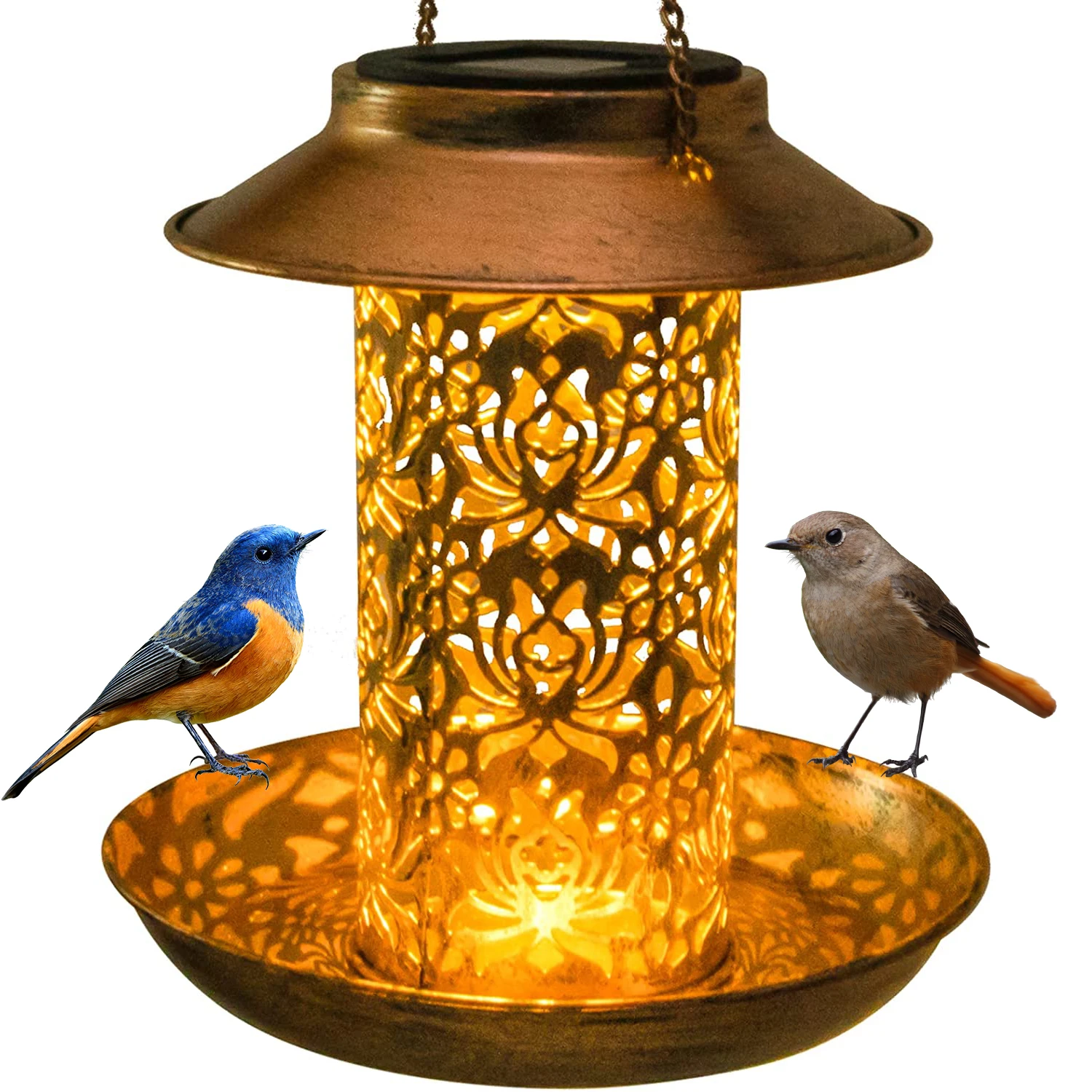
One excellent choice is the Solar Bird Feeder Metal Outdoors Hanging Bird House with Light, which combines durability with a charming design. Its metal construction ensures longevity, while the built-in light creates a cozy atmosphere. It’s a thoughtful gift for bird lovers, as it’s both practical and decorative.
Whether you’re a seasoned birder or a casual observer, a solar bird feeder is a rewarding addition to any garden. It’s a small step toward a more sustainable lifestyle, and it brings daily delight.
Solar Bird Feeder Metal Outdoors Hanging Bird House with Light Gift Ideas for Bird Lovers Outdoor Garden Backyard Decoration
If you’re looking for a reliable and attractive option, consider the Solar Bird Feeder Metal Outdoors Hanging Bird House with Light—it’s built to last and brings a warm glow to your garden.
Frequently asked questions
How long does the light stay on with a solar bird feeder?
Typically, a fully charged solar bird feeder can illuminate for 6 to 8 hours. This may vary based on battery capacity, sunlight exposure, and LED efficiency.
Do solar bird feeders work in winter?
Yes, but shorter days and lower sun angles may reduce charging efficiency. The light may be dimmer or last shorter. You can switch off the light to conserve battery or move the feeder to a sunnier spot.
Can I leave my solar bird feeder outside in the rain?
Most solar bird feeders are weather-resistant, but it’s best to check the manufacturer’s specifications. Ensure the solar panel and battery compartment are sealed to prevent water damage. Regular cleaning and maintenance help prolong its life.
What type of birds will a solar bird feeder attract?
Solar bird feeders attract a variety of birds, depending on the seed and location. Common visitors include finches, sparrows, chickadees, and cardinals. The light may also attract insects, which can draw in insect-eating species.
