
Blog
Cantilever Umbrella Base: A Complete Buying Guide
Buying Guide
Cantilever Umbrella Base: How to Choose Wisely
A cantilever umbrella base is the unsung hero of your outdoor comfort, yet many overlook its importance. This guide will help you pick the right one for your space.
Understanding the Role of a Cantilever Umbrella Base
Unlike traditional umbrellas that stand through a center pole, a cantilever umbrella offsets its canopy to the side, supported by a single arm. This design offers unobstructed shade, but it also places unique demands on the base. The base must counteract the leverage created by the offset canopy, especially when the wind picks up. A well-chosen cantilever umbrella base ensures your umbrella remains upright and safe, protecting both your guests and your patio furniture.
Key Factors in Choosing a Cantilever Umbrella Base
When shopping for a cantilever umbrella base, consider these essentials:
- Weight: Heavier bases provide more stability. As a rule of thumb, aim for at least 100 lbs (45 kg) for a standard 10-foot umbrella, but check your umbrella’s specifications.
- Material: Common materials include concrete, steel, and plastic. Concrete and steel offer maximum weight, while plastic may be filled with sand or water for portability.
- Design: Square or rectangular bases often provide a larger footprint for stability. Some models allow you to mount the pole off-center for better clearance.
- Portability: If you need to move the umbrella, consider bases with wheels or those that can be emptied for transport.
Weight Distribution and Stability
Stability is not just about total weight; it’s about how that weight is distributed. A base with a wide stance can be more stable than a heavier one with a narrow footprint. Look for bases with a low center of gravity. Some bases come with cross-shaped designs, but square or rectangular bases typically offer better support for cantilever umbrellas.
Material Matters: Pros and Cons
Each material has its trade-offs:
- Concrete: Extremely sturdy, but heavy to move and can chip.
- Steel: Durable and often powder-coated to resist rust, but can be pricey.
- Plastic (HDPE): Lightweight, but you’ll need to fill it with sand or water. High-density polyethylene is UV-resistant and won’t crack easily.
For a permanent setup, concrete or steel is ideal. If you prefer flexibility, a plastic base you can fill and empty might be the way to go.
Sizing: Matching Base to Umbrella
Your umbrella’s size dictates the base weight. A 10-foot umbrella generally requires a 100-150 lb base. For larger 13-foot models, go up to 200 lbs or more. Also, check the pole diameter—your base must fit it. Most cantilever umbrellas have a pole diameter of 1.5 to 2.5 inches. Measure before you buy.
Installation and Maintenance Tips
Set up your base on a level surface. If you’re using a portable base, fill it evenly with sand or water. Tighten all screws and bolts. To extend the life of your base, clean it periodically with mild soap and water. For metal bases, touch up any scratches to prevent rust. In winter, store the base indoors or cover it to protect from freezing temperatures if it contains water.
Safety Considerations
Never leave your umbrella up in high winds, even with a heavy base. A sudden gust can topple the umbrella, causing damage. If you’re away, lower the canopy or remove it. Also, ensure the base is not a trip hazard—place it away from walkways. For public spaces like restaurants, secure the base to the ground if possible.
For more on wind resistance and umbrella safety, check this informative article on umbrellas.
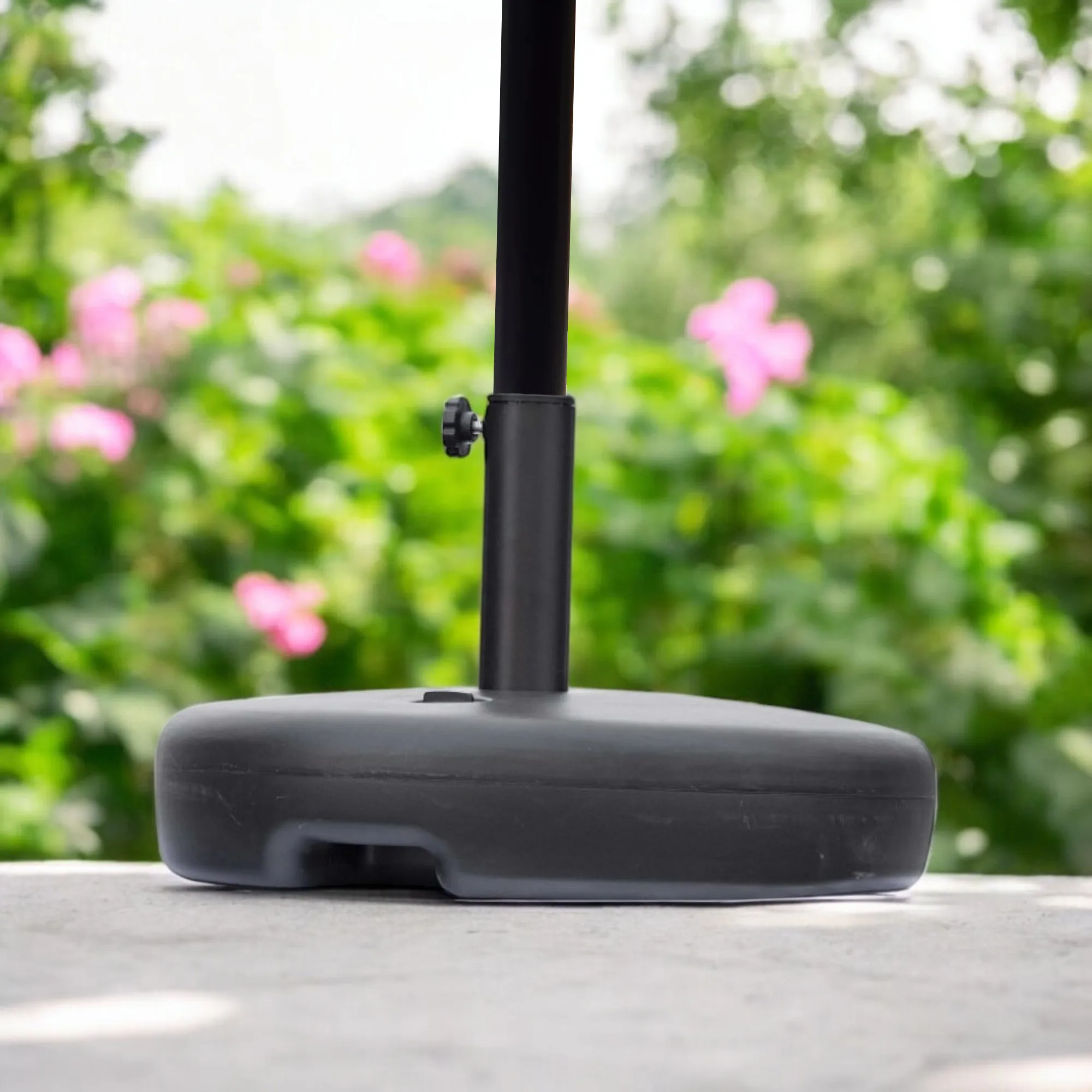
Heavy Duty Plastic Cantilever Umbrella Base Modern Square Design for Garden Hotel Park 3m Radii Aluminum Frame Patio
If you’re looking for a durable and stylish option, consider the Heavy Duty Plastic Cantilever Umbrella Base with a modern square design—it’s built to handle large canopies and adds a contemporary touch to any patio.
Frequently asked questions
How much weight do I need in a cantilever umbrella base?
A good rule is to have at least 100 lbs for a 10-foot umbrella. For larger umbrellas, add 25-50 lbs per extra foot. Always check your umbrella’s manual for specific requirements.
Can I use a regular umbrella base for a cantilever umbrella?
No, regular umbrella bases are not designed to handle the offset load of a cantilever umbrella. They are typically too light and may not have the correct mounting hardware.
What is the best material for a cantilever umbrella base?
Concrete and steel offer maximum stability but are heavy to move. Plastic bases that you fill with sand or water are lighter and more portable, but they require proper filling to be effective.
How do I maintain my cantilever umbrella base?
Clean it regularly with mild soap and water. For metal bases, check for rust and touch up with paint. If your base holds water, drain it and store it dry during freezing temperatures.
