
Blog
The Ultimate Guide to Choosing the Perfect Children’s Bookshelf
Buying Guide
Find the Perfect Children’s Bookshelf for Your Family
A children’s bookshelf is more than just storage; it’s an invitation to explore the world of reading. Here’s how to pick the right one for your little ones.
Why a Children’s Bookshelf Matters
A children’s bookshelf is not just a piece of furniture; it’s a gateway to imagination. When books are displayed at a child’s eye level and within easy reach, they become more likely to pick one up and dive into a story. This simple act can foster a lifelong love of reading.
Moreover, a dedicated bookshelf helps teach organization and responsibility. Children learn to care for their belongings when they have a special place for them. It also adds a touch of warmth and personality to a room, making it feel truly theirs.
Key Features to Look For
When shopping for a children’s bookshelf, consider these essential features to ensure it meets your child’s needs and your expectations.
Safety and Durability
Safety is paramount. Look for a bookshelf with rounded corners, sturdy construction, and anti-tip straps. It should be able to withstand the inevitable bumps and pulls from little hands. Materials like solid wood or high-quality metal offer durability, while non-toxic finishes are a must.
Size and Accessibility
The bookshelf should be proportionate to your child’s height, allowing them to reach books easily. Front-facing displays are great for younger children, while older kids might prefer traditional spine-out shelving. Ensure the shelves are not too deep so small hands can grab books without struggling.
Storage Capacity and Versatility
Think about how many books your child has and will acquire. Adjustable shelves offer flexibility as the collection grows. Some bookshelves come with additional storage like bins or drawers, perfect for toys, art supplies, or other treasures. A versatile design can adapt to changing needs.
Materials: Wood, Metal, or Fabric?
The material of your children’s bookshelf affects its look, durability, and safety. Here’s a breakdown to help you decide.
Wood is a classic choice, offering warmth and sturdiness. Solid wood bookshelves can last for years and often become heirloom pieces. However, they can be heavy and may require assembly.
Metal bookshelves are sleek and modern, often lightweight yet durable. They are easy to clean and can be very stable if well-designed. Some metal frames come with fabric bins, providing a soft touch and colorful accents.
Fabric bookshelves are lightweight and portable, ideal for temporary setups or small spaces. They are usually collapsible, making them easy to store when not in use. However, they may not be as sturdy as wood or metal and can tip over if overloaded.
Style and Design: Matching Your Home
A children’s bookshelf should complement your home decor while also appealing to your child. Consider the overall aesthetic of the room—whether it’s modern, classic, or eclectic—and choose a design that blends in seamlessly.
Color can also play a role. Bright, bold colors can stimulate a child’s imagination, while neutral tones might fit better in a shared space. Some bookshelves come with whimsical shapes, like trees or animals, adding a playful element to the room.
For a cohesive look, think about how the bookshelf will interact with other furniture. A low, horizontal design can double as a toy chest or seating, while a tall, vertical unit can maximize storage in a small area.
Space-Saving Solutions
Not every room has the luxury of a dedicated library corner. If space is tight, consider a bookshelf that maximizes vertical storage or fits into odd nooks. Corner bookshelves, wall-mounted shelves, or bookshelves with built-in desks can save precious floor space.
For smaller collections, a simple book ledges or a rotating book tower can be both functional and decorative. The key is to make the most of what you have without compromising on accessibility.
Encouraging Reading Habits
A well-chosen children’s bookshelf can actively encourage reading. Rotate books regularly to keep the selection fresh, and display front covers to tempt young readers. Make the bookshelf a cozy spot by adding a soft rug, a comfortable chair, or a reading tent nearby.
Involve your child in the process of organizing their bookshelf. Let them decide which books to display and where. This gives them a sense of ownership and pride, making them more likely to engage with their books.
For more insights on fostering early literacy, check out this article on early childhood education.
Making the Right Choice for Your Family
Choosing the right children’s bookshelf is a personal decision that depends on your child’s age, your space, and your budget. By considering safety, material, style, and functionality, you can find a bookshelf that will serve your family well for years to come.
Remember, the goal is not just to store books but to create an environment where your child feels inspired to read, learn, and dream. A thoughtful investment in a bookshelf is an investment in your child’s future.
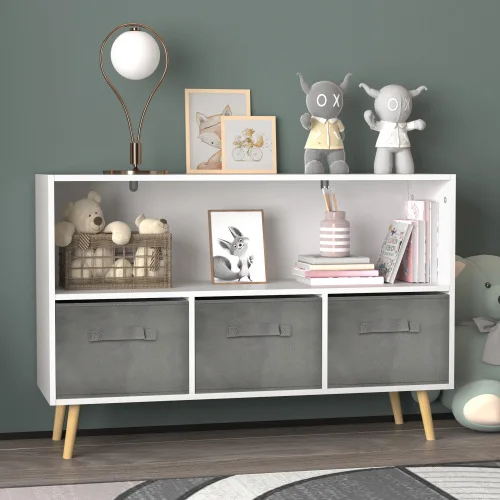
Modern FCJ Children’s Bookshelf Foldable Fabric Drawers Wood Plastic Metal Cabinet for Bedroom School Dining Storage Function
For a versatile and safe option, consider the Modern FCJ Children’s Bookshelf, which combines foldable fabric drawers with a sturdy metal frame, perfect for any room in your home.
Frequently asked questions
At what age should I introduce a children’s bookshelf?
You can introduce a children’s bookshelf as soon as your child starts showing interest in books, typically around 6-12 months. Choose a low, sturdy shelf with front-facing displays for babies and toddlers, and transition to more traditional shelving as they grow.
How many books should a children’s bookshelf hold?
The number of books a children’s bookshelf can hold depends on its size and design. A good rule of thumb is to have enough space for 20-30 books, which allows for a variety without overwhelming your child. Rotate books regularly to keep the selection interesting.
Are metal and fabric bookshelves safe for children?
Yes, metal and fabric bookshelves can be safe if they are well-constructed and meet safety standards. Look for rounded edges, sturdy frames, and anti-tip mechanisms. Fabric shelves should be filled evenly to prevent tipping. Always follow the manufacturer’s guidelines.
How can I make a children’s bookshelf more appealing to my child?
Display books with covers facing out, use colorful bins and baskets, and create a cozy reading nook nearby. Involve your child in organizing the shelf and let them pick a few favorite books to display. Rotate the selection regularly to maintain interest.
