
Blog
Smart Home Office Storage Ideas for a Clutter-Free Workspace
Workspace Solutions
Home Office Storage: Smart Ways to Organize Your Workspace
Home office storage is the key to a productive and peaceful workspace. Whether you have a dedicated room or a corner in your living area, finding the right solutions can transform how you work.
Why Home Office Storage Matters
In a world where remote work is becoming the norm, having a well-organized home office is more important than ever. Without proper storage, papers pile up, cables tangle, and it becomes hard to focus. But it’s not just about tidiness—efficient storage can boost your productivity and reduce stress. When everything has its place, you can find what you need quickly and keep your mind clear.
Moreover, your home office should reflect your personal style. The right storage solutions can add warmth and character to your workspace, making it a place you enjoy spending time in. Whether you prefer minimalist shelves or classic wooden cabinets, there’s an option for every taste.
Assessing Your Storage Needs
Before you rush to buy new furniture, take a moment to evaluate what you actually need. Look around your workspace and identify the main sources of clutter. Do you have stacks of paper that need a filing system? Are your office supplies scattered in different drawers? Perhaps you need a dedicated spot for your printer or a place to hide away cables.
Consider your workflow: what do you use daily, weekly, or occasionally? Items you use frequently should be within arm’s reach, while those used less often can be stored higher up or in less accessible spots. Also, think about future needs—will you be adding new equipment or expanding your book collection?
Creative Shelving Solutions
Shelving is a versatile way to add storage without taking up floor space. Floating shelves are perfect for small offices, providing a place for books, plants, and decorative items. They can be installed above your desk or on empty walls to keep your work surface clear.
For heavier items, consider industrial-style shelving units. They offer sturdy storage and can be styled with baskets and bins to keep things organized. Another idea is to use wall-mounted rails with hooks for hanging files, scissors, or even headphones. This keeps essentials visible yet out of the way.
If you have a corner that’s underused, a corner shelf unit can maximize that space. And don’t forget the space above your monitor—a shelf there can hold reference books or a small plant to add life to your setup.
Desk Organization Essentials
Your desk is the focal point of your office, so keeping it organized is crucial. Start with a desk organizer tray to corral pens, sticky notes, and other small items. Use cable management clips to keep cords tidy and out of sight.
A document holder or vertical file organizer on your desk can keep important papers within reach without creating a mess. For those who prefer a minimalist look, consider a simple wooden or metal tray for daily essentials. The key is to have a designated spot for everything you use regularly.
Another useful tool is a monitor stand with built-in storage. It raises your screen to eye level and provides a place to store notebooks or a keyboard underneath, freeing up valuable desk space.
Maximizing Vertical Space
When floor space is limited, look up. Vertical storage solutions can dramatically increase your capacity without making the room feel cramped. Tall bookcases or shelving units can hold everything from books to storage boxes, making use of the often-underused space above eye level.
Consider installing a pegboard on the wall. It’s a flexible system that allows you to hang tools, supplies, or even plants, and you can rearrange it as your needs change. Another option is a rolling cart that fits under your desk or in a closet—it can be moved around and provides extra storage when you need it.
Don’t overlook the back of your door. An over-the-door organizer with pockets can hold mail, small accessories, or even cleaning supplies. It’s a simple, effective way to add storage without any major installation.
Choosing the Right Furniture
Furniture plays a big role in your office’s storage capabilities. A desk with built-in drawers is a classic choice, but you might also consider a credenza or a sideboard that offers both surface space and enclosed storage. When selecting furniture, think about the materials and how they fit with your existing decor. Solid wood pieces add warmth and durability, while metal or glass can give a more modern feel.
One versatile piece is a filing cabinet. It not only keeps your documents organized but can also serve as a side table or a support for a printer. Look for options that have multiple compartments and adjustable shelves to accommodate different items. For a subtle integration, choose a cabinet that matches your other furniture or one that adds a pop of color.
If you’re working with a small space, consider furniture that serves dual purposes. For example, a desk with a hutch provides vertical storage, or a foldable desk that can be tucked away when not in use.
Incorporating Baskets and Bins
Baskets and bins are not only practical but also add texture and style to your office. Use them to group similar items—like chargers, cables, or notepads—and label them for easy identification. Woven baskets bring a natural, cozy feel, while metal bins offer a more industrial look.
Place a few bins on open shelves to keep smaller items from cluttering the space. You can also use a decorative basket on the floor to store larger items like throw blankets or extra supplies. The key is to choose containers that are both functional and visually appealing, so they enhance the overall design.
Remember, the goal is to reduce visual noise. By containing items in bins, you create a cleaner, more serene environment that helps you focus.
Maintaining Your Organized Space
Once you’ve set up your storage systems, it’s important to maintain them. Set aside a few minutes each day to tidy up and return items to their designated spots. A weekly declutter session can prevent buildup and keep your space functional.
Regularly reassess your storage as your needs evolve. Maybe you’ve accumulated more files or new equipment—adjust your systems accordingly. The idea is to create a sustainable routine that keeps your home office a pleasant place to work.
Finally, don’t be afraid to personalize your space. Add a plant, a photo, or a piece of art that inspires you. A well-organized office that reflects your personality will make you look forward to your workday.
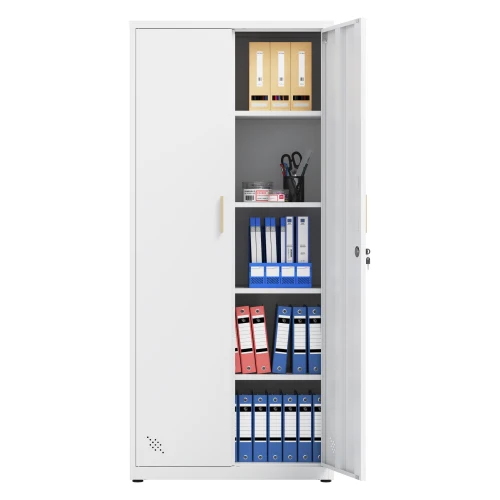
High Storage Home Office Design FCJ File Cabinet with 2 Doors and 4 Partitions to Separate 5 Storage Spaces
For a comprehensive storage solution, consider the High Storage Home Office Design FCJ File Cabinet with 2 Doors and 4 Partitions to Separate 5 Storage Spaces, which offers ample room for files and supplies while fitting neatly into your workspace.
Frequently asked questions
What are the best home office storage solutions for small spaces?
For small spaces, focus on vertical storage like floating shelves, pegboards, and tall bookcases. Use under-desk rolling carts and over-the-door organizers to maximize every inch. Multi-functional furniture, such as a desk with built-in storage, also helps.
How can I organize my home office on a budget?
Start by decluttering and repurposing items you already have, like mason jars for pens or shoeboxes for files. Use affordable storage bins and baskets from discount stores. DIY solutions, such as creating your own pegboard or using tension rods under the desk, can save money too.
What is the best way to store files and documents in a home office?
The best way is to use a filing cabinet with hanging folders, organizing documents by category and date. If space is tight, consider a vertical file organizer on your desk or a digital scanning system to reduce paper clutter. Always label folders clearly for easy retrieval.
How do I keep cables and wires organized in my home office?
Use cable clips to secure cords along the edge of your desk, and cable sleeves to bundle multiple wires together. Label each cable with a tag or colored tape. For a cleaner look, route cables behind your desk using adhesive cable management trays or use a cable box to hide power strips.
