
Blog
Metal Lateral File Cabinet Buying Guide
Office Storage
How to Choose a Metal Lateral File Cabinet
A metal lateral file cabinet is a smart investment for any organized workspace. This guide will help you navigate the options and pick the right one for your needs.
Why Choose a Metal Lateral File Cabinet?
When it comes to filing documents, a metal lateral file cabinet offers distinct advantages over vertical files. Its wide drawers allow you to file letter- or legal-sized papers side-by-side, making it easier to browse and retrieve files without pulling entire folders out. Metal construction provides superior durability and fire resistance compared to wood or plastic, ensuring your important papers are protected.
Lateral cabinets also provide a stable surface on top, perfect for a printer, decorative items, or extra workspace. Their low profile makes them ideal for placing under a window or along a wall without obstructing sightlines.
Key Considerations Before Buying
Before you start shopping, think about your space and how you plan to use the cabinet. Measure the area where it will go, considering both width and depth, including clearance for drawers to open fully. Check door swings and traffic flow to ensure the cabinet won’t block anything.
Decide on the size and number of drawers. A 2-drawer model is great for home offices or small teams, while 3- or 4-drawer versions offer more capacity for growing businesses. Also, consider whether you need to file letter, legal, or both sizes.
Security is another factor. If you handle confidential documents, look for a model with a locking mechanism. Many lateral files have a central lock that secures all drawers with a single key.
Materials and Build Quality
Steel is the standard for metal lateral file cabinets, but not all steel is created equal. Check the gauge—thicker steel (lower gauge number) means more durability. Look for reinforced drawer suspensions that can handle heavy loads without sagging. Ball-bearing slides offer smooth, quiet operation and are worth the extra investment.
The finish matters too. Powder-coated paint is more resistant to chipping and scratching than liquid paint. If you live in a humid area, consider a galvanized steel interior to prevent rust.
Size and Configuration
Lateral file cabinets come in various widths, typically 30 to 42 inches. The most common is 36 inches, which fits letter and legal files. Depth usually ranges from 18 to 24 inches. Think about the drawer depth—deeper drawers can hold more files but require more clearance when open.
You’ll also choose between a full-suspension and a non-suspension drawer. Full-suspension extends the drawer completely, allowing you to see and access all files. Non-suspension is cheaper but only opens partially, which can be inconvenient.
Safety and Ergonomics
Safety is crucial, especially if you have children or pets. Look for a cabinet with an anti-tip mechanism, which prevents the cabinet from tipping over when multiple drawers are open. Some models have a safety interlock system that only allows one drawer to open at a time.
Ergonomics also play a role. The height of the cabinet should allow you to access the top drawer comfortably. Lateral files are typically 28 to 30 inches high, which works well for use as a side table or workspace.
Assembly and Installation
Most metal lateral file cabinets require some assembly. Check the instructions and tools needed before you buy. Some are difficult to put together, so read customer reviews to gauge ease of assembly. If you’re not handy, consider hiring a professional or choosing a pre-assembled option.
Place the cabinet on a level floor to ensure drawers operate smoothly. Adjustable leveling feet can help on uneven surfaces.
Style and Aesthetics
While function is paramount, the cabinet’s appearance matters in a home or office setting. Metal cabinets are available in a range of colors, from classic black and white to more vibrant hues. Some have textured finishes that hide fingerprints and scratches.
Consider the overall decor and choose a cabinet that complements it. For a modern look, opt for clean lines and a neutral color. For a traditional feel, a wood-grained finish might be more appropriate.
Maintenance and Longevity
Metal file cabinets are low maintenance. Wipe them down with a damp cloth and mild detergent as needed. Avoid abrasive cleaners that can damage the finish. Periodically lubricate the drawer slides to keep them operating smoothly.
With proper care, a high-quality metal lateral file cabinet can last for decades, making it a cost-effective solution for your storage needs.
For a reliable and practical option, consider the file cabinet designs that have evolved over time to meet modern needs.
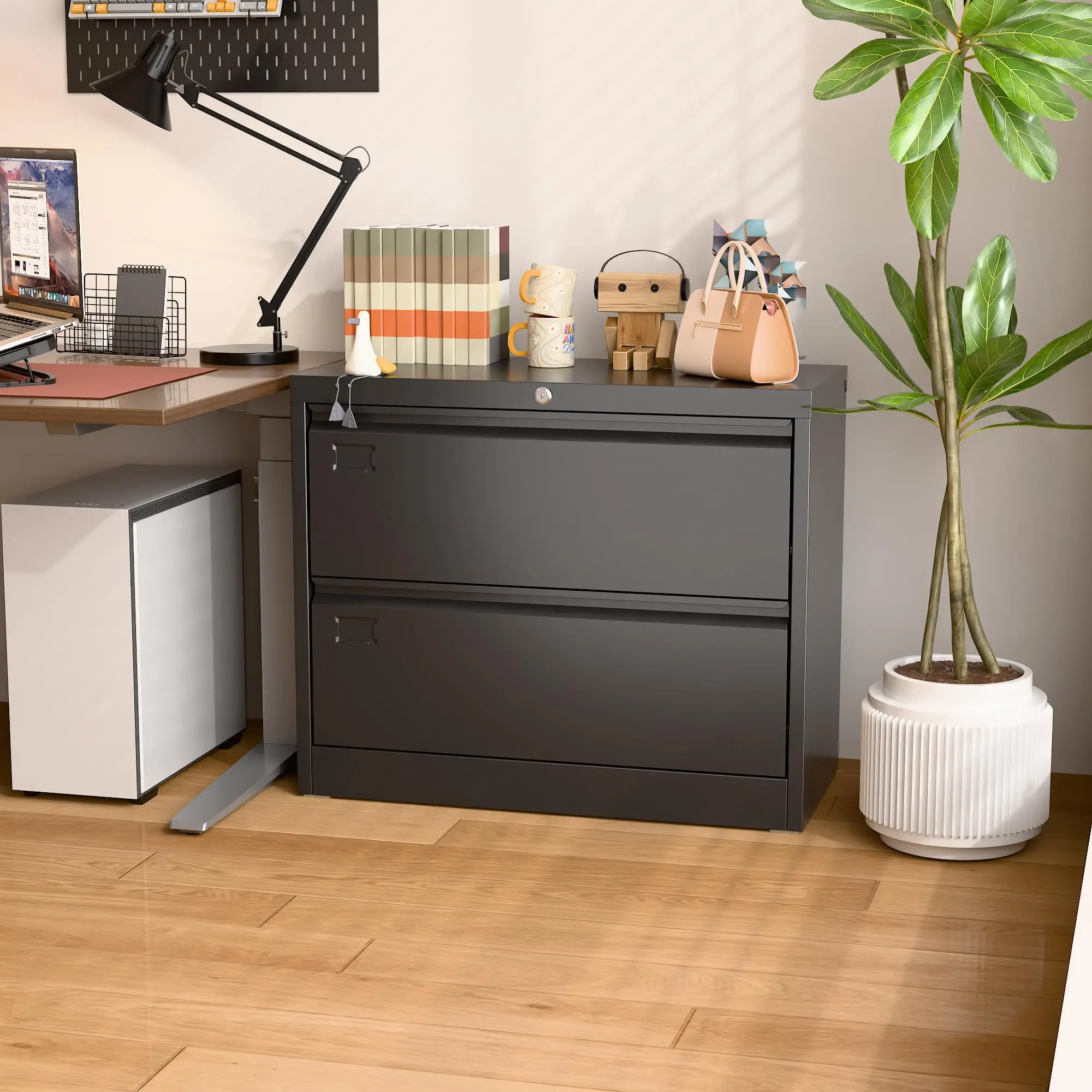
Aobabo 2 Drawer Metal Lateral File Cabinet 34.5 Inches Wide Letter Legal Size Black Assembly Required Large Deep Drawers File
For a dependable and spacious option, the Aobabo 2 Drawer Metal Lateral File Cabinet offers deep drawers and a sturdy build at a practical price.
Frequently asked questions
What is the difference between lateral and vertical file cabinets?
Lateral file cabinets are wider and shallower than vertical ones. Drawers open side-to-side, allowing files to be stored front-to-back. They provide better visibility and often have a flatter top for additional workspace. Vertical cabinets are narrower and deeper, and drawers open front-to-back, requiring more space in front.
Can a metal lateral file cabinet be locked?
Yes, many metal lateral file cabinets come with a locking mechanism. Typically, a central lock secures all drawers, but some models offer individual drawer locks. Always check the product specifications to ensure it meets your security needs.
How much weight can a metal lateral file cabinet hold?
The weight capacity depends on the construction and quality. Heavy-duty models can support up to 300 pounds per drawer. It’s important to check the manufacturer’s specifications and not exceed the recommended limit to avoid damage or injury.
What is the standard height of a lateral file cabinet?
Most lateral file cabinets are around 28 to 30 inches high. This height is convenient for use as a side table or work surface. However, you can also find taller models with more drawers, which are typically 40 inches or more in height.
