
Blog
Modern Wood Executive Desk: A Buying Guide
Office Essentials
Choosing a Modern Wood Executive Desk That Works
A modern wood executive desk can anchor your home office with warmth and authority. But with so many options, how do you pick the right one?
Why Choose a Modern Wood Executive Desk?
A modern wood executive desk is more than a piece of furniture; it’s a statement of your work style. Unlike glass or metal desks, wood brings a natural texture that softens the often sterile tech-heavy office environment. It also tends to be durable, with proper care lasting for decades. Whether you’re outfitting a corporate corner office or a home study, the right wooden desk can boost both productivity and aesthetic appeal.
Wood desks also offer versatility. From rich walnut to light oak, the grain and color can complement a range of interior designs, from minimalist to traditional. And because wood is a renewable resource, choosing a sustainably sourced desk can align with eco-conscious values.
Materials: Solid Wood vs. Veneer vs. Engineered Wood
Not all wood desks are created equal. Understanding the differences helps you make an informed investment.
- Solid wood: The gold standard. Durable, repairable, and ages beautifully. Look for hardwoods like oak, maple, or walnut. Expect a higher price and heavier weight.
- Wood veneer: A thin layer of real wood over plywood or MDF. Offers the look of solid wood at a lower cost. More stable against humidity changes, but less repairable if damaged.
- Engineered wood (MDF, particleboard): Usually wrapped in laminate or veneer. Budget-friendly but less durable. Prone to chipping and moisture damage.
For a truly executive feel, solid wood is ideal, but high-quality veneer can also provide an upscale appearance without the hefty price tag. Check the construction details: dovetail joints and sturdy hardware indicate craftsmanship.
Size and Layout: Fitting Your Workspace
Before falling in love with a design, measure your room. A massive desk can overwhelm a small space, while a too-small desk may feel cramped. Standard executive desks range from 60 to 72 inches wide. Consider your workflow: if you use multiple monitors or spread out paperwork, opt for a larger surface. Also factor in clearance for your chair and any additional furniture like bookshelves or filing cabinets.
Think about the shape: rectangular is classic, but an L-shaped desk can provide more surface area and delineate zones for computer work and meetings. A standing desk converter can also be added if you want flexibility. Always leave at least 30 inches of walking space around the desk.
Ergonomics: Comfort and Health
Your desk’s height and design directly affect your posture and well-being. The standard desk height is 29-30 inches, but your ideal height depends on your body. When seated, your elbows should be at a 90-degree angle, and your feet flat on the floor. If the desk is too high or low, you’ll strain your neck and shoulders. Adjustable-height desks, or those with keyboard trays, can help.
Also consider the depth: a deeper desk (30 inches or more) allows for proper monitor placement—about an arm’s length away—reducing eye strain. Cable management features, like grommets or channels, keep cords tidy and prevent tangling, which is a small but significant ergonomic bonus.
Style and Finish: Matching Your Aesthetic
The beauty of a modern wood executive desk lies in its ability to blend with your existing decor. Think about the color and grain. Dark woods like walnut and mahogany exude sophistication and work well in traditional or formal settings. Mid-tone woods like cherry or oak feel warmer and more casual. Light woods like ash or maple are great for contemporary or Scandinavian interiors, making the room appear larger.
Finish also matters: a matte finish hides fingerprints and reduces glare, while a glossy finish adds polish but requires more upkeep. Some desks feature live edges or natural irregularities for a rustic-modern look. Don’t forget hardware—metal accents in brass, black, or chrome can add a modern twist.
Features and Storage: Desk Drawers and More
Executive desks often come with built-in storage to keep your workspace organized. Drawers are essential for stashing documents, stationery, and personal items. Look for drawers with smooth glides and soft-close mechanisms. Some desks have a central drawer for keyboard and mouse, or a file drawer for hanging folders.
Other features to consider: a hutch or hutch shelf for extra storage, a built-in power strip or USB ports, and integrated cable routing. If you have a laptop, a dedicated laptop compartment or a flip-up door can be useful. Remember that more features often mean a higher price, so prioritize what you actually need.
Assembly and Maintenance: Ease and Longevity
Some desks arrive fully assembled, but many require DIY assembly. Before buying, check the instructions and required tools. Look for desks with pre-drilled holes and labeled parts to simplify the process. If you’re not handy, consider white-glove delivery or assembly services, which some retailers offer.
To keep your desk looking its best, follow care guidelines. Use coasters for drinks, and clean spills immediately. Dust regularly with a soft cloth and use a wood polish occasionally. Avoid placing the desk in direct sunlight to prevent fading. With proper care, a quality wood desk can last a generation.
For more on the environmental impact of wood furniture, see this overview of wood as a material.
Budgeting: What to Expect
Prices for modern wood executive desks vary widely. You can find basic models for under $300, but they may use less durable materials. Mid-range desks ($500-$1000) offer better construction and finishes. High-end, solid-wood desks can exceed $2000. Determine your budget, but remember that a desk is a long-term investment. Spending a bit more on a desk that meets your needs and lasts longer is often wiser than replacing a cheaper one every few years.
Consider also the warranty and return policy. A reputable manufacturer will stand behind their product. If possible, visit a showroom to test the desk’s comfort and quality, or at least read customer reviews online.
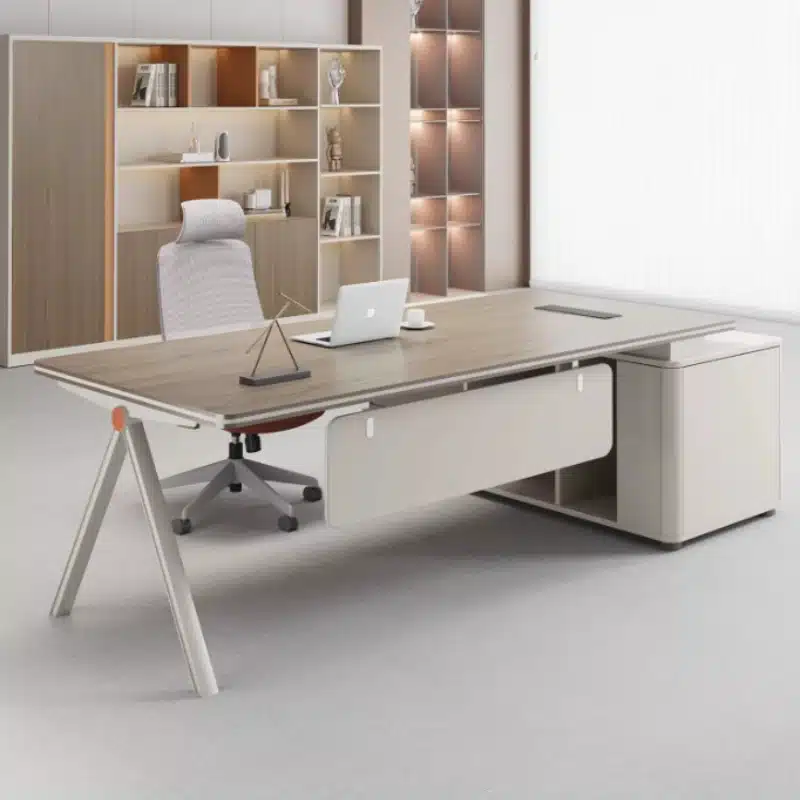
Large Wood Aesthetic Office Desk Designer Modern Drawers Standing Computer Desk Executive Wooden Mesa Escrivaninha Furniture
For a desk that combines modern aesthetics with practical storage, consider the Large Wood Aesthetic Office Desk Designer Modern Drawers Standing Computer Desk Executive Wooden Mesa Escrivaninha Furniture, which offers both style and function.
Frequently asked questions
What is the standard height for a modern wood executive desk?
The standard height is 29-30 inches, but your ideal height depends on your body proportions. When seated, your elbows should be at a 90-degree angle, and your feet flat on the floor. Adjustable-height desks can accommodate different users.
How do I choose between solid wood and veneer for an executive desk?
Solid wood is more durable, repairable, and ages beautifully, but it’s heavier and more expensive. Veneer offers a similar look at a lower cost and is more stable against humidity changes, but it’s less repairable. Consider your budget and how much wear and tear the desk will see.
Can I use a modern wood executive desk for a standing desk setup?
Yes, you can use a standing desk converter on top of a standard desk, or you can choose an adjustable-height executive desk that allows you to switch between sitting and standing. Ensure the desk has a sturdy base to support the converter and your equipment.
How do I maintain a modern wood executive desk?
Dust regularly with a soft cloth, use coasters for drinks, and clean spills immediately. Apply wood polish occasionally to maintain the finish. Avoid placing the desk in direct sunlight to prevent fading, and use felt pads under heavy items to prevent scratches.
