
Blog
The Ultimate Writing Desk Buying Guide for Creatives
Buying Guide
Find Your Perfect Writing Desk Today
A writing desk is more than just furniture; it’s the command center for your creativity. Whether you’re drafting novels, paying bills, or sketching ideas, the right desk can transform your productivity and comfort.
Why Your Writing Desk Matters
Your writing desk is where ideas take shape. It’s not just a piece of furniture; it’s a personal workspace that influences your posture, focus, and even your mood. A well-chosen desk can reduce physical strain, keep you organized, and inspire you to sit down and write. On the other hand, a poorly suited desk can lead to back pain, clutter, and procrastination.
Think about how much time you spend at your desk. If you work from home or write professionally, it’s likely hours each day. Investing in a quality writing desk is an investment in your health and creativity. But with so many options, how do you choose?
This guide will walk you through the essential factors—size, material, style, storage, and ergonomics—so you can find a desk that feels like it was made for you.
Size and Space: Finding the Right Fit
Before you fall in love with a desk’s design, measure your room. You need to know how much space you have and how much you actually need. A writing desk should fit comfortably in your room without making it feel cramped, but it also needs to be large enough to hold your essentials.
- Measure your room: Leave at least 24 inches of walking space behind your chair.
- Consider your gear: If you use a laptop, a smaller desk may suffice, but if you have a monitor, printer, or reference books, you’ll need more surface area.
- Think about future needs: It’s better to have a little extra room than not enough.
For small apartments, a corner desk or a wall-mounted option can save space. For larger rooms, a spacious desk with ample surface allows you to spread out papers and materials. Remember, you can always add storage later, but you can’t expand the desk top.
Materials: From Wood to Glass
The material of your writing desk affects its durability, maintenance, and aesthetic. Here are the most common options:
- Solid wood: Classic and sturdy, wood desks bring warmth and longevity. They can be refinished if scratched, but they are heavy and may require more care.
- Engineered wood (MDF/particleboard): Affordable and versatile, these desks are lighter and come in many finishes. They are less durable but fine for light use.
- Glass: Modern and sleek, glass desks make a room feel larger and are easy to clean. They can show fingerprints and may require tempered glass for safety.
- Metal: Industrial and strong, metal desks are often used in contemporary settings. They are durable but can be cold and noisy.
- Combination: Many desks mix materials, like a wood top with metal legs, for a balanced look and function.
Consider your lifestyle. If you drink coffee at your desk, a glass top might be easier to wipe down, but a wood desk might be more forgiving of scratches. Think about the climate too—wood can warp in humid areas.
Style and Aesthetics: Matching Your Space
Your writing desk should complement your room’s décor. It’s a focal point, so it should reflect your personal style. Here are some popular styles:
- Minimalist: Clean lines, neutral colors, no clutter. Often made of metal and glass.
- Rustic: Reclaimed wood, natural textures, and a cozy feel.
- Industrial: Metal frames with wood or concrete tops, often with exposed hardware.
- Traditional: Ornate details, rich woods, and classic shapes.
- Modern: Sleek, geometric, and often incorporating glass or glossy finishes.
Think about the overall vibe of your home. A writing desk should feel like it belongs, not stick out like a sore thumb. If you’re unsure, a neutral color like white or black can work anywhere.
Storage and Organization: Keep Clutter at Bay
A cluttered desk can lead to a cluttered mind. Consider how much storage you need. Some desks come with drawers, shelves, or hutches, while others are just a bare surface.
- Drawers: Great for storing pens, notebooks, and small items. Look for smooth-gliding drawers.
- Shelves: Useful for books, binders, or decorative items.
- Keyboard tray: Saves surface space if you use a desktop computer.
- Cable management: Some desks have built-in grommets or trays to keep cords tidy.
If you prefer a minimalist look, you might want a simple desk with no drawers and use separate storage solutions like a bookshelf or rolling cart. Remember, too much storage can encourage hoarding, so only get what you need.
Ergonomics and Comfort: Your Body Will Thank You
Comfort is crucial for long writing sessions. An ergonomic desk setup helps prevent neck pain, backaches, and eye strain. Here’s what to look for:
- Height: The standard desk height is 29-30 inches, but if you’re taller or shorter, you may need an adjustable desk or a desk that suits your height. Your elbows should be at a 90-degree angle when typing.
- Legroom: Ensure there’s enough space for your legs to stretch. A desk with a modesty panel can restrict movement.
- Monitor placement: Your screen should be at eye level, which may require a monitor stand.
- Chair compatibility: Pair your desk with an ergonomic chair that supports your lower back.
If you have existing back issues, consider a sit-stand desk that lets you alternate between sitting and standing. But remember, even the best desk won’t help if you don’t take breaks and stretch.
Special Features: What Else to Consider
Some desks come with extra features that can enhance your experience. Think about what would make your writing life easier.
- Adjustable height: Allows you to switch between sitting and standing.
- Built-in charging ports: Convenient for powering devices.
- Wireless charging surface: A modern touch.
- Foldable or wall-mounted: Great for tiny spaces.
- Glass top with LED lighting: Adds ambiance, though it may be more for gaming than writing.
But don’t get swayed by gimmicks. Prioritize function over flash. A simple, sturdy desk might serve you better than one with all the bells and whistles.
Budget and Value: Making a Smart Investment
Writing desks range from under $100 to thousands of dollars. Set a budget before you shop, but be flexible. A higher price often means better materials and craftsmanship, but there are great options at every price point.
- Under $200: Basic desks, often made of particleboard. They work but may not last as long.
- $200-$500: Good selection of quality desks, including some with solid wood tops or metal frames.
- $500-$1000: Higher-end materials, better design, and more features.
- $1000+: Premium desks, often handmade or with unique designs.
Consider the desk’s lifespan. A $300 desk that lasts 10 years is a better value than a $100 desk that falls apart in 2. Also, factor in shipping costs and assembly time.
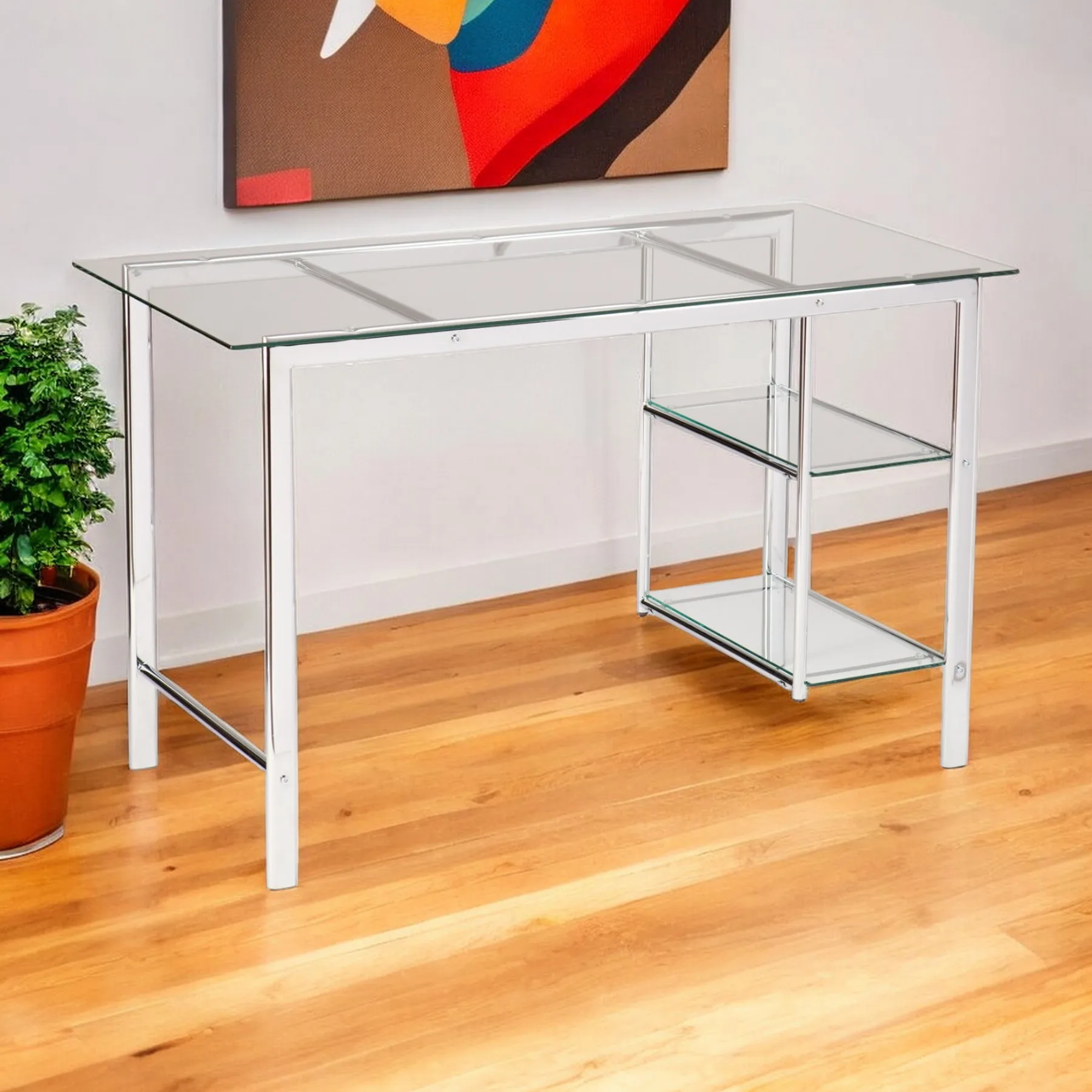
If you’re looking for a contemporary option that balances style and function, the 47″ Writing Desk with Clear Silver Glass and Metal Contemporary Computer Desk is worth a look. It’s sleek, durable, and designed for modern workspaces.
Final Thoughts: Your Ideal Writing Desk Awaits
Choosing a writing desk is a personal decision. It should fit your space, your style, and your needs. Take your time, measure carefully, and think about how you work. A great desk can inspire you to write more and write better.
Remember, the best writing desk is the one that you look forward to sitting at every day. Whether you prioritize aesthetics, storage, or ergonomics, there’s a desk out there for you. Happy writing!
47″ Writing Desk with Clear Silver Glass and Metal Contemporary Computer Desk
For a contemporary touch, the 47″ Writing Desk with Clear Silver Glass and Metal Contemporary Computer Desk offers a sleek, sturdy surface that pairs well with any modern décor.
Frequently asked questions
What size writing desk do I need?
The size depends on your room and what you plan to use it for. A standard desk is about 60 inches wide and 30 inches deep, but if you have limited space, a smaller desk around 40 inches wide may suffice. Consider your computer setup and how much surface area you need for writing or other tasks.
What is the best material for a writing desk?
There is no ‘best’ material; it depends on your preferences and budget. Solid wood is durable and classic, while glass and metal offer a modern look. Engineered wood is affordable but less durable. Choose a material that fits your aesthetic and maintenance willingness.
How can I make my writing desk more ergonomic?
Ensure the desk height allows your elbows to be at a 90-degree angle when typing. Use a monitor stand to bring the screen to eye level. Invest in an ergonomic chair that supports your lower back. Take regular breaks to stretch and rest your eyes.
Should I buy a writing desk with storage?
It depends on your organizational needs. If you have many supplies, drawers and shelves can help keep your workspace tidy. If you prefer a minimalist look or have separate storage, a simple desk may be sufficient. Assess your current clutter to decide.
