
Blog
The Ultimate Guide to Choosing an Extendable Writing Desk
Desk Guide
Choosing the Right Extendable Writing Desk
An extendable writing desk is a smart investment for any home office, offering flexibility without sacrificing style. In this guide, we’ll explore what to look for to find the perfect one for your needs.
Why Choose an Extendable Writing Desk?
If you’ve ever struggled with a cramped workspace, you know the value of adaptability. An extendable writing desk lets you adjust your surface area on demand—perfect for spreading out paperwork or pulling in a second monitor. Unlike fixed desks, these pieces grow with your needs, making them a favorite for small apartments and busy professionals alike.
Beyond the obvious space benefits, an extendable desk encourages better organization. You can keep it compact for everyday tasks and expand it when you need room for creative projects. This flexibility can genuinely improve your workflow, as you’re not constantly fighting for elbow room.
Key Features to Look For
When shopping for an extendable writing desk, consider the following features to ensure you get the most value:
- Extension Mechanism: Look for smooth slides or fold-out leaves that are easy to operate. A sturdy mechanism will last for years without sagging.
- Material Quality: Solid wood or high-grade MDF with a durable finish resists scratches and stains. Check for moisture resistance if you plan to use it near a window.
- Storage Options: Drawers or shelves add functionality, keeping your essentials within reach. Think about what you need to store—pens, files, or tech gadgets.
- Size and Proportions: Measure your room and consider the desk’s footprint when extended. Make sure it fits comfortably without blocking walkways.
Each of these factors contributes to the overall usability and longevity of your desk. Prioritize what matters most to you—whether it’s a sleek look or maximum storage.
Materials: From Wood to MFC
The material of your desk affects both aesthetics and durability. Solid wood offers a classic, warm feel but can be heavy and pricey. On the other hand, engineered woods like MFC (melamine-faced chipboard) provide a budget-friendly alternative with excellent resistance to scratches and moisture. According to Wikipedia’s article on MDF, MDF is an engineered wood product made by breaking down hardwood or softwood residuals into wood fibers, combining them with wax and a resin binder, and forming panels by applying high temperature and pressure. This process creates a stable, uniform material that’s ideal for furniture.
MFC desks often come in a variety of finishes, from matte white to wood grain, making it easy to match your decor. They’re also lighter than solid wood, which simplifies assembly and rearrangement. If you’re on a budget but still want a reliable desk, MFC is a solid choice.
Space-Saving Design and Ergonomics
The primary advantage of an extendable desk is its ability to save space. When closed, it occupies a minimal footprint, freeing up valuable floor area. When you need more surface, simply extend it—perfect for temporary projects or guests. This adaptability is especially useful in multi-purpose rooms, like a living room that doubles as a home office.
Ergonomics also play a role. An extendable desk allows you to adjust the surface area to suit different tasks, reducing the need to hunch over a cluttered workspace. Pair it with an adjustable chair to maintain proper posture, and you’ll notice less fatigue during long work sessions.
Assembling Your Desk: Tips and Tricks
Most extendable desks require some assembly. To make the process smoother:
- Lay out all parts and hardware before you begin.
- Follow the instructions step-by-step, tightening screws gradually to avoid stripping.
- Use a power drill with a clutch set to low torque to prevent over-tightening.
- If you’re assembling alone, use a blanket or cardboard to protect the desk surface from scratches.
Taking your time during assembly ensures a stable, wobble-free desk that will serve you well for years.
Styling Your Extendable Desk
Once your desk is set up, it’s time to make it your own. A clean, organized surface boosts productivity. Use cable management clips to keep cords tidy, and add a desk lamp with adjustable brightness for evening work. Personalize with a small plant or a photo frame—these touches make the space inviting.
If your desk is in a shared area, consider a foldable design that can be tucked away when not in use. This keeps the room looking spacious and uncluttered.
Maintenance and Care
To keep your extendable desk looking new, wipe it down regularly with a soft, damp cloth. Avoid harsh chemicals that can damage the finish. For MFC surfaces, a mild soap solution works well. Check the extension mechanism periodically and lubricate if it becomes squeaky. With proper care, your desk will remain functional and attractive for years.
Making the Right Choice
Ultimately, the best extendable writing desk is one that fits your space, meets your needs, and reflects your style. Consider how often you’ll use the extension feature, the amount of storage you require, and the overall aesthetic of your room. By weighing these factors, you’ll find a desk that enhances your productivity and complements your home.
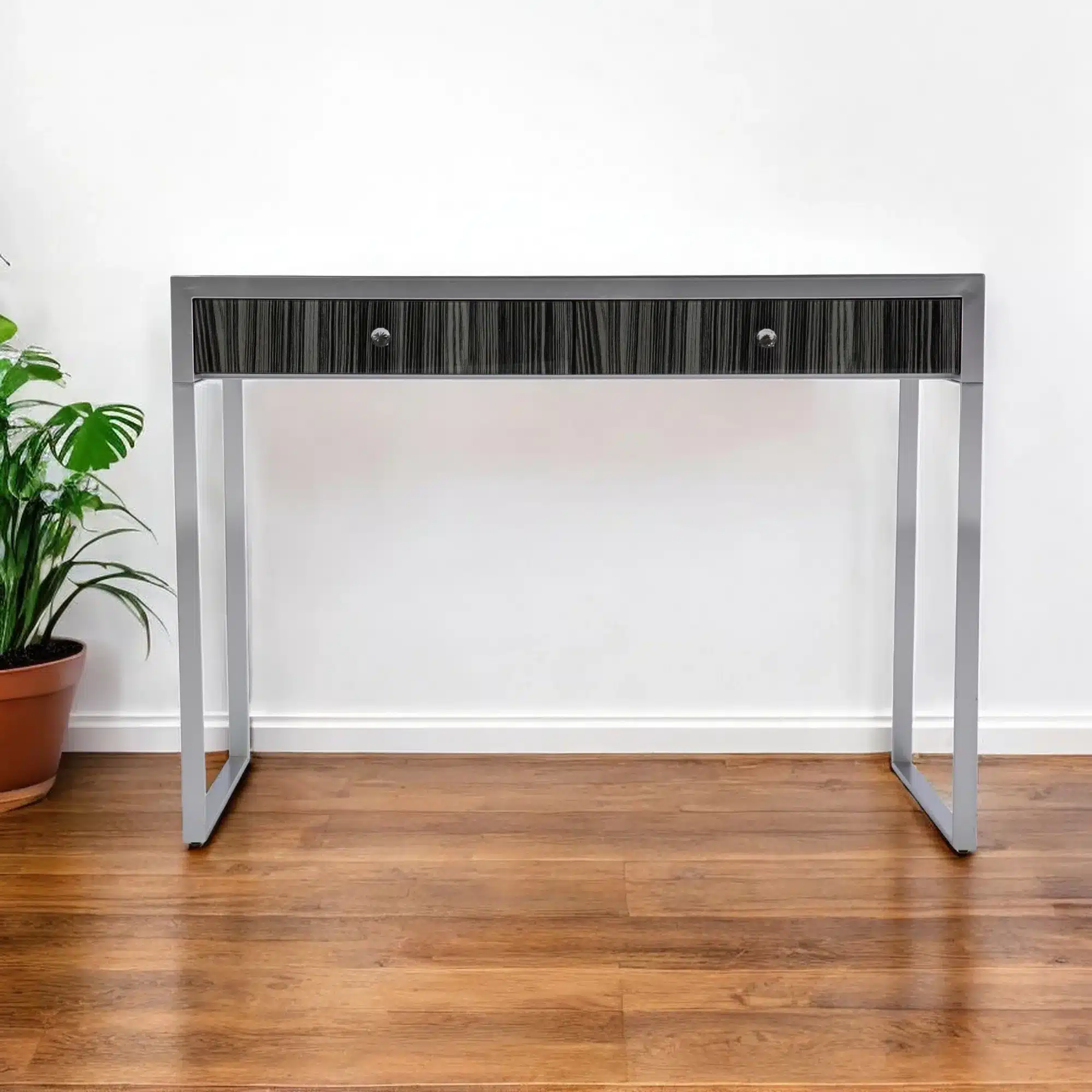
If you’re looking for a reliable option, consider the 42″ Extendable Silver MFC Writing Desk with Two Drawers—it combines functionality with a sleek design, and its easy assembly makes it a practical choice for any room.
42″ Extendable Silver MFC Writing Desk with Two Drawers for Living Room Workshop Warehouse Supermarket Villa Easy Assembly
For a practical and stylish solution, the 42″ Extendable Silver MFC Writing Desk with Two Drawers offers easy assembly and a compact design that adapts to your space.
Frequently asked questions
What is the average size of an extendable writing desk?
Most extendable desks range from 40 to 60 inches in width when extended, with depths around 24 inches. The compact size when closed is typically 30-40 inches, making them ideal for small spaces.
Can an extendable desk support heavy equipment like dual monitors?
Yes, if the desk is made of sturdy materials like solid wood or high-quality MFC. Check the weight capacity specified by the manufacturer, which usually ranges from 50 to 100 pounds. Ensure the extension mechanism is robust to handle the load.
How do I clean and maintain an MFC desk?
Use a soft, damp cloth with mild soap to wipe the surface. Avoid abrasive cleaners or scouring pads. Dry immediately to prevent moisture damage. Periodically check screws and hinges for tightness.
Are extendable desks suitable for small apartments?
Absolutely. Their space-saving design is perfect for compact living areas. You can fold or slide the extension when not in use, freeing up floor space for other activities.
