
Blog
Floating Bathroom Vanity: The Complete Buying Guide
Buying Guide
Floating Bathroom Vanity: Your Smart Buying Guide
A floating bathroom vanity can transform your bathroom’s look and feel, offering both style and practicality. This guide walks you through everything you need to know before making a purchase.
Why Choose a Floating Bathroom Vanity?
A floating bathroom vanity, also known as a wall-mounted vanity, is a popular choice in contemporary bathroom design. Unlike traditional floor-standing units, these vanities are attached directly to the wall, leaving the floor beneath open. This creates a sense of spaciousness, making even small bathrooms feel larger and airier.
Beyond aesthetics, floating vanities offer practical benefits. The open floor space simplifies cleaning, allowing you to sweep or mop without obstacles. They also provide flexibility in height placement, enabling you to install them at a comfortable level for your family, which is especially useful in homes with varying user heights.
Moreover, a floating vanity can be a design statement. With a variety of materials, colors, and styles available, you can find one that matches your bathroom’s theme, whether it’s minimalist, rustic, or luxurious.
Sizing and Space Considerations
Before you fall in love with a particular design, you need to assess your bathroom’s dimensions. The size of your floating vanity should be proportional to the room. A common rule of thumb is to leave at least 15 inches of clearance on each side of the vanity for comfortable movement. Also, consider the door swing and traffic flow.
Measure the wall space where you plan to install the vanity. Note the location of plumbing rough-ins, as you’ll need to align the vanity’s drain and water supply lines. You might also want to check for wall studs, because a floating vanity must be securely anchored to them. If you’re unsure about the structural integrity, consult a professional.
For smaller bathrooms, a compact vanity around 24 inches wide may suffice. For larger spaces, you can opt for a double vanity or a wider single unit. Keep in mind that the depth typically ranges from 18 to 24 inches. Ensure there’s enough room to open drawers and doors comfortably.
Material and Durability
The material of your floating vanity affects both its look and longevity. Common options include solid wood, plywood, MDF, and even metal or glass. Solid wood offers natural beauty and durability but may require more maintenance in humid environments. Plywood and MDF are more resistant to moisture and are often used in budget-friendly options.
Countertops are equally important. Quartz, marble, and solid surface are popular choices. Quartz is non-porous and resists stains, making it ideal for bathrooms. Marble adds elegance but requires sealing. Ceramic and porcelain are also common, offering a range of colors and patterns.
When selecting materials, consider the humidity levels in your bathroom. Proper ventilation is key to preventing warping or mold. Look for vanities with a water-resistant finish and sealed edges.
Installation Essentials
Installing a floating vanity is a task that often requires some DIY skills. You’ll need to locate wall studs and use a level to ensure the vanity is perfectly horizontal. The mounting hardware must be heavy-duty and suitable for the wall type (drywall, tile, etc.). If you’re not comfortable with these steps, hiring a professional is a wise investment.
Also, plan for the plumbing. The drain and water supply lines will need to be routed through the wall or the vanity’s back panel. Some vanities come with pre-drilled holes for this purpose. Ensure you have the necessary connections and that they are properly sealed to prevent leaks.
Don’t forget to leave access for shut-off valves. You might want to install a small access panel for future maintenance. It’s also a good idea to have a helper during installation to hold the vanity in place while you secure it.
Style and Design Trends
Floating vanities come in a wide array of styles, from sleek modern to classic traditional. The current trend leans toward minimalist designs with clean lines and natural materials. Matte black fixtures, vessel sinks, and integrated lighting are popular additions.
Color choices can dramatically affect the mood of your bathroom. White and light gray create a fresh, clean look, while dark woods add warmth and sophistication. A floating vanity with a wood texture, like the Andean oak, brings an organic touch that pairs well with greenery and natural stone.
Consider the overall theme of your bathroom. If you have a contemporary space, a floating vanity with a glossy finish and under-mount sink might be perfect. For a spa-like retreat, opt for a stone countertop and a waterfall edge.
Storage and Functionality
One of the main concerns with floating vanities is storage. Since they lack the base of traditional vanities, you might think they offer less space. However, many designs maximize storage with deep drawers, open shelves, or a combination of both.
Think about what you need to store: toiletries, towels, cleaning supplies, etc. Drawers with dividers can keep items organized. Open shelving provides easy access but requires neatness. Some vanities have a built-in towel bar or a mirror cabinet above.
If you’re short on storage, consider adding a tall cabinet or a shelving unit nearby. Alternatively, you can use the space beneath the vanity for a stylish basket or a small stool.
Lighting and Accessories
Proper lighting enhances the functionality and ambiance of your vanity area. Install sconces on either side of the mirror for even illumination, or use a backlit mirror for a modern touch. Ensure the lighting is bright enough for grooming tasks.
Accessories like faucets and sinks play a role too. Wall-mounted faucets free up counter space and pair beautifully with floating vanities. Vessel sinks sit on top of the counter and become a focal point. Undermount sinks are easier to clean.
Don’t forget the mirror. A large, framed mirror can make the room feel bigger. A medicine cabinet with integrated lighting is practical for small bathrooms.
Budgeting and Value
Floating vanities range in price from a few hundred to several thousand dollars. The cost depends on materials, brand, and size. Set a budget before you start shopping, and remember to factor in installation costs if you’re hiring a professional.
Investing in a quality vanity can add value to your home. A well-chosen floating vanity is not only a functional piece but also a design element that can impress potential buyers. Look for warranties and customer reviews to ensure you’re getting a durable product.
While it’s tempting to go for the cheapest option, consider the long-term benefits of a sturdy, well-made vanity. It’s better to spend a bit more upfront than to deal with repairs or replacements later.
For more ideas on bathroom design, you might find this article on bathrooms helpful.
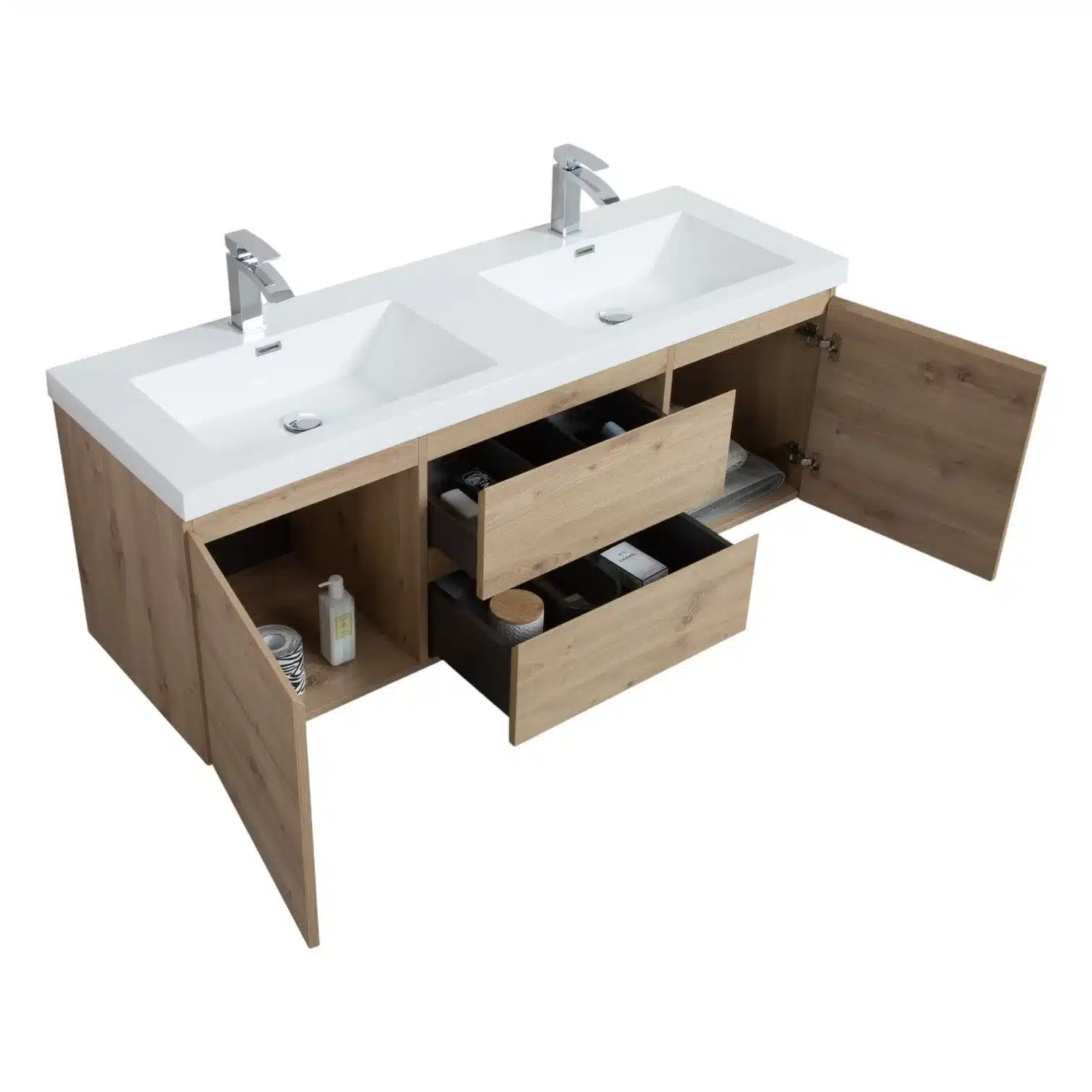
1500mm Bathroom Vanity With White Countertop Andean Oak Texture | Floating Vanity
For a stunning and functional option, consider the 1500mm Bathroom Vanity With White Countertop Andean Oak Texture | Floating Vanity, which combines durability with a natural wood aesthetic.
Frequently asked questions
What is a floating bathroom vanity?
A floating bathroom vanity is a wall-mounted cabinet that does not touch the floor, creating an open space beneath. It is secured to the wall via brackets or a frame, offering a modern look and easier cleaning.
How much weight can a floating vanity hold?
The weight capacity depends on the mounting system and wall structure. Typically, a well-installed floating vanity can support 100-300 pounds. Always ensure it is anchored to wall studs and use heavy-duty brackets.
Are floating vanities more expensive than traditional ones?
Floating vanities can be comparable in price or slightly higher due to the need for wall mounting and sometimes higher-end materials. However, they can save space and add value, making them a worthwhile investment.
Can I install a floating vanity on any wall?
Floating vanities require a wall that can support the weight. Drywall alone is not enough; you need to anchor into wall studs. For tile or concrete walls, special anchors may be needed. Consult a professional if unsure.
