
Blog
Best Chef Knife Set: A Practical Guide for Home Cooks
Kitchen Essentials
Choosing the Best Chef Knife Set for Your Kitchen
The best chef knife set is more than a collection of blades—it’s your daily partner in the kitchen. Whether you’re a home cook or a weekend warrior, this guide will help you pick a set that fits your style and budget.
What to Look for in a Chef Knife Set
A good chef knife set typically includes a chef’s knife, a paring knife, and a utility or bread knife. The chef’s knife is your workhorse, ideal for chopping, slicing, and dicing. Paring knives handle smaller tasks like peeling or trimming. Some sets add a serrated bread knife for crusty loaves. Consider your cooking habits: if you often prepare meat, a carving knife might be useful; if you bake, a bread knife is essential. Look for full tang construction (the metal extends through the handle) for balance and durability. High-carbon stainless steel is a popular choice for its sharpness and rust resistance. Forged blades are generally stronger than stamped ones, but they come at a higher price. A comfortable, ergonomic handle reduces fatigue during long prep sessions. Wooden handles offer a classic feel, while synthetic materials like polypropylene are low-maintenance. Lastly, storage matters: a knife block keeps blades organized and accessible, but magnetic strips or blade guards are space-saving alternatives.
Understanding Blade Materials and Their Impact on Performance
The blade is the heart of any knife set. Stainless steel is common and resists corrosion, but it can be harder to sharpen. High-carbon stainless steel combines edge retention with rust resistance. German steel (like X50CrMoV15) is softer, making it easier to sharpen, while Japanese steel (like VG-10) is harder, holding an edge longer but requiring careful handling. Ceramic blades are extremely sharp and lightweight, but they are brittle and chip easily. For most home cooks, high-carbon stainless steel offers the best balance. Blade hardness is measured on the Rockwell scale (HRC): 56-58 HRC is typical for Western knives, while Japanese knives often range 60-62 HRC. Harder blades stay sharp longer but are more prone to chipping. A 58-60 HRC steel is a sweet spot. Also consider the blade’s grind: a 15-degree edge is sharper but more delicate; a 20-degree edge is more durable. Many Japanese knives have a 15-degree angle, while Western knives use 20 degrees. Some sets offer a hybrid edge that combines both.
Handle Design and Ergonomics: Finding the Right Fit
Your knife handle should feel like a natural extension of your hand. Common materials include wood, plastic, and metal. Wooden handles, like pakka wood (layers of wood veneer bonded with resin), offer warmth and grip even when wet. They require occasional oiling to prevent drying. Plastic handles are lightweight and dishwasher-safe (though hand washing is recommended). Metal handles are durable but can be slippery. The shape matters: a contoured handle with a slight bulge at the end prevents slipping. Full tang knives have metal running through the handle, providing balance and strength. A three-rivet design is classic and secure. For those with smaller hands, a slim handle is better; larger hands need a thicker grip. Some knives feature a bolster (the thick band between blade and handle), which adds weight and protects fingers. However, a bolster can make sharpening difficult. Try holding the knife before buying—if possible, visit a store. Online, read reviews about handle comfort. A balanced knife reduces wrist strain. The weight should feel centered near the bolster or slightly forward, depending on your cutting style. A heavy knife (8+ ounces) can be tiring; a lighter one (6-7 ounces) offers more control.
Key Knives in a Set and Their Uses
A typical chef knife set includes three to five pieces. The chef’s knife (8-10 inches) is the most versatile—use it for chopping vegetables, slicing meat, and mincing herbs. A paring knife (3-4 inches) handles precision tasks like peeling apples or deveining shrimp. A serrated bread knife (8-10 inches) cuts through crusty bread without crushing it, and also works well for tomatoes and citrus. Some sets add a utility knife (4-6 inches) for medium tasks, or a Santoku knife (a Japanese-style all-purpose knife with a sheepsfoot blade). Santoku knives excel at slicing and dicing, especially for vegetables and fish. A carving knife (8-9 inches) is useful for roasts and poultry. A honing steel is often included—it’s not a sharpener but realigns the edge between sharpenings. A knife block or sheaths for storage are common additions. Think about which knives you’ll actually use: if you rarely cook roasts, skip the carving knife. A smaller set with high-quality pieces is better than a large set with mediocre ones.
Maintaining Your Chef Knife Set: Sharpening and Care
Even the best chef knife set will dull over time. Regular honing (every few uses) with a honing steel maintains the edge. For sharpening, use a whetstone (preferred for a fine edge), a pull-through sharpener (easy but removes more metal), or a professional service. Whetstones come in different grits: 1000-2000 for sharpening, 4000-6000 for finishing. Soak the stone in water for 10 minutes, then sharpen at a 15-20 degree angle. Always hand wash knives with mild soap and dry immediately—dishwashers can dull edges and damage handles. Store knives in a block, magnetic strip, or with blade guards. Avoid cutting on glass, stone, or metal surfaces; use wood or plastic cutting boards. Never use a knife to pry open cans or as a screwdriver. With proper care, a good set can last a lifetime. If you notice chips or rolled edges, it’s time to sharpen. A sharp knife is safer than a dull one because it requires less force.
Budget Considerations: Finding Value Without Sacrificing Quality
Chef knife sets range from $30 to over $500. Entry-level sets (under $100) often use stamped blades and lower-quality steel. They may be fine for occasional use but won’t hold an edge long. Mid-range sets ($100-$300) typically feature forged blades, better steel (like German or Japanese), and comfortable handles. This is the sweet spot for most home cooks. Premium sets ($300+) use top-tier materials and craftsmanship, often from renowned brands. However, you don’t need to spend a fortune for good performance. Look for sets that include the knives you’ll actually use—avoid filler pieces like steak knives if you don’t need them. A three-piece set (chef, paring, bread) can cover most tasks. Consider buying individual knives instead of a set to prioritize quality. Some manufacturers offer lifetime warranties and free sharpening services. Also factor in the cost of accessories like a honing steel or cutting board. Ultimately, the best value is a set that fits your cooking frequency and technique. If you cook daily, invest in a higher-end set; if you cook occasionally, a mid-range set is sufficient. Remember that a sharp, well-balanced knife makes cooking more enjoyable and efficient.
Comparing Western and Japanese Knife Styles
Western knives (like German or French) typically have thicker blades with a curved edge, allowing a rocking motion for chopping. They are more durable and can handle heavy tasks like cutting through bones. Japanese knives have thinner, harder blades with a flatter edge, designed for precise push-cuts. They excel at slicing raw fish and vegetables. Common Japanese styles include the Santoku (multi-purpose), Gyuto (chef’s knife), and Nakiri (vegetable knife). Many home cooks appreciate the balance of a hybrid set that offers both Western and Japanese blades. For example, a Santoku knife combines the best of both worlds. The edge angle also differs: Western knives are usually sharpened to 20 degrees, while Japanese knives use 15 degrees. A 15-degree edge is sharper but more delicate. If you’re new to Japanese knives, start with a Santoku or a Gyuto. Handle shapes vary: Western handles are often full tang with rivets, while Japanese handles (wa-style) are often octagonal or D-shaped and lighter. Choose based on your comfort. Some sets include a mix of styles to give you versatility. Ultimately, the best style is the one that feels natural in your hand and suits your cooking tasks.
How to Test a Chef Knife Set Before Buying
If possible, try a knife before committing to a set. Hold each knife to check balance: the pivot point should be where the blade meets the handle. The knife should feel neither handle-heavy nor blade-heavy. Test the grip: your fingers should wrap comfortably without slipping. For a chef’s knife, the handle should fill your palm without feeling bulky. Check the blade’s sharpness out of the box—it should easily slice through paper or a tomato. Look at the edge: it should be even and free of burrs. Assess the weight: a heavier knife (8-10 oz) helps with chopping, while a lighter one (6-8 oz) offers control. Consider the bolster: if present, ensure it doesn’t interfere with sharpening. Also check the knife’s spine (the top of the blade) for thickness—a thinner spine indicates a more precise blade. For paring knives, a comfortable handle is crucial for detailed work. If you can’t try in person, read reviews from multiple sources, focusing on durability, edge retention, and comfort. Look for detailed feedback from home cooks with similar needs. Some online retailers offer trial periods or easy returns. Finally, consider the set’s warranty and customer service. A reputable brand stands behind its products.
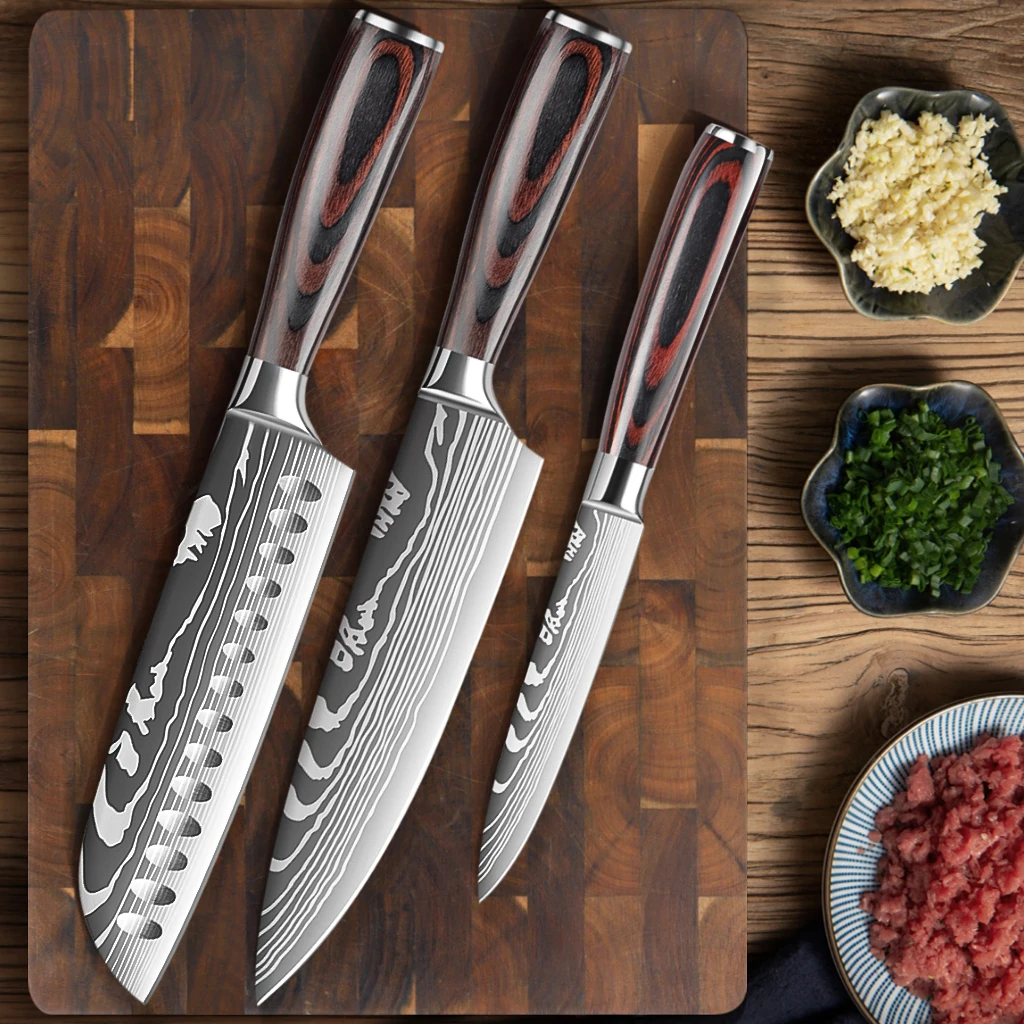
IOKO 3 PCS Japanese Style Kitchen Knife Set Pakka Wood Handle Slicing Sushi Steak Santoku Chef Utility Paring Kitchen Knife Set
For a reliable and balanced set that covers everyday tasks, the IOKO 3 PCS Japanese Style Kitchen Knife Set with pakka wood handles offers a solid combination of sharpness and comfort without breaking the bank.
Frequently asked questions
How many knives do I really need in a chef knife set?
Most home cooks can get by with a three-piece set: an 8-inch chef’s knife, a 3-4 inch paring knife, and a serrated bread knife. This covers chopping, slicing, peeling, and bread. Additional knives like a utility or Santoku can be nice but aren’t essential.
What is the best steel for a chef knife set?
High-carbon stainless steel is a great all-around choice, offering a good balance of sharpness, edge retention, and rust resistance. German steel (e.g., X50CrMoV15) is softer and easier to sharpen, while Japanese steel (e.g., VG-10) holds an edge longer but is harder to sharpen.
Should I buy a knife block or a magnetic strip?
Knife blocks are convenient and protect blades, but they can take up counter space and may not fit all knife sizes. Magnetic strips save space and allow easy access, but require proper installation and careful placement to avoid accidents. Blade guards are a budget-friendly alternative.
How often should I sharpen my chef knives?
It depends on usage. For daily cooking, sharpen every 1-2 months with a whetstone or take them to a professional. Hone with a steel every few uses to maintain the edge. Signs it’s time to sharpen: the knife slips when cutting a tomato or requires more pressure than usual.
