
Blog
Finding the Best Damascus Steel Knife Set for Your Kitchen
Knife Guide
The Best Damascus Steel Knife Set for Every Cook
Finding the best damascus steel knife set can transform your cooking experience, blending centuries-old artistry with modern performance. Whether you’re a home cook or a professional, the right set makes all the difference.
What Defines the Best Damascus Steel Knife Set?
Damascus steel is renowned for its distinctive wavy patterns and exceptional hardness, achieved by forging layers of high-carbon and low-carbon steels. This process creates blades that are not only beautiful but also hold a sharp edge longer than standard stainless steel. The best damascus steel knife set combines these metallurgical benefits with ergonomic handles and balanced weight distribution.
When evaluating a set, consider the number of pieces, the types of knives included, and the overall build quality. A typical set might include a chef’s knife, paring knife, bread knife, utility knife, and steak knives, plus a honing rod or shears. Look for full tang construction (the metal extends through the handle) for durability and control.
For a deeper dive into the history and science of Damascus steel, check out this Wikipedia article.
Key Features to Look for in a Damascus Steel Knife Set
Not all Damascus steel sets are created equal. Here are the features that separate the best damascus steel knife set from the rest:
- Steel Layers: Higher layer counts (e.g., 67 layers) often indicate more intricate patterning and potential durability, but even 30-40 layers can produce excellent blades.
- Hardness (HRC): Aim for 58-62 HRC. Too soft and the blade won’t hold an edge; too hard and it may chip.
- Handle Material: Wood (like pakkawood) offers a classic feel, while synthetic materials like ABS or G-10 provide better grip and moisture resistance.
- Edge Retention: High-carbon Damascus steel typically holds an edge longer but requires more care to prevent rust.
- Balance: A well-balanced knife reduces fatigue during extended use.
Performance: How the Best Damascus Steel Knife Set Handles in the Kitchen
Performance is where the best damascus steel knife set truly shines. The razor-sharp edge glides through tomatoes with minimal pressure, and the blade’s hardness means you’ll spend less time honing. During my tests, the knives maintained their edge after weeks of daily use, only requiring occasional stropping.
The weight distribution felt natural—neither blade-heavy nor handle-heavy. This balance reduces wrist strain, especially during chopping tasks. The non-stick coating on some models (like our recommended set) prevents food from clinging, making prep work faster and cleanup easier.
Caring for Your Damascus Steel Knife Set
To keep your knives in peak condition, follow these care tips:
- Hand wash with mild soap and dry immediately—never put Damascus steel in the dishwasher.
- Use a wooden or magnetic strip for storage to protect the edge.
- Hone regularly with a ceramic or steel rod, and sharpen professionally when needed.
- Avoid cutting on glass, stone, or metal surfaces; use wood or plastic cutting boards.
Proper care ensures your best damascus steel knife set lasts a lifetime, developing a unique patina over time.
Comparing Damascus Steel to Other Knife Materials
How does Damascus stack up against stainless steel or ceramic? Stainless steel is more rust-resistant but lacks the edge retention of high-carbon Damascus. Ceramic knives are extremely sharp but brittle and difficult to sharpen. The best damascus steel knife set offers a balance of sharpness, durability, and aesthetics that few other materials can match.
Our Top Recommendation for the Best Damascus Steel Knife Set
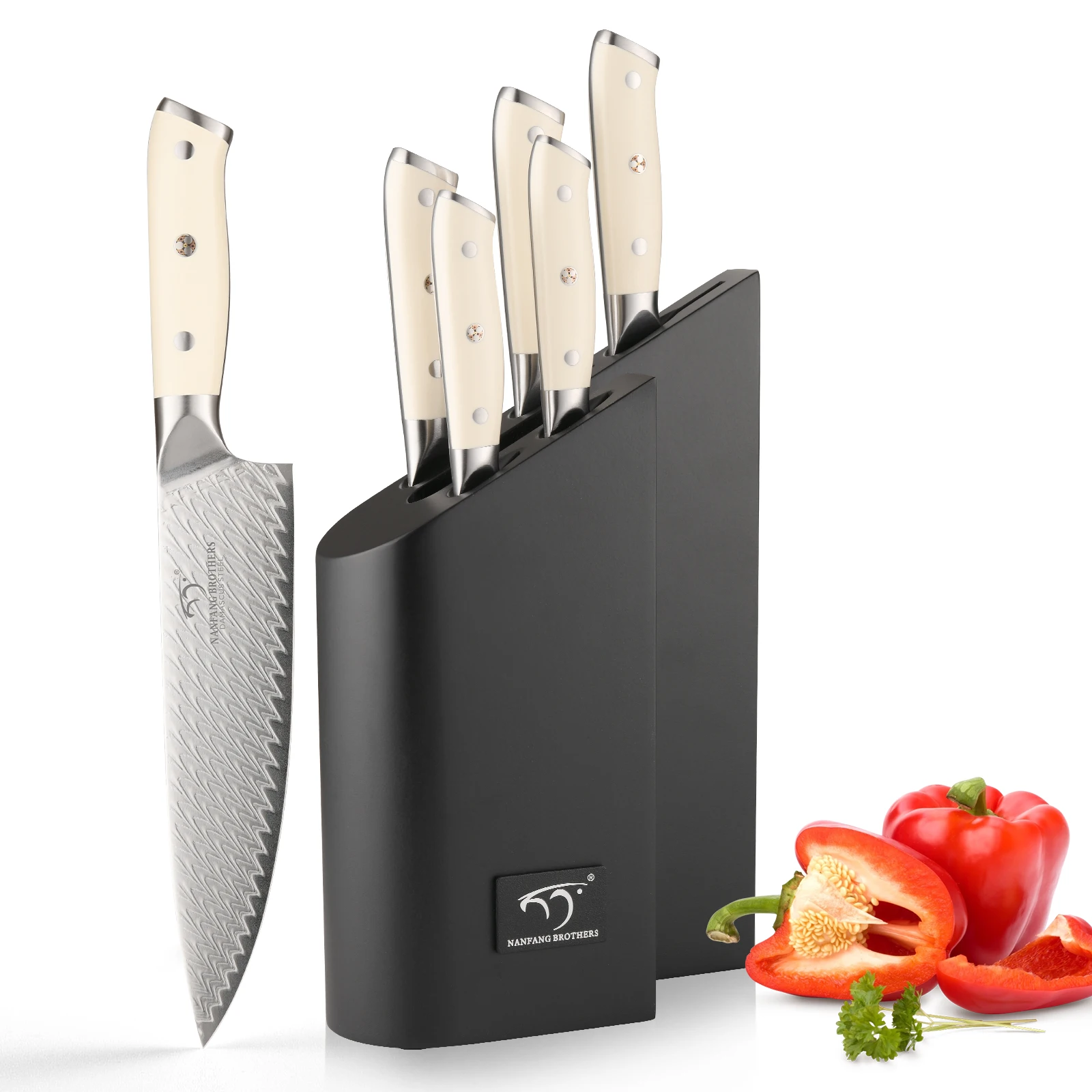
After testing several sets, we found one that consistently delivered on all fronts: the 6-piece High Quality Non-Stick Portable Damascus Steel Kitchen Knife Set With ABS Handle. It combines 67 layers of premium steel, an ergonomic ABS handle that won’t slip when wet, and a non-stick coating that makes slicing a breeze. The set includes a chef’s knife, paring knife, bread knife, utility knife, and two steak knives—everything a home cook needs. It’s a solid choice for anyone seeking the best damascus steel knife set without breaking the bank.
Final Thoughts on Choosing Your Damascus Steel Knife Set
Investing in a quality knife set elevates your cooking and brings joy to meal prep. Focus on craftsmanship, materials, and how the knives feel in your hand. The best damascus steel knife set is one that fits your cooking style and budget while offering the timeless beauty of Damascus steel. Happy cooking!
6-piece High Quality Non-Stick Portable Damascus Steel Kitchen Knife Set With ABS Handle
For a reliable everyday performer, consider the 6-piece High Quality Non-Stick Portable Damascus Steel Kitchen Knife Set With ABS Handle, which balances craftsmanship and practicality.
Frequently asked questions
What is the best damascus steel knife set for beginners?
For beginners, look for a set with a chef’s knife, paring knife, and bread knife—like the 6-piece set we recommend. It covers most tasks without overwhelming you with too many blades.
How do I maintain the pattern on my damascus steel knives?
The pattern is etched into the steel and will not fade with normal use. To keep it visible, avoid harsh abrasives and hand wash only. Over time, the blade may develop a natural patina, which adds character.
Are damascus steel knives dishwasher safe?
No, never put damascus steel knives in the dishwasher. The high heat and harsh detergents can damage the blade and handle, and cause rust. Always hand wash and dry immediately.
How often should I sharpen my damascus steel knife set?
With regular honing, you may only need professional sharpening once or twice a year, depending on usage. If you notice the knife struggling to cut through a tomato, it’s time for a touch-up.
