
Blog
The Best 8 Inch Chef Knife: A Complete Buying Guide
Buying Guide
Your Ultimate 8 Inch Chef Knife Guide
Choosing the right 8 inch chef knife can transform your cooking experience. Whether you’re a home cook or a professional, this guide covers everything you need to know to make an informed decision.
Why 8 Inches Is the Sweet Spot
An 8 inch chef knife strikes a perfect balance between versatility and control. It’s long enough to slice through large vegetables and meats with one smooth stroke, yet nimble enough for precise tasks like mincing garlic or dicing shallots. Most professional chefs consider it the go-to size for everyday cutting.
Compared to a 6-inch chef knife, the extra length gives you more leverage and a longer cutting edge, reducing the number of strokes needed for larger ingredients. Against a 10-inch blade, the 8-inch is lighter and easier to maneuver, especially for cooks with smaller hands or those who prefer a more agile tool.
Blade Steel: What Matters Most
The steel determines how sharp your knife gets, how long it holds that edge, and how easy it is to sharpen. Here are the most common types:
- High-Carbon Stainless Steel: A popular choice for its balance of edge retention, corrosion resistance, and ease of sharpening. Most quality knives use this.
- Damascus Steel: Known for its beautiful layered pattern, Damascus steel can offer excellent hardness and edge retention. It’s often harder to sharpen but performs beautifully when maintained.
- Carbon Steel: Holds a razor edge but rusts easily. Requires immediate drying and oiling.
- Ceramic: Extremely hard and stays sharp long, but brittle and difficult to sharpen.
For most home cooks, high-carbon stainless steel or a well-crafted Damascus steel blade is ideal. Look for a Rockwell hardness (HRC) between 58 and 62 for a good combination of sharpness and durability.
Handle Comfort and Ergonomics
A knife is only as good as its handle. You’ll be gripping it for extended periods, so comfort and security are paramount. Consider these factors:
Material
Wood: Classic, warm feel, but requires maintenance to avoid cracking or swelling. Stabilized wood is more durable and resists moisture.
Stainless Steel: Durable and hygienic, but can be slippery when wet. Often has a textured finish.
Polypropylene or Synthetic: Lightweight, dishwasher-safe, but can feel cheap.
Shape and Grip
Look for a handle that fills your palm comfortably, with a slight bulge in the middle to prevent slipping. A full tang (the metal extends through the handle) adds balance and strength. Try to hold the knife before buying if possible.
Balance and Weight
A well-balanced 8 inch chef knife should feel like an extension of your arm. The balance point is typically just in front of the bolster (the thick metal band between blade and handle). Heavier knives (around 8-10 oz) can power through dense vegetables, while lighter ones (6-8 oz) offer more agility for precise cuts.
To test balance, place your finger under the bolster: the knife should sit level without tipping forward or backward. A slightly blade-heavy knife can aid chopping, while a handle-heavy knife may cause fatigue.
Edge Geometry and Grind
The edge grind affects how the knife cuts. Common types include:
- Double Bevel (V-Edge): Symmetrical grind on both sides, typical for Western knives. Easy to sharpen and versatile.
- Single Bevel: One side flat, other angled. Used for traditional Japanese knives; creates incredibly sharp edges but requires skill to use and sharpen.
- Convex Grind: Rounded shape that reduces friction, excellent for slicing but harder to sharpen.
For most users, a double bevel with a 15-20 degree angle per side is perfect for everyday tasks.
Maintenance and Sharpening
No knife stays sharp forever. Proper care extends its life:
- Honing: Use a honing steel before each use to realign the edge. This doesn’t remove metal, just straightens the blade.
- Sharpening: When honing isn’t enough, use a whetstone (1000-6000 grit) or a quality pull-through sharpener. Avoid electric sharpeners that can overheat the blade.
- Cleaning: Hand wash with mild soap and dry immediately. Never put in dishwasher.
- Storage: Use a knife block, magnetic strip, or blade guard to protect the edge.
How to Choose the Perfect Knife for You
Start by assessing your cooking habits. Do you primarily cut vegetables, or do you break down poultry and fish? Consider your hand size and grip strength. A heavier knife may be better for large hands, while a lighter one suits smaller hands.
Set a budget: Good knives start around $50 and go up to several hundred. You don’t need to spend a fortune, but avoid the cheapest options—they often have poor steel and uncomfortable handles.
Finally, read reviews and, if possible, test knives in a store. The best knife is the one that feels right in your hand and meets your specific needs.
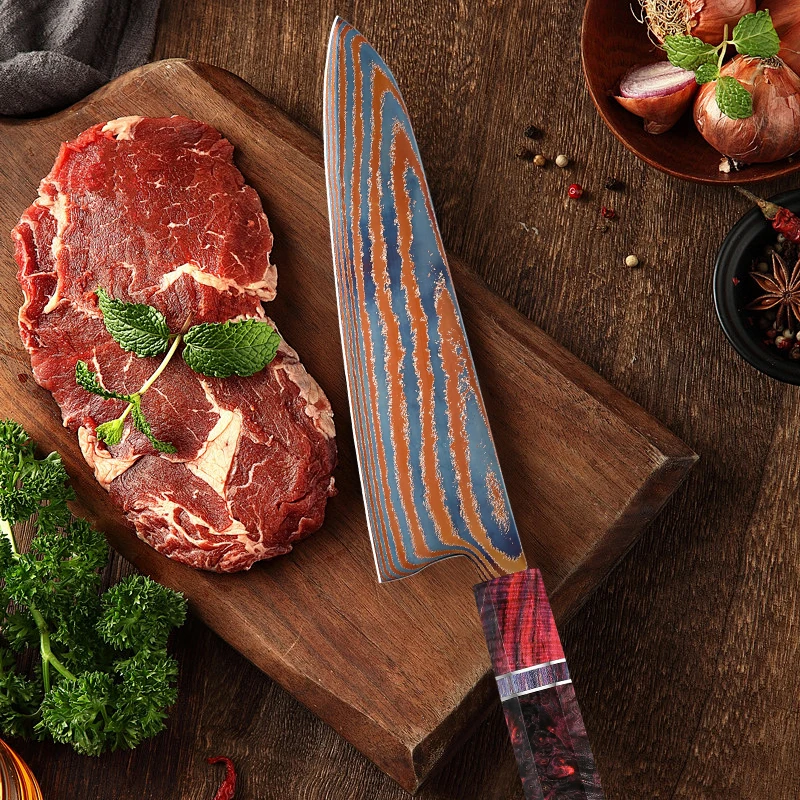
8-inch Damascus steel chef knife Sharp Timascus knife blade Titanium Cut Vegetable and Meat Stabilized Colored Wood Handle
For a blend of artistry and performance, consider the 8-inch Damascus steel chef knife with a sharp Timascus blade, stabilized colored wood handle—it’s a reliable tool that looks as good as it cuts.
Frequently asked questions
What is the best steel for an 8 inch chef knife?
High-carbon stainless steel is the most popular for its balance of edge retention, corrosion resistance, and ease of sharpening. Damascus steel offers excellent performance and beauty but requires more upkeep.
How do I know if an 8 inch chef knife is balanced?
Place your index finger just in front of the bolster. The knife should balance horizontally without tipping. A blade-heavy knife aids chopping; a handle-heavy one may cause fatigue.
Can I put my 8 inch chef knife in the dishwasher?
No. Dishwashers can dull the blade, damage the handle, and cause rust. Always hand wash with mild soap and dry immediately.
How often should I sharpen my 8 inch chef knife?
Hone before each use. Sharpen on a whetstone every 2-3 months for regular home use, or when the knife no longer cuts through a tomato skin easily.
