
Blog
Damascus Steel Knife Set: Beauty Meets Performance
Buying Guide
The Ultimate Damascus Steel Knife Set Buying Guide
A Damascus steel knife set is more than just a collection of blades—it’s a fusion of ancient craftsmanship and modern kitchen performance. Whether you’re a home cook or a professional, understanding what makes these knives special will help you choose a set that lasts a lifetime.
What Makes a Damascus Steel Knife Set Special?
Damascus steel is renowned for its distinctive wavy patterns, which are created by forging multiple layers of high-carbon and stainless steels. This process not only produces stunning aesthetics but also results in blades that are exceptionally sharp, durable, and resistant to corrosion. A true Damascus steel knife set combines these properties with ergonomic handles and balanced weight distribution, making it a joy to use for everyday chopping, slicing, and dicing.
Unlike mass-produced knives, each Damascus blade is unique—the pattern is like a fingerprint. The layering also creates micro-serrations along the edge, enhancing cutting performance. For those who appreciate both form and function, investing in a quality set elevates the cooking experience.
Key Factors to Consider When Buying a Damascus Steel Knife Set
Steel Core: VG10 vs. Other Alloys
The core steel determines edge retention and sharpness. VG10 (also known as VGold10) is a popular choice because it combines high carbon content for hardness with chromium and vanadium for corrosion resistance. Many premium Damascus steel knife set options feature a VG10 core clad in softer stainless steel layers, offering a balance of sharpness and toughness. Other common cores include AUS-8, which is slightly softer but easier to sharpen, and 440C, which offers good stain resistance.
Handle Material: Comfort and Durability
Handles should provide a secure grip even when wet. Pakka wood (also called stabilized wood) is a favorite among chefs for its warmth, beauty, and moisture resistance. It’s made by impregnating hardwood with resin under pressure, resulting in a dense, durable material that won’t crack or warp. Other options include micarta, G10, and stainless steel, but for a classic look, Pakka wood is hard to beat.
Knife Types in a Set
A typical set includes an 8-inch chef’s knife (all-purpose), a 3.5-inch paring knife (for detail work), a 6-inch utility knife (for medium tasks), and often a bread knife or santoku. Some sets also include kitchen shears or a sharpening rod. Choose a set that matches your cooking style—if you rarely bake, you might skip the bread knife.
Weight and Balance
A well-balanced knife feels like an extension of your hand. The center of gravity should be at or just ahead of the bolster (the thick junction between blade and handle). Heavier knives (8+ oz) are great for chopping through hard vegetables, while lighter ones (6-7 oz) offer nimble precision. Always hold a knife before buying if possible.
How to Care for Your Damascus Steel Knife Set
To preserve the beauty and performance of your Damascus steel knife set, follow these care tips:
- Hand wash only: Dishwashers can damage the blade edge and handle. Wash with mild soap and warm water, then dry immediately.
- Store safely: Use a magnetic strip, knife block, or edge guards to prevent blades from rubbing against each other.
- Hone regularly: Use a honing steel (smooth ceramic or diamond) between sharpenings to realign the edge. Sharpening with whetstones or a professional service should be done every few months depending on use.
- Avoid hard surfaces: Use wooden, bamboo, or plastic cutting boards. Glass, stone, or metal boards will dull the blade quickly.
With proper care, a high-quality Damascus knife set can last for decades, developing a patina that adds character.
Damascus Steel vs. Other Knife Materials
Compared to standard stainless steel, Damascus offers superior sharpness and edge retention due to its higher carbon content. However, it requires more maintenance to prevent rust if the outer layers are not stainless. German knives (like Wusthof or Zwilling) are softer and easier to sharpen but lack the intricate pattern. Japanese-style Damascus knives are harder (HRC 60-62) and take a finer edge, but are more brittle. For most home cooks, a balanced Damascus steel knife set with a VG10 core provides the best of both worlds.
For a deeper dive into the history and metallurgy of Damascus steel, visit Wikipedia’s article on Damascus steel.
What to Look for in a Damascus Steel Knife Set Under $300
In this price range, you can expect a VG10 core and Pakka wood handles from reputable brands. Look for full tang construction (the metal extends through the handle) for balance and durability. The blade should be forged, not stamped, as forging aligns the grain structure for better strength. Check for a symmetrical edge grind and smooth bolster transition. A set with four essential knives (chef, utility, paring, bread) is a great starter—you can always add specialized knives later.
Final Thoughts: Choosing the Right Damascus Steel Knife Set for You
Your choice ultimately depends on your budget, cooking habits, and aesthetic preference. A well-crafted Damascus steel knife set is an investment that transforms meal prep into a pleasure. Prioritize blade steel (VG10 is a safe bet), handle comfort (Pakka wood feels great), and a balanced weight that suits your grip. Whether you’re slicing tomatoes or breaking down a chicken, the right set will make every cut effortless.
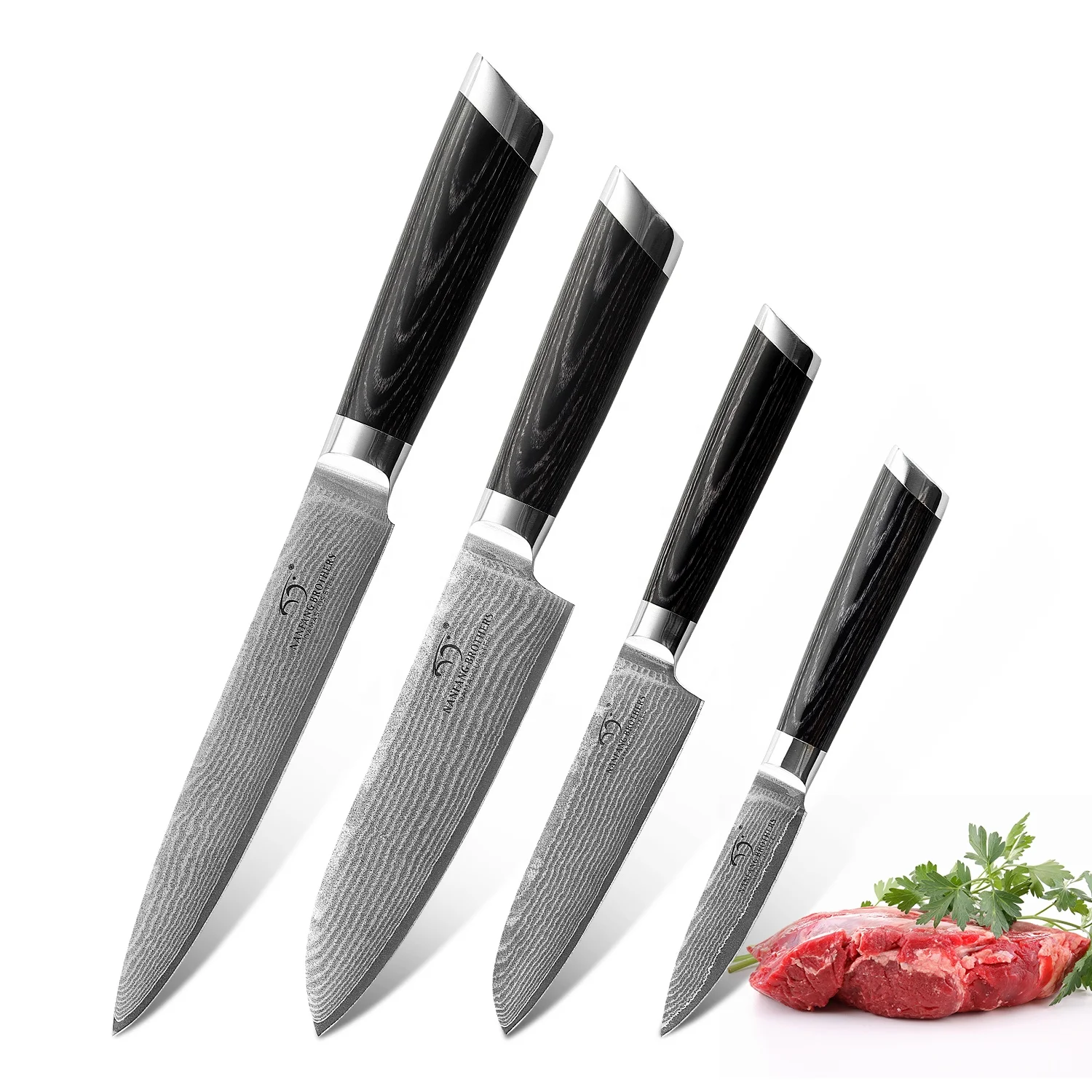
Professional Cook Tools 4 Pieces Damascus Steel VG10 Chef Kitchen Knife Set with Pakka Wood Handle
For a reliable entry into Damascus craftsmanship, consider the Professional Cook Tools 4 Pieces Damascus Steel VG10 Chef Kitchen Knife Set with Pakka Wood Handle, which offers a solid VG10 core and comfortable handles at a reasonable price.
Frequently asked questions
Is a Damascus steel knife set worth the investment?
Yes, if you value sharpness, durability, and aesthetics. The layered construction creates a hard core that holds an edge well, and the unique patterns make each knife a work of art. Properly maintained, they can last a lifetime.
How do I identify a genuine Damascus steel knife set?
Look for visible wavy patterns that are consistent throughout the blade. Genuine Damascus is etched to reveal the layers—counterfeits often have printed or laser-etched patterns that wear off. Also, reputable brands will specify the core steel (e.g., VG10) and number of layers.
Can I put Damascus steel knives in the dishwasher?
No. Dishwasher detergents and high heat can damage the blade edge, discolor the Damascus pattern, and cause wooden handles to crack or swell. Always hand wash and dry immediately.
What is the best angle to sharpen Damascus steel knives?
Most Damascus chef knives are sharpened at a 15-20 degree angle per side. Japanese-style knives often use 15 degrees for a finer edge, while Western-style may use 20 degrees for more durability. Use a whetstone or professional service for best results.
