
Blog
The Best Kitchen Knife Set for Every Home Cook
Buying Guide
Finding the Best Kitchen Knife Set for Your Kitchen
A great kitchen knife set makes cooking more enjoyable and efficient. Whether you’re a beginner or a seasoned cook, the best kitchen knife set balances sharpness, durability, and comfort.
What Makes a Kitchen Knife Set Great?
A quality knife set should include the essential blades you use daily. Look for full tang construction, where the blade extends through the handle, for better balance and durability. The steel type matters too—high-carbon stainless steel holds an edge longer and resists rust. A set that feels comfortable in your hand and stays sharp will make prep work a breeze.
Key Knives Every Set Should Include
Most home cooks need an 8-inch chef’s knife for chopping and slicing, a paring knife for small tasks, and a serrated bread knife. A utility knife and kitchen shears are nice bonuses. Avoid sets with too many specialty knives you won’t use—quality over quantity wins.
Chef’s Knife
This is your workhorse. It should feel balanced and have a blade that’s easy to sharpen. A good chef’s knife handles everything from dicing onions to slicing meat.
Paring Knife
For peeling, trimming, and detailed work. Look for a comfortable handle and a sharp, pointed tip.
Serrated Knife
Essential for bread, tomatoes, and delicate items. A wavy edge cuts without crushing.
Blade Materials: Stainless vs. Damascus vs. Ceramic
Stainless steel is common and easy to maintain. Damascus steel features layered patterns that create a beautiful, strong blade—often with a harder core for edge retention. Ceramic knives are lightweight but brittle. For most home cooks, high-carbon stainless or VG-10 steel offers the best balance of sharpness and toughness.
Handle Design and Comfort
Handles come in wood, plastic, or metal. Wood looks classic but needs care. Plastic is lightweight and grippy when wet. Metal handles can be slippery. Ergonomics matter—a comfortable handle reduces fatigue during long cooking sessions. Try to hold a knife before buying if possible.
Storage and Maintenance
A knife block keeps blades safe and organized, but magnetic strips or in-drawer organizers save counter space. Always hand wash knives—dishwashers dull edges and damage handles. Use a honing rod weekly and sharpen every few months. A good set will last decades with proper care.
Budget Considerations
You don’t need to spend a fortune. A decent set for $100-$200 can serve you well. Premium sets with VG-10 or Damascus steel cost more but offer superior edge retention and aesthetics. Consider how often you cook—if it’s daily, investing in a higher-quality set pays off.
Our Recommendation
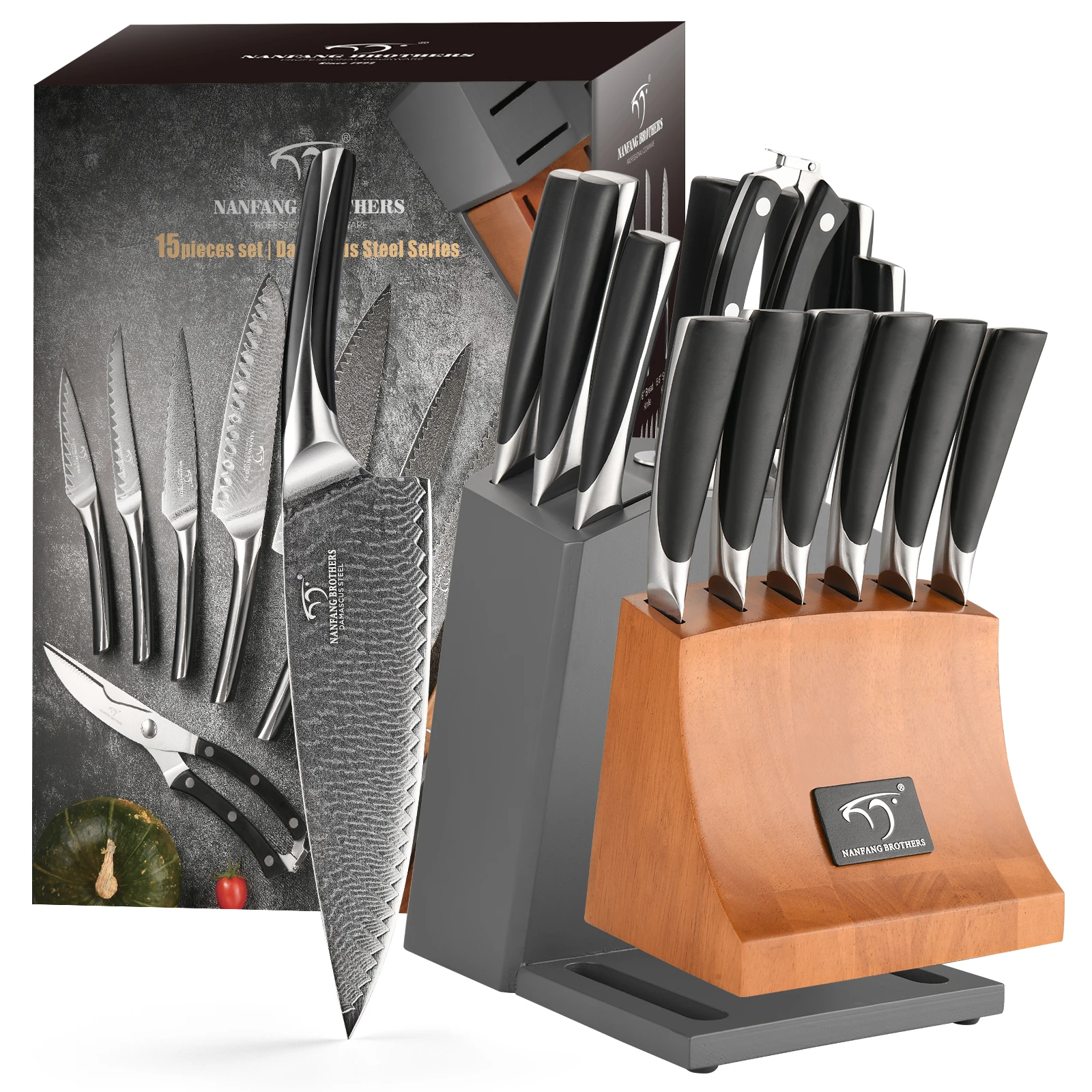
If you’re looking for a comprehensive set that combines performance and beauty, the Set of 15 VG-10 Damascus Steel Knives offers a full range of blades plus scissors and a sharpening stick, all with excellent edge retention and a striking appearance.
Set of 15 VG-10 Damascus Steel Knives Cutting Bread Meat Kitchen Knife Set with Scissors Sharpener Stick
For a complete set that balances value and performance, consider the Set of 15 VG-10 Damascus Steel Knives, which includes essential blades plus scissors and a sharpening stick.
Frequently asked questions
What is the best steel for kitchen knives?
High-carbon stainless steel, like VG-10, offers a great balance of sharpness, edge retention, and rust resistance. It’s a popular choice for both home cooks and professionals.
How many knives do I really need in a set?
A basic set of 3-5 knives (chef’s, paring, serrated, plus maybe a utility and shears) covers most tasks. Larger sets offer convenience but often include rarely used knives.
How do I keep my knives sharp?
Use a honing rod weekly to realign the edge, and sharpen with a whetstone or professional service every few months. Avoid glass cutting boards—they dull blades quickly.
Are expensive knife sets worth it?
If you cook frequently, a quality set with better steel and construction is worth the investment. For occasional use, a mid-range set can be sufficient.
