
Blog
The Best Japanese Kitchen Knife Set for Home Cooks
Knife Guide
Choosing Your Ideal Japanese Kitchen Knife Set
A Japanese kitchen knife set can transform your cooking experience, offering precision and sharpness that lasts. Whether you’re a home cook or a budding chef, understanding what makes these knives special will help you pick the right set.
What Makes a Japanese Kitchen Knife Set Special?
Japanese knives are renowned for their sharpness, durability, and unique blade geometries. Unlike Western knives, which are typically thicker and heavier, Japanese knives are thinner and harder, allowing for cleaner cuts with less effort. The steel used—often high-carbon stainless steel—holds an edge longer but requires proper care to avoid rust. A good Japanese kitchen knife set will include a variety of blade shapes designed for specific tasks, from slicing fish to chopping vegetables.
One key distinction is the single-bevel vs. double-bevel edge. Traditional Japanese knives like the yanagiba are single-bevel, ideal for precise sushi slicing. Double-bevel knives like the gyuto (chef’s knife) are more versatile and easier for Western cooks to use. When selecting a set, consider your cooking style and whether you want to maintain traditional sharpening techniques.
Types of Knives in a Japanese Kitchen Knife Set
A typical Japanese kitchen knife set includes several essential blades. The gyuto (chef’s knife) is the workhorse for chopping and slicing. The santoku is a multi-purpose knife with a sheep’s foot tip, excellent for slicing, dicing, and mincing. A petty knife serves as a utility knife for smaller tasks, while a nakiri is designed specifically for vegetables. For boning and filleting, a honesuki or deba knife is included.
Some sets also feature a bread knife with a serrated edge, though this is less traditional. The inclusion of a paring knife is common for intricate work. Understanding each knife’s purpose will help you use them effectively and maintain their edges.
Steel Types: Carbon vs. Stainless
Japanese knives are made from various steels. High-carbon steel (e.g., Shirogami or Aogami) takes an incredibly sharp edge but is prone to rust. Stainless steel (e.g., VG-10 or AUS-8) is more resistant to corrosion and easier to maintain, making it a good choice for beginners. Some knives combine a stainless cladding with a carbon core for the best of both worlds.
For a Japanese kitchen knife set, stainless steel is often recommended for its low maintenance. However, if you enjoy the ritual of care and want the sharpest possible edge, carbon steel is rewarding. Whichever you choose, proper storage and drying are essential to prolong the knife’s life.
Handle Designs: Traditional vs. Western
Japanese knife handles come in two main styles: traditional (wa) and Western (yo). Wa handles are typically octagonal or D-shaped, made from wood like magnolia or ho wood, and are lighter and more ergonomic for pinch grips. Yo handles are similar to Western knives, often made from synthetic materials or stabilized wood, and are heavier and more familiar to many cooks.
When choosing a Japanese kitchen knife set, consider your grip preference. Wa handles offer better control for precise cuts, while yo handles provide a secure grip for heavier tasks. Many sets offer a mix, so you can experience both.
How to Care for Your Japanese Knives
Proper care extends the life of your knives. Always hand wash with mild soap and dry immediately—never put them in the dishwasher. Store them in a knife block, magnetic strip, or with blade guards to protect the edges. Regular honing with a ceramic rod and occasional sharpening on whetstones will maintain the edge.
For a Japanese kitchen knife set, investing in a good whetstone (1000/6000 grit) is wise. Avoid electric sharpeners, as they can damage the thin blades. With proper care, these knives can last a lifetime.
Budget Considerations and Value
Japanese knife sets range from affordable to investment-grade. Entry-level sets (under $100) often use softer stainless steel and basic handles, but can still perform well. Mid-range sets ($100-$300) offer better steel (like VG-10) and more comfortable handles. High-end sets ($300+) feature premium steels, beautiful finishes, and traditional craftsmanship.
For most home cooks, a mid-range Japanese kitchen knife set provides excellent value. Look for sets that include the knives you’ll actually use—avoid unnecessary extras. A five-piece set with gyuto, santoku, petty, nakiri, and a bread knife covers most tasks. For more on knife steel, see this Wikipedia article.
Top Features to Look For
When shopping for a Japanese kitchen knife set, prioritize blade hardness (HRC 58-62 is ideal), full tang construction for balance, and comfortable handle ergonomics. A bolsterless design allows for easier sharpening over the entire blade length. Also consider the set’s storage solution—a knife block or roll is convenient.
Many sets come with a limited warranty, which indicates manufacturer confidence. Read reviews from trusted sources to gauge real-world performance. Remember, the best set is one that fits your hand and cooking habits.
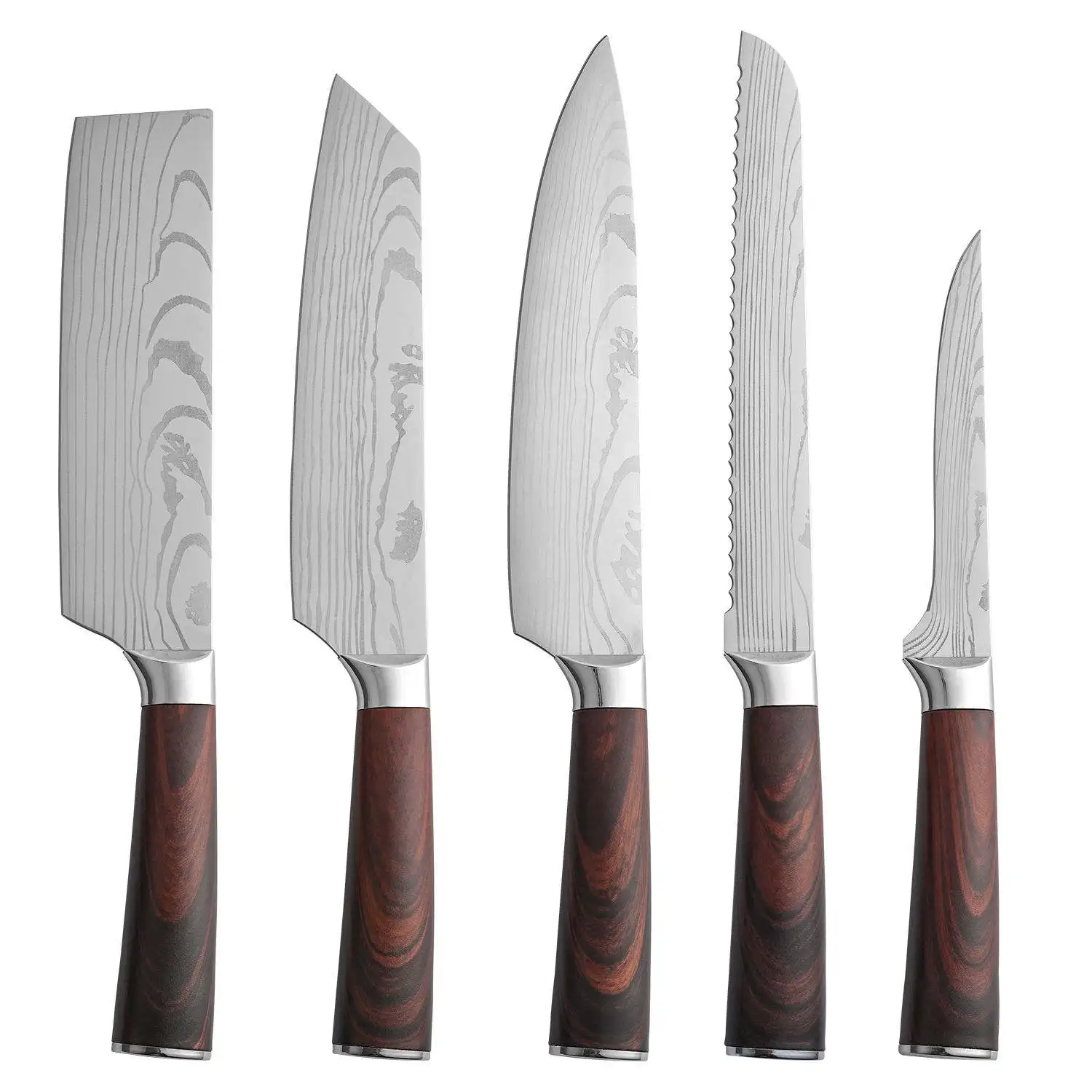
Stainless Steel Paring Boning Butcher Bread Knife Set Five-Piece Japanese Kitchen Knife Set
If you’re seeking a versatile starter set, the Stainless Steel Paring Boning Butcher Bread Knife Set Five-Piece Japanese Kitchen Knife Set offers a practical range of blades for everyday cooking.
Frequently asked questions
What is the difference between Japanese and Western knives?
Japanese knives are typically thinner, harder, and sharper than Western knives. They use higher-carbon steel and have different blade geometries for precise cuts. Western knives are thicker, heavier, and more durable for tough tasks like chopping bones.
How do I sharpen a Japanese kitchen knife?
Use a whetstone with grits 1000 and 6000. Soak the stone, hold the knife at a 15-degree angle, and slide the blade across the stone in a sweeping motion. Repeat on both sides until a burr forms, then refine with the finer grit.
Can I use a Japanese knife for chopping bones?
No, most Japanese knives are not designed for bones. Use a Western cleaver or a dedicated deba knife for heavy tasks. Thin blades can chip or break if used on hard surfaces.
What is the best steel for a Japanese kitchen knife set?
For beginners, VG-10 stainless steel offers good edge retention and rust resistance. For enthusiasts, Shirogami (white steel) provides exceptional sharpness but requires careful maintenance.
