
Blog
Essential Guide to Choosing Ceramic Dinner Plates
Tableware Guide
Your Complete Guide to Ceramic Dinner Plates
Ceramic dinner plates are the backbone of any well-set table, offering durability and timeless appeal. Whether you’re a seasoned host or just starting to curate your kitchen, understanding what makes a great plate can transform your dining experience.
Why Choose Ceramic Dinner Plates?
Ceramic dinner plates are a staple in kitchens worldwide, prized for their heat retention, chip resistance, and aesthetic versatility. Unlike other materials, ceramic doesn’t leach chemicals or absorb odors, making it a safe choice for daily use. Plus, they’re oven-safe and microwave-friendly, bridging the gap between rustic charm and modern convenience.
Types of Ceramic Dinner Plates
From stoneware to porcelain, the variety can be overwhelming. Stoneware is dense and durable, ideal for casual dining, while porcelain offers a delicate, refined look. Earthenware, though more porous, provides an artisanal feel. Each type has its own glaze and firing process, affecting both appearance and longevity. For a deep dive into ceramic materials, check out this Wikipedia article on ceramic glazes.
Key Factors to Consider
When shopping for ceramic dinner plates, think about size, weight, and edge style. Standard dinner plates are around 10-11 inches, but consider your serving needs. A heavier plate feels substantial but may be tiring to handle. Look for rolled edges or footed bases for added stability. Also, check for microwave and dishwasher safety—most modern ceramics are fine, but hand-painted or metallic accents may require special care.
Durability and Chip Resistance
Ceramic dinner plates can chip if dropped, but high-quality stoneware and porcelain are remarkably tough. Look for plates with reinforced edges or a vitrified body, which reduces porosity and increases strength. Brands often test for impact resistance, so read reviews or ask about warranty.
Design and Versatility
From minimalist white to vibrant patterns, ceramic dinner plates can match any decor. Neutral colors are timeless and easy to mix, while bold designs make a statement. Consider your existing tableware and choose pieces that can transition from everyday meals to festive gatherings. Mixing shapes—like round and square—adds visual interest.
Caring for Your Ceramic Dinner Plates
To extend the life of your ceramic dinner plates, avoid sudden temperature changes (don’t put a hot plate in cold water). Use gentle detergents and soft sponges to prevent glaze scratches. Stack plates with felt pads or paper towels between them to prevent scratching. For stubborn stains, a baking soda paste works wonders.
Eco-Friendly and Health Benefits
Ceramic is a natural material, often made from abundant clay and fired at high temperatures, making it an eco-friendly choice. Unlike plastic, ceramic doesn’t release microplastics, and it’s fully recyclable. Many artisans use lead-free glazes, ensuring your food stays safe. Supporting ceramic artisans also sustains traditional crafts.
Matching Ceramic Dinner Plates with Other Tableware
Your ceramic dinner plates should harmonize with bowls, mugs, and serving dishes. Stick to a cohesive color palette or mix complementary textures. For example, glossy plates pair well with matte bowls. Consider the overall theme—rustic, modern, or eclectic—and let your plates anchor the table setting.
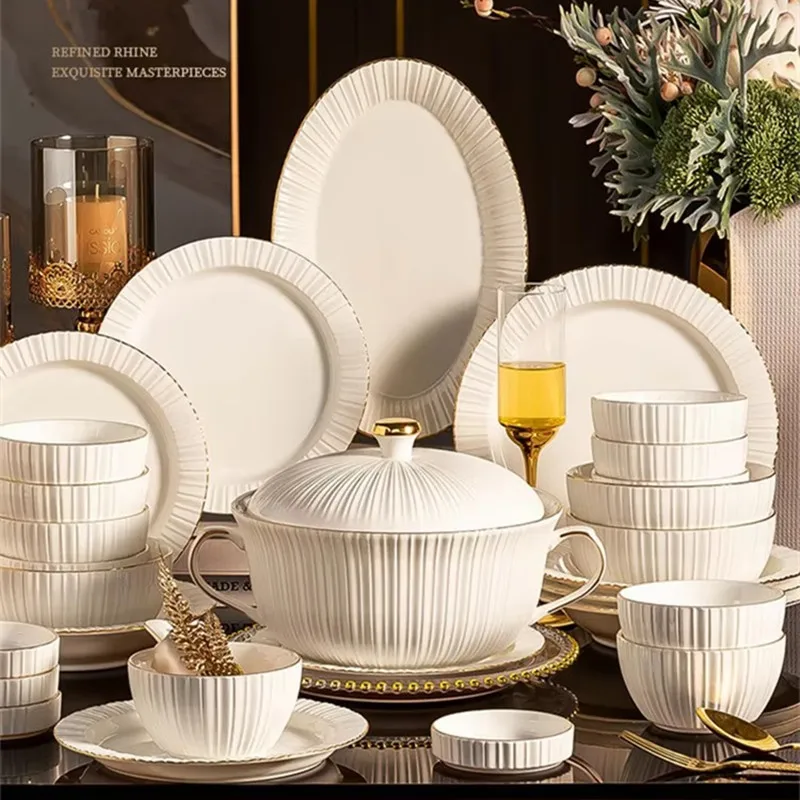
Relief Sculpture Gold Inlay Ceramic Rice Bowl Dishes Beef Steak Plate Fish Plate Premium Ceramic Tableware 1pcs
For a unique touch, consider the Relief Sculpture Gold Inlay Ceramic Rice Bowl Dishes Beef Steak Plate Fish Plate Premium Ceramic Tableware 1pcs—a single artisan piece that elevates any meal.
Frequently asked questions
Are ceramic dinner plates microwave safe?
Most ceramic dinner plates are microwave safe, but avoid those with metallic trim or gold inlay, as they can spark. Always check the manufacturer’s label.
How do I prevent ceramic plates from chipping?
Handle with care, avoid stacking without protection, and use gentle washing methods. High-quality stoneware and porcelain are more chip-resistant.
Can I put ceramic dinner plates in the oven?
Yes, many ceramic plates are oven-safe up to 350°F or higher. However, avoid sudden temperature changes to prevent cracking.
What is the difference between stoneware and porcelain?
Stoneware is thicker, more durable, and often has a rustic look, while porcelain is finer, more translucent, and typically more expensive.
