
Blog
The Ultimate Stainless Steel Baking Pan Buying Guide
Buying Guide
Choose the Best Stainless Steel Baking Pan
A stainless steel baking pan is a versatile workhorse in any kitchen, offering even heat distribution and lasting durability. Whether you’re roasting vegetables or baking brownies, the right pan makes all the difference.
Why Choose a Stainless Steel Baking Pan?
Stainless steel is prized for its durability and non-reactive surface, meaning it won’t alter the flavor of acidic foods like tomatoes or citrus. Unlike nonstick pans, stainless steel can withstand high temperatures and is safe for metal utensils. It also heats evenly, reducing hot spots that can lead to burnt edges. For more on the science of heat conductivity, check out this Wikipedia article on heat transfer.
Key Features to Look For
When shopping for a stainless steel baking pan, consider the gauge (thickness), edge design, and whether it has a nonstick coating. Thicker pans (around 18/10 gauge) resist warping and distribute heat more evenly. Rolled edges add strength, and a mirror finish is purely aesthetic.
- Gauge: Lower numbers mean thicker metal. 18/10 is a common high-quality choice.
- Rimless vs. Rolled: Rimless pans are easier to clean but may warp; rolled edges add rigidity.
- Nonstick: Some stainless pans have a ceramic or PTFE coating for easy release, but pure stainless requires greasing.
Size and Shape Considerations
Standard sizes include quarter-sheet (9×13), half-sheet (18×13), and full-sheet (26×18). For home use, a half-sheet is most versatile. Deep pans are ideal for roasting or baking bread, while shallow ones work for cookies. Always measure your oven before buying.
How to Care for Your Stainless Steel Pan
Stainless steel is dishwasher safe, but hand washing with mild detergent preserves its shine. For stubborn residue, soak with baking soda or use a stainless steel cleaner. Avoid abrasive pads that scratch. Dry immediately to prevent water spots.
Common Uses for a Stainless Steel Baking Pan
From roasting chicken to baking sheet cakes, a stainless steel baking pan excels in many tasks. It’s perfect for searing meats before roasting, as you can use it on the stovetop. The non-reactive surface also makes it ideal for marinating or storing food.
- Roasting vegetables and meats
- Baking cookies, brownies, and cakes
- Making one-pan meals
- Cooling baked goods (if rimless)
Comparing Stainless Steel to Other Materials
Aluminum heats faster but reacts with acidic foods. Glass is non-reactive but can shatter. Cast iron retains heat well but is heavy and requires seasoning. Stainless steel offers a balanced combination of durability, even heating, and low maintenance.
Tips for Even Baking
To prevent burnt bottoms, use light-colored pans (stainless is naturally reflective). Rotate the pan halfway through baking. If using a dark pan, reduce oven temperature by 25°F. Always preheat the pan for crispy crusts.
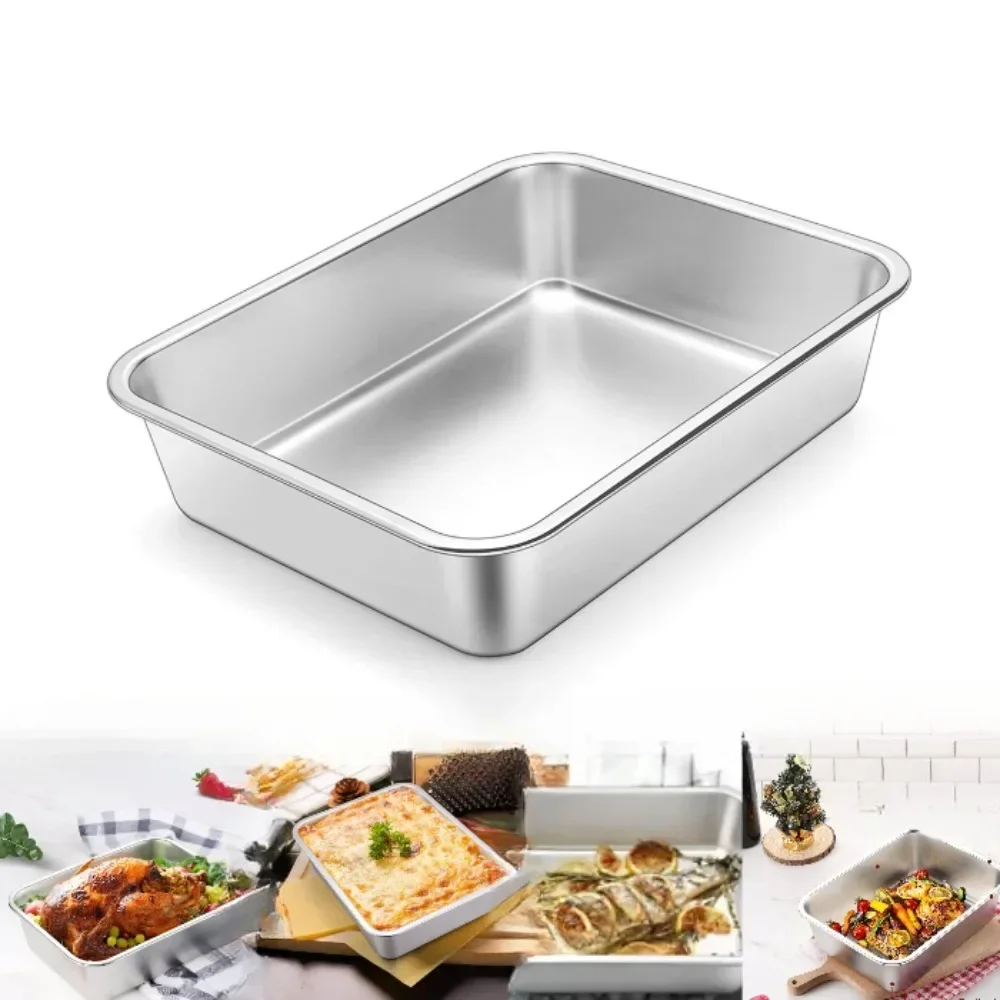
Thickened Stainless Steel Deep Pan Multifunction Roast Chicken Salad Cake Cookie Bakeware for Brownie Bread Meat Baking Pan
For a reliable option, consider the Thickened Stainless Steel Deep Pan Multifunction Roast Chicken Salad Cake Cookie Bakeware, which offers a sturdy build and versatile design for all your baking needs.
Frequently asked questions
Can I use metal utensils on a stainless steel baking pan?
Yes, stainless steel is scratch-resistant and safe for metal spatulas and whisks, unlike nonstick pans.
Is stainless steel oven-safe at high temperatures?
Most stainless steel pans are oven-safe up to 500°F, but check the manufacturer’s guidelines for handles.
How do I remove baked-on food from a stainless steel pan?
Soak with hot water and baking soda, or use a stainless steel cleaner. Avoid steel wool to prevent scratches.
Does stainless steel react with food?
No, stainless steel is non-reactive, so it won’t discolor or add metallic taste to acidic foods like tomatoes.